Perrine's Covered Bridge
NBI Information
Location
State: New York
County: Ulster County
Feature Carried: Pedestrian Path
Feature Crossed: Wallkill River
Latitude, Longitude: 41.8177,-74.0557
Structure Open, Posted, or Closed to Traffic: Open to Pedestrians
History
Year Built: 1840
Year Closed: 1940
Picture Date: December 28, 2025
Geometry
Lanes on Structure: 1
Lanes under Structure: 0
Number of Main Spans: 1
Main Structure Type: Truss - Thru
Main Structure Material: Wood or Timber
Condition
Bridge is not on the National Bridge Inventory
Bridge Information
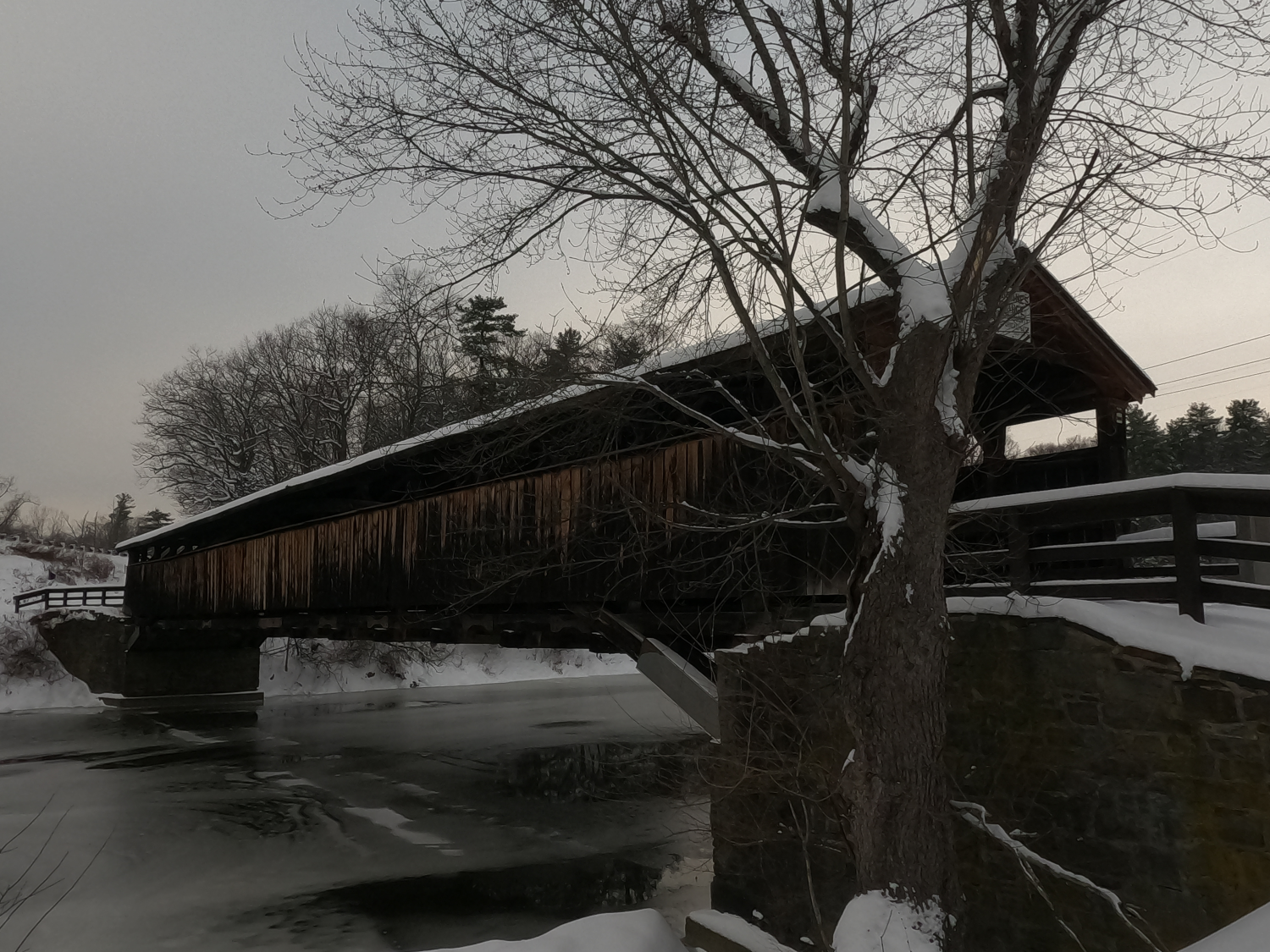
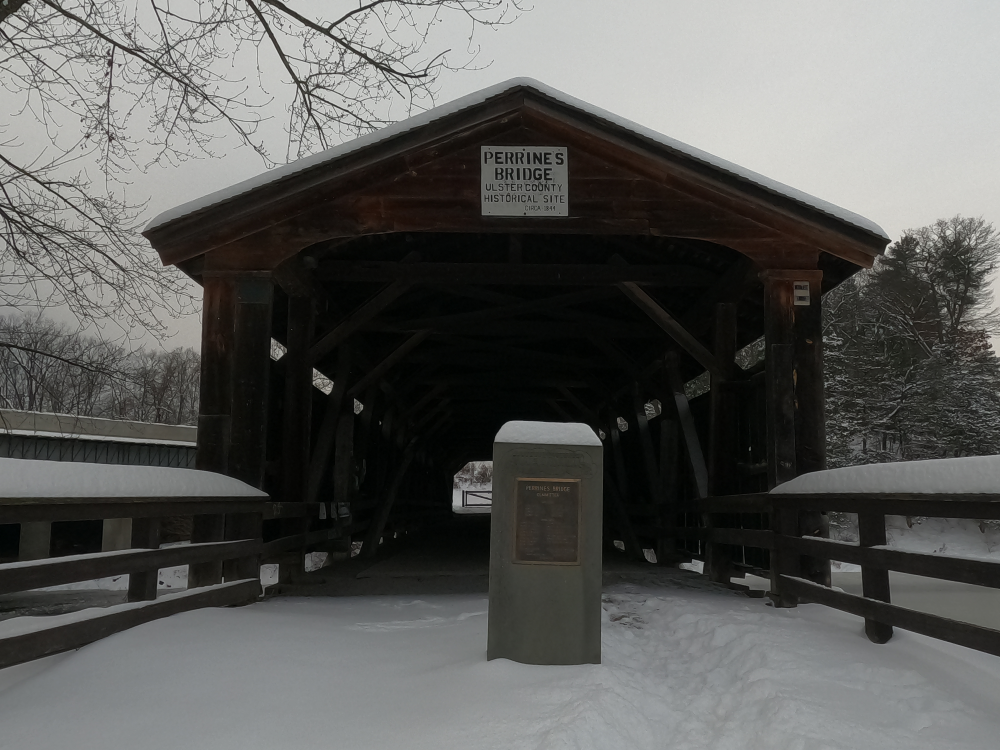
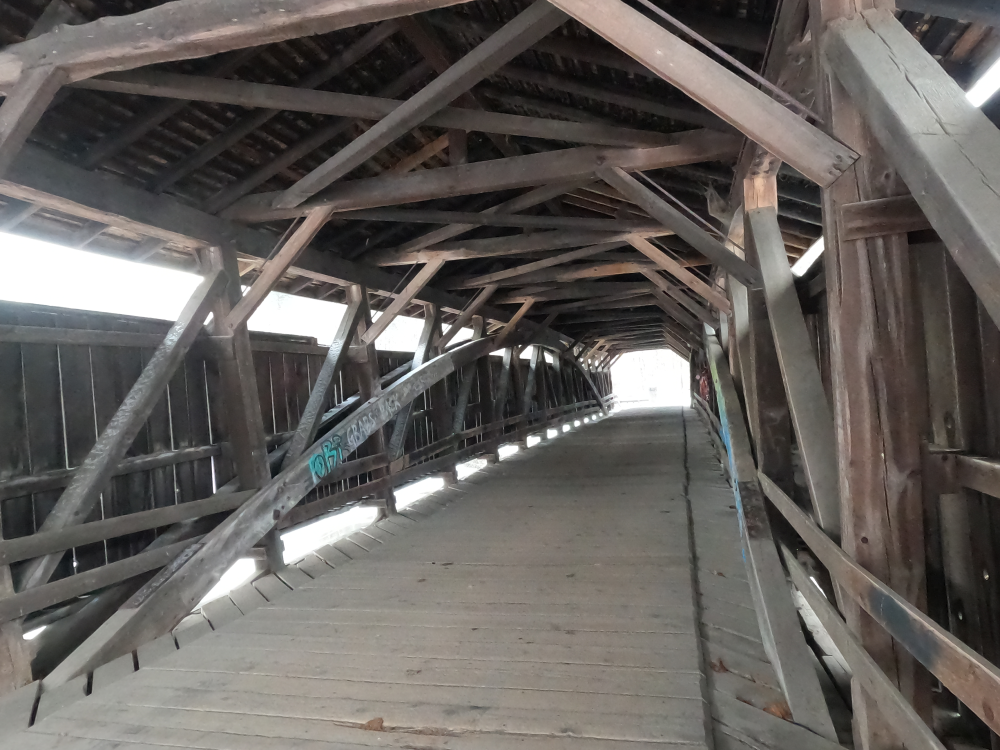
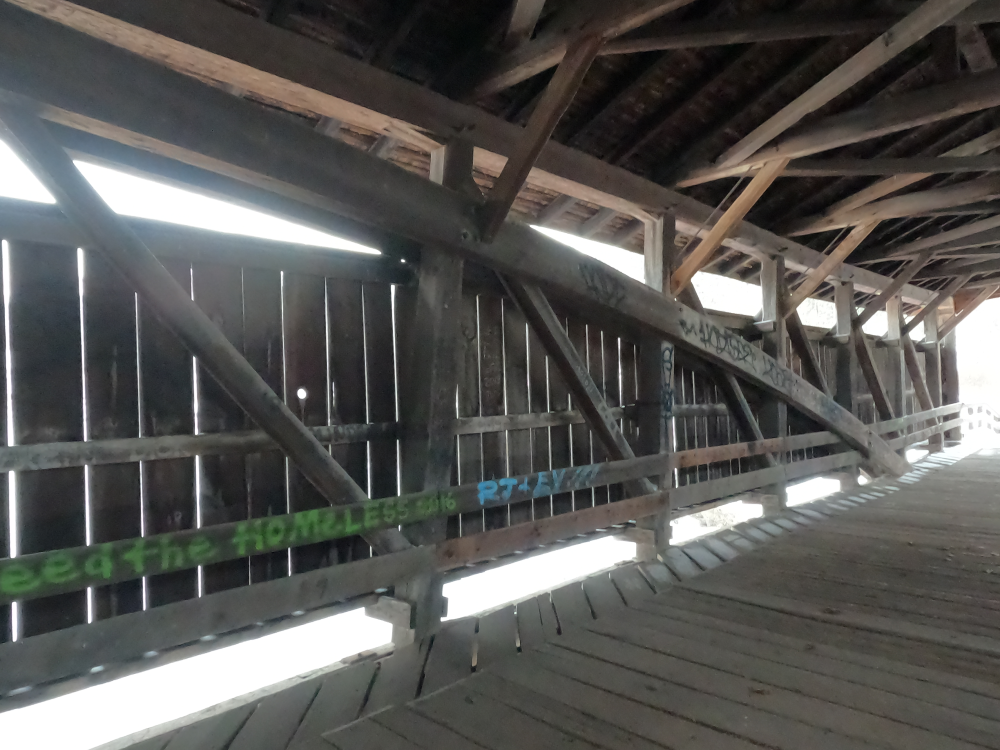
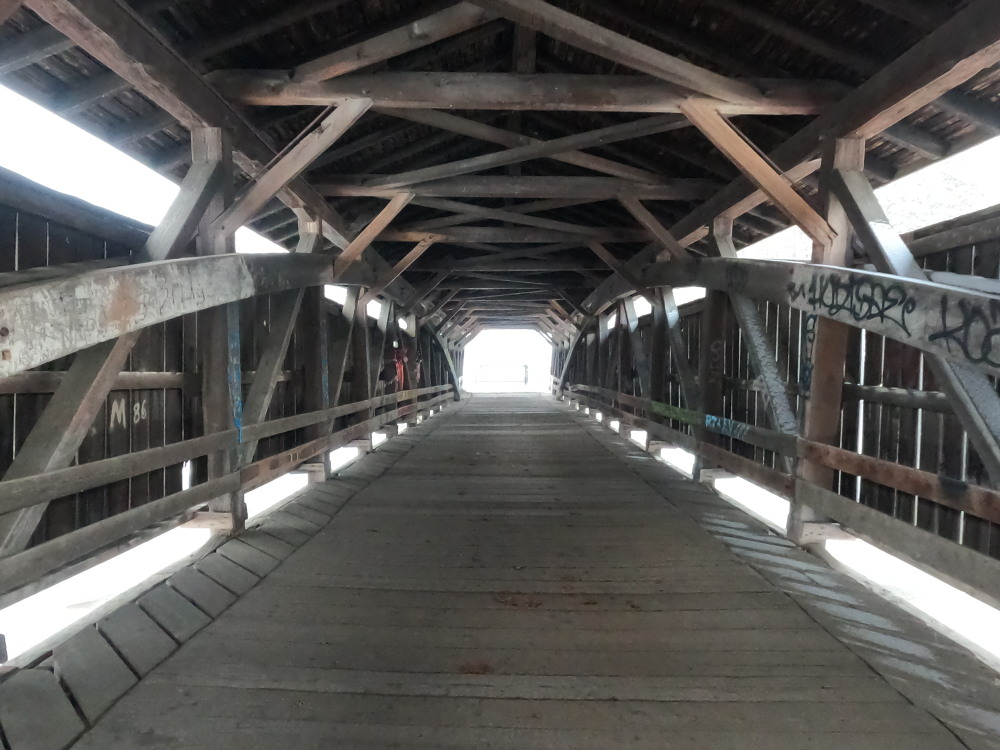
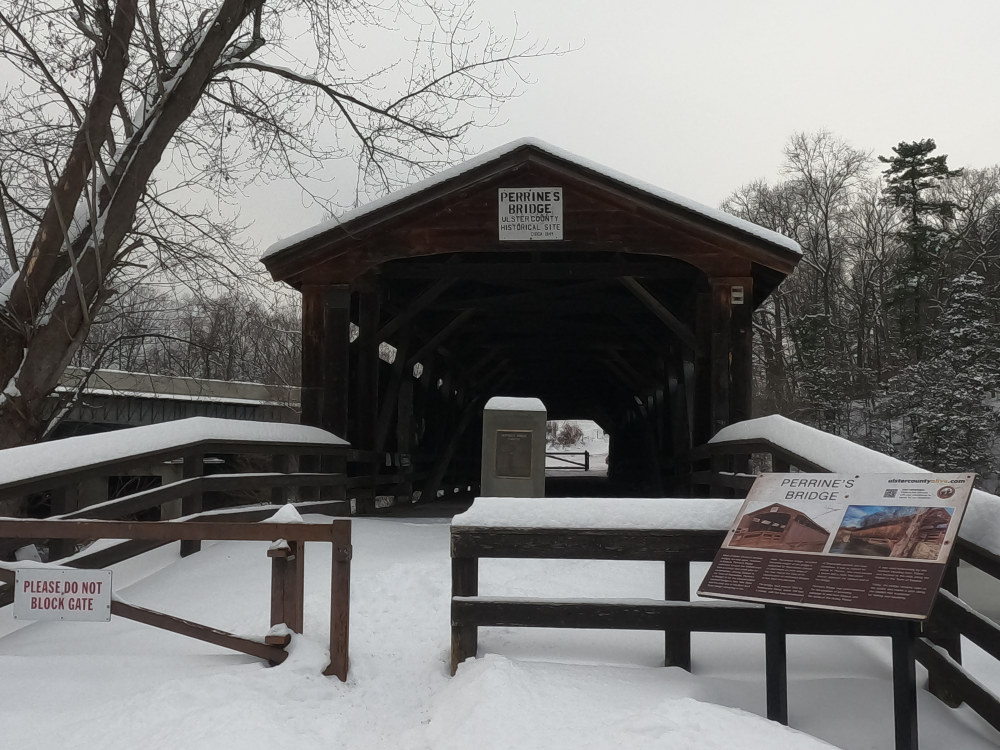
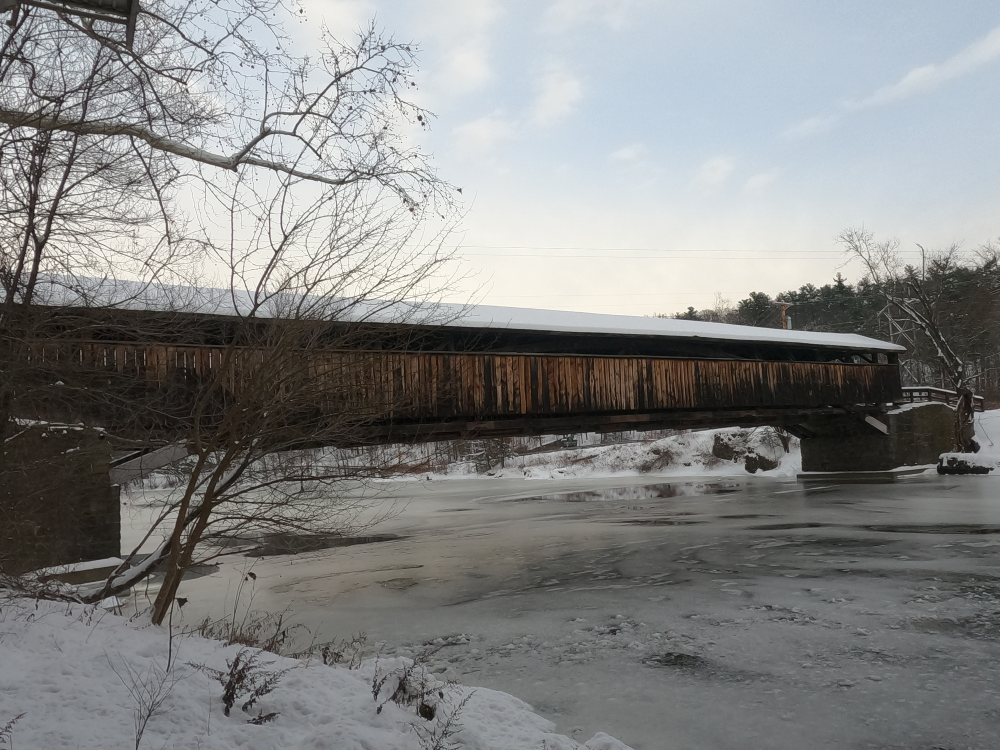
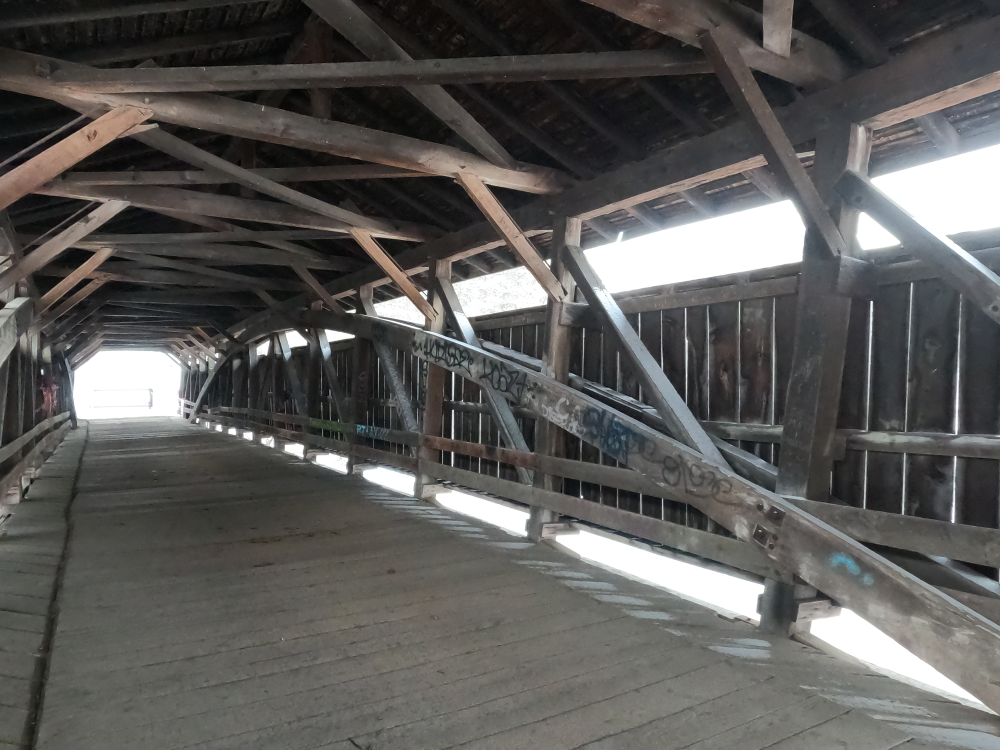
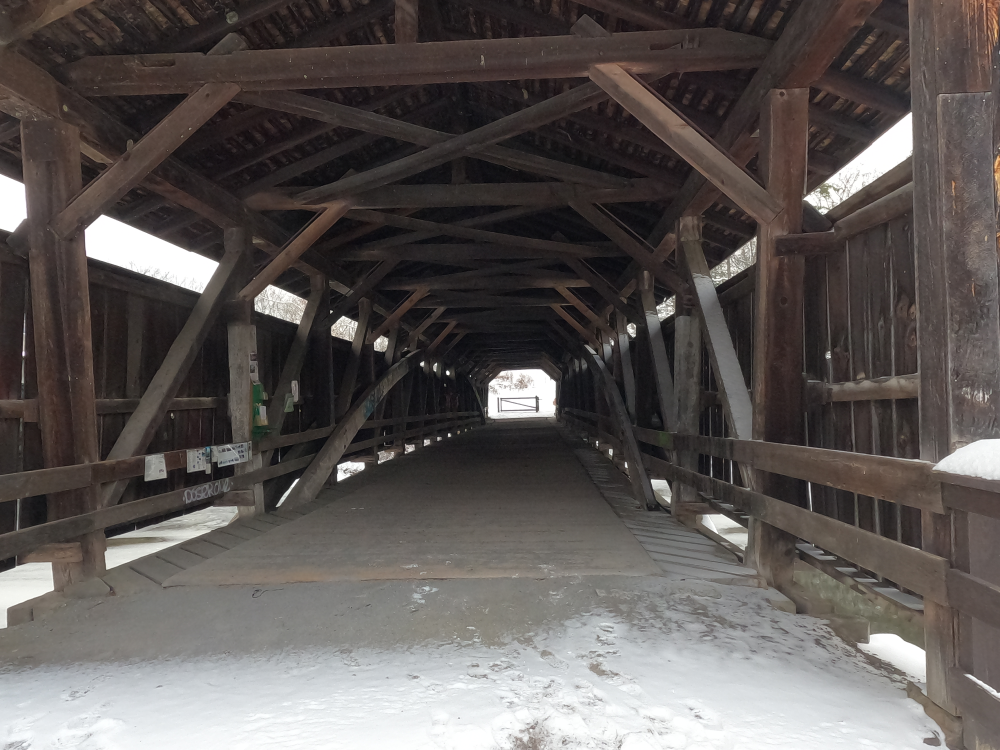
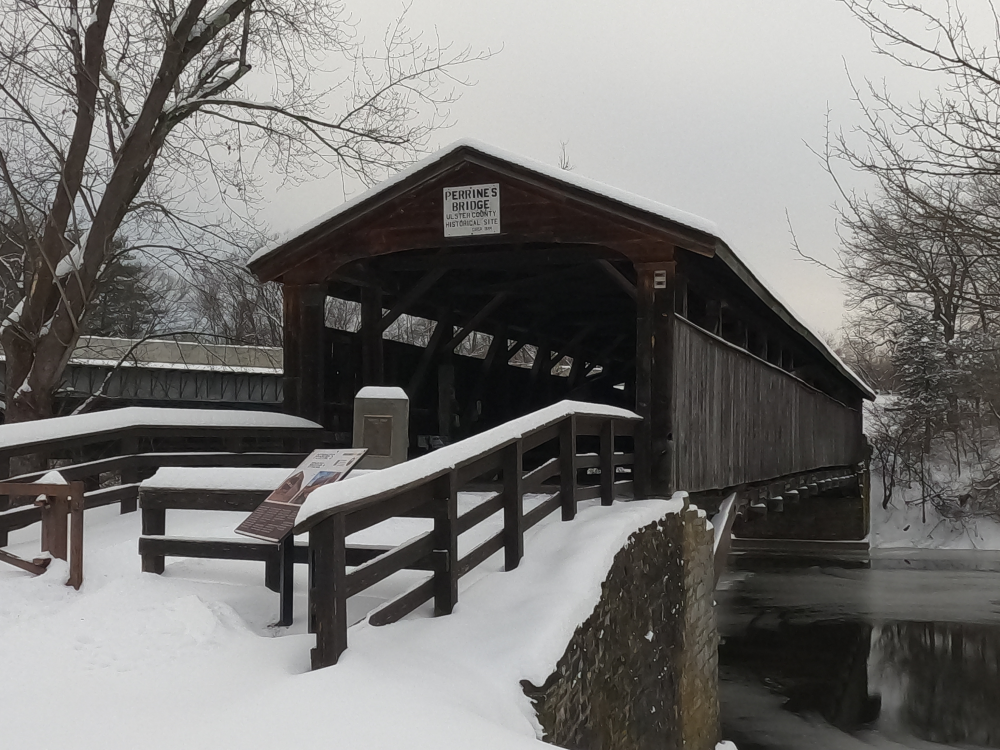
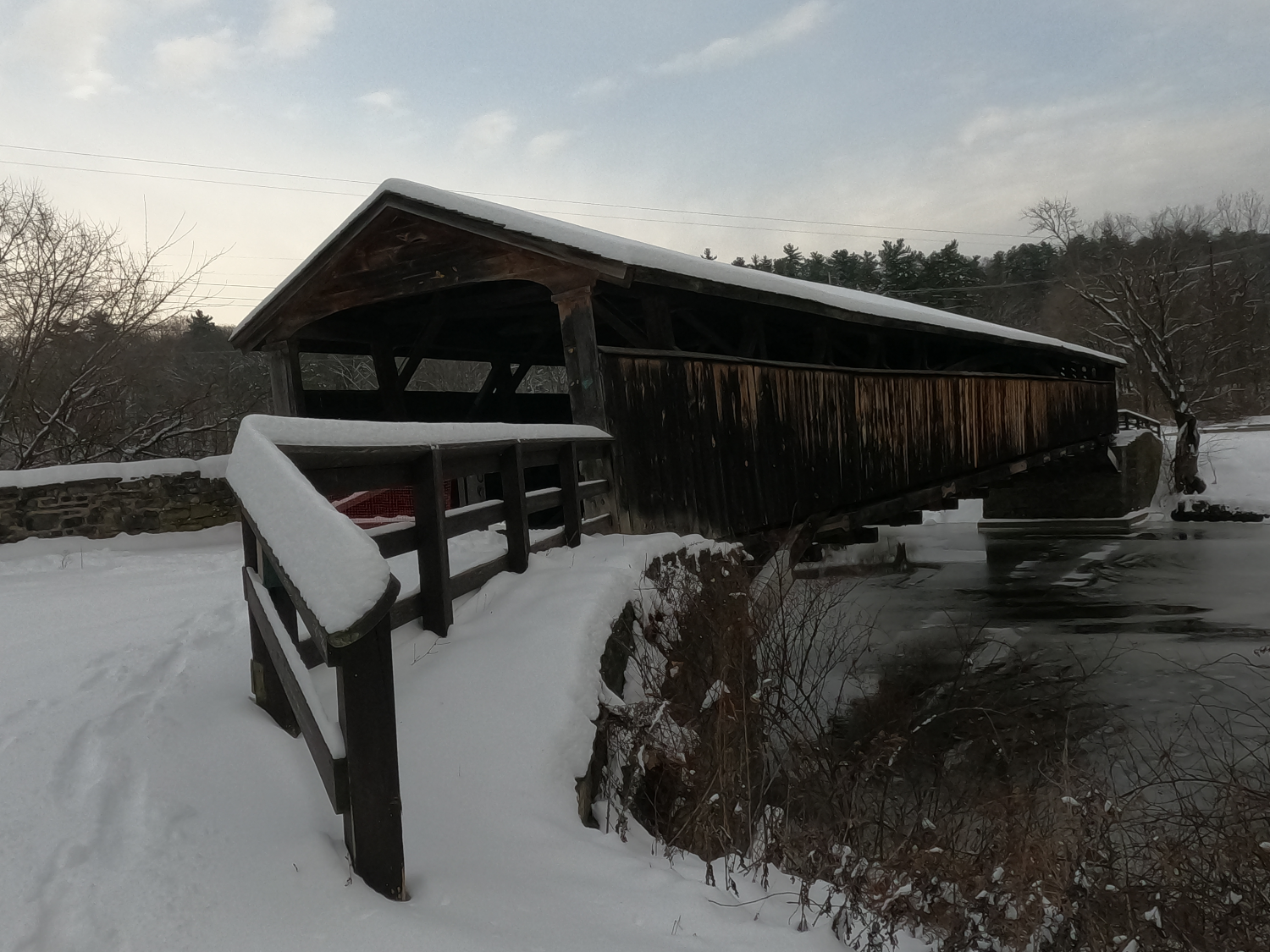
Perrine's Covered Bridge was most likely built in the late 1840’s, making it the second-oldest covered bridge in New York (the Hyde Hall Bridge was built in 1825). It is the longest standing Burr Arch Bridge in the state.
There are many conflicting dates for the construction of this bridge, with different sources citing date anywhere from 1820 to 1850. Unfortunately, the Board of Supervisors’ Minutes from 1807-1828 and 1837-1861 are missing from the Ulster County Archives, so the construction date will remain a mystery. It is likely that a bridge was originally built at this site in the early 1820s and was replaced in 1834. The current bridge was authorized in 1846, with construction starting soon after. Although it is possible that elements remain from the original bridge (which would make it the oldest covered bridge in the state).
The bridge abutments are built from local bluestone, as well as Rosendale Cement, which had been discovered nearby in the late 1820’s. The Burr arches were crafted from mature White Pine Trees, with chestnut and hemlock being used for the floor and side planks. The roof is shingled in cypress.
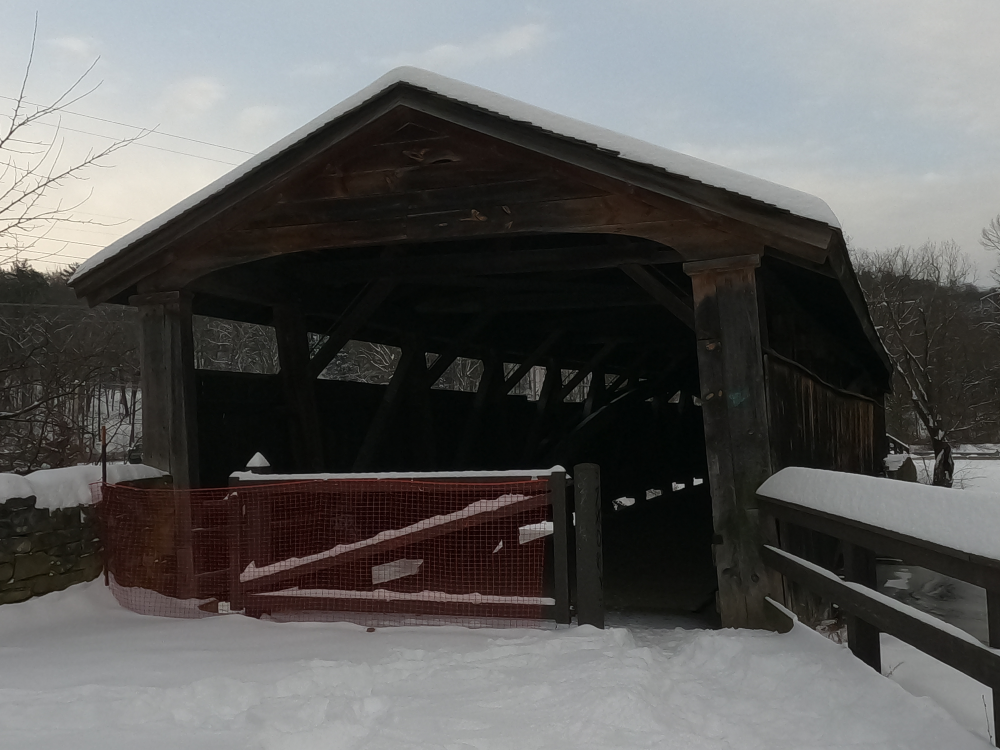
The bridge became part of NY Routes 32 and 213 in 1930 but was bypassed with a new alignment in 1933. In April of 1940, the bridge was condemned and barricaded to vehicular traffic. It sat abandoned and decaying, with the locals asking for it to be removed. This almost happened in 1954, with the New York State Thruway was constructed. The original plan placed the highway directly through the bridge. However, the demolition was overturned, and the Thruway was rerouted slightly to the west. However, many locals still didn’t like the deteriorating bridge and called for it to be demolished or relocated.
In the 1960’s, the New York Covered Bridge Society actively lobbied and publicized the case for preserving the historic structure. The “Restore Perrine’s Bridge” campaign led to a major effort by Ulster County to restore the bridge before it collapsed into the river. It was restored from 1968 to 1969, and again in 1993.
The bridge was named after James Perrine, who operated a hotel and tavern near the site of the bridge. Over the winter, Jame’s son was hired as the “snower”, to shovel snow onto the bridge to allow horse-drawn sleights to cross.
References