7 Mile Road Bridge
NBI Information
Location
State: Michigan
County: Midland County
Feature Carried: 7 Mile Road
Feature Crossed: Big Salt River
Latitude, Longitude: 43.6740,-84.3892
Toll: On free road
Maintenance Responsibility: City or Municipal Highway Agency
Structure Open, Posted, or Closed to Traffic: Posted for load (may include other restrictions such as temporary bridges which are load posted)
History
Year Built: 1927
Historical Significance: Bridge is not eligible for the National Register of Historic Places.
Year Reconstructed: None
Picture Date: August 31, 2025
Geometry
Lanes on Structure: 2
Lanes under Structure: 0
Skew: 20 degrees
Number of Main Spans: 1
Main Structure Type: Girder and Floorbeam System
Main Structure Material: Concrete
Number of Approach Spans: None
Approach Structure Type: None
Approach Structure Material: None
Condition
Inspection Date: September 2023
Deck Condition: Fair
Superstructure Condition: Fair
Substructure Condition: Satisfactory
Channel Condition: Poor
Culvert: Not Applicable
NBI Year: 2024
Bridge Information
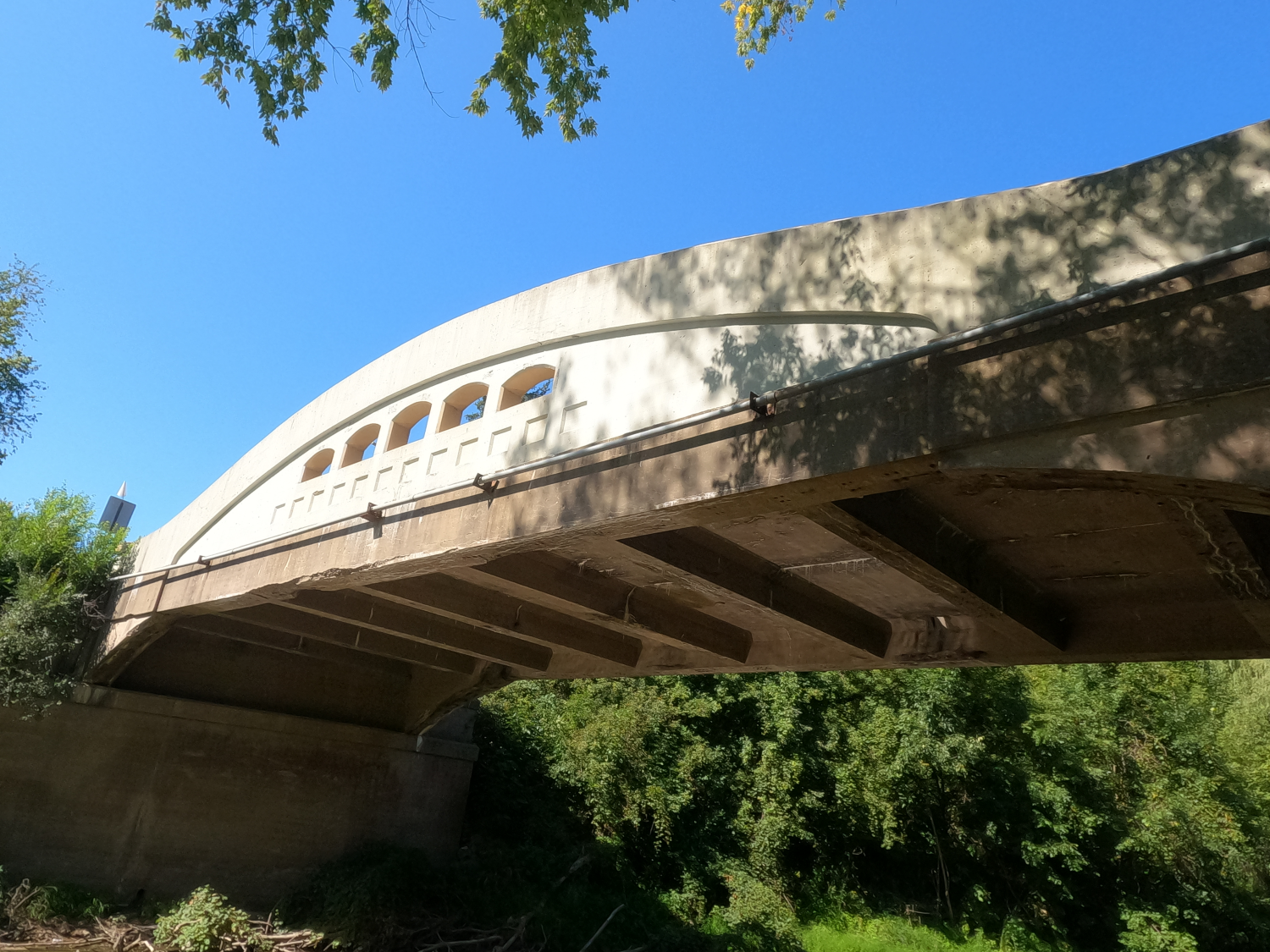
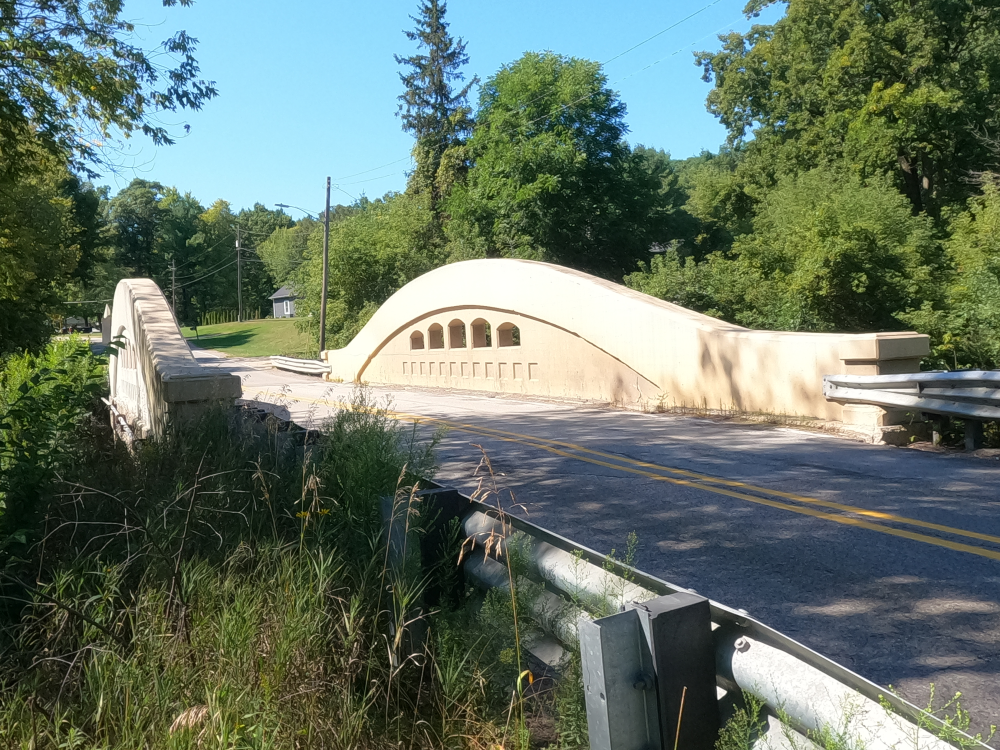
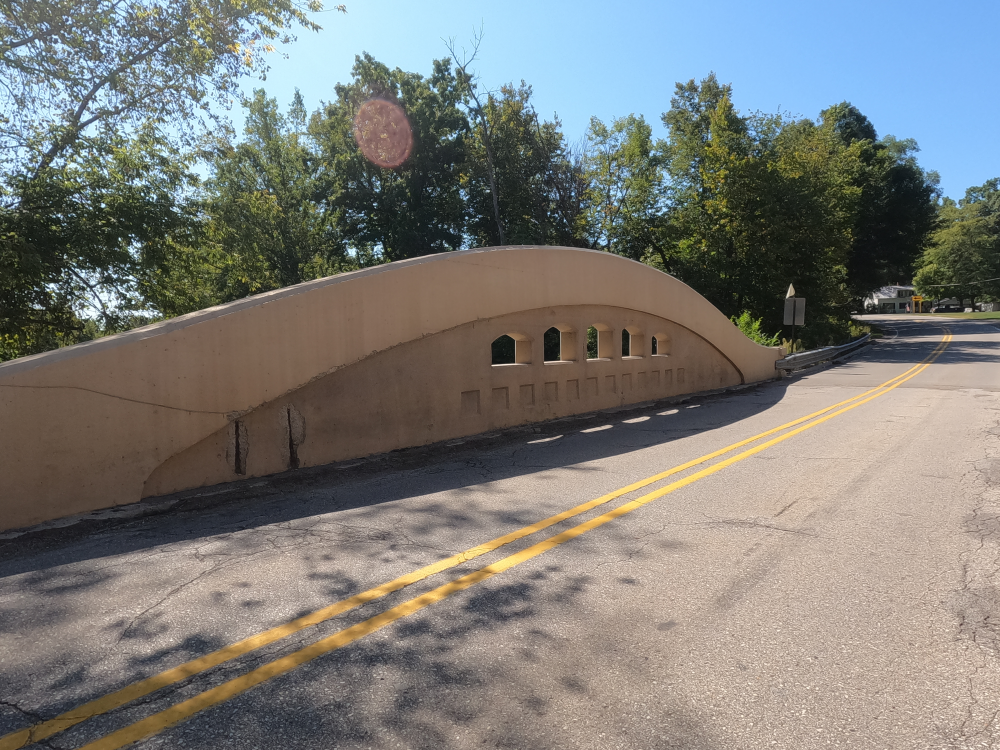
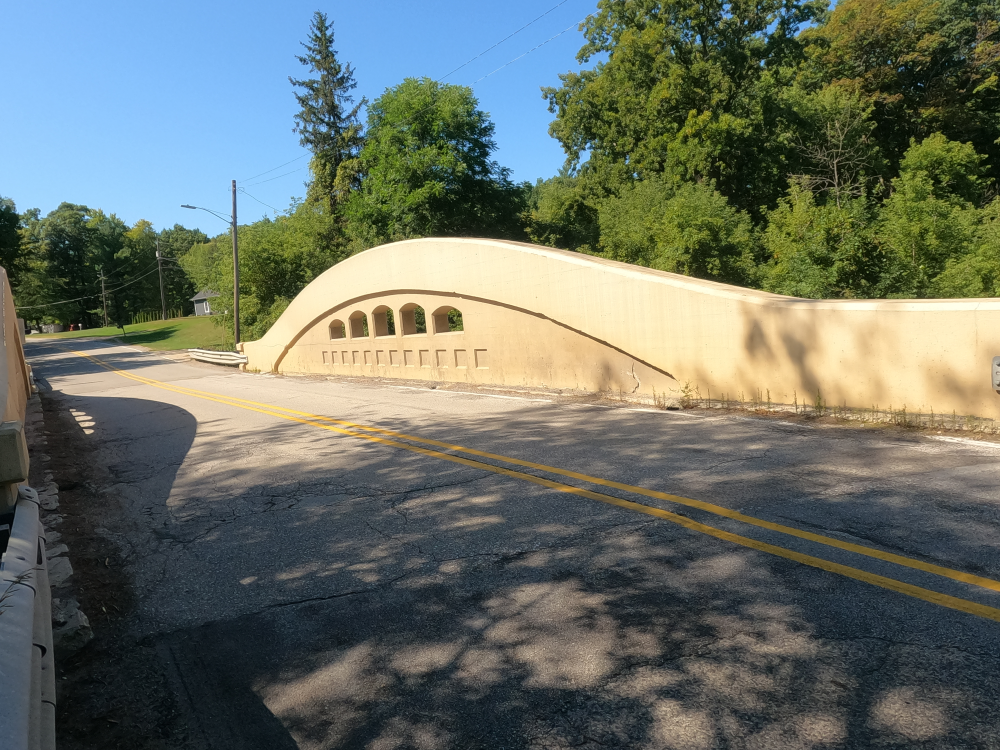
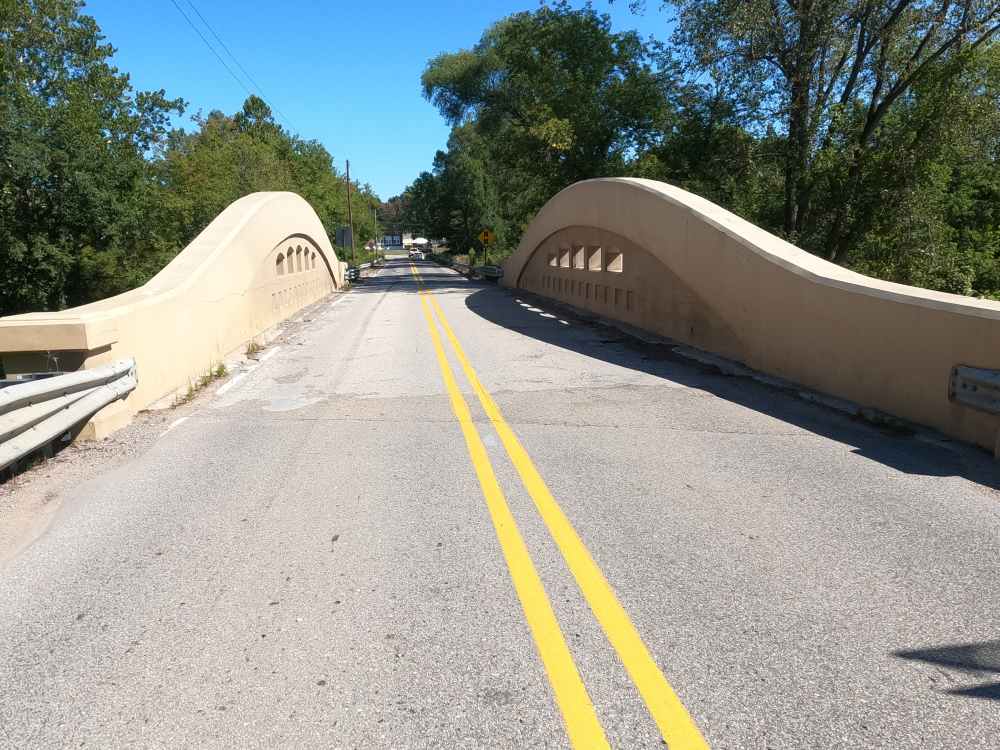
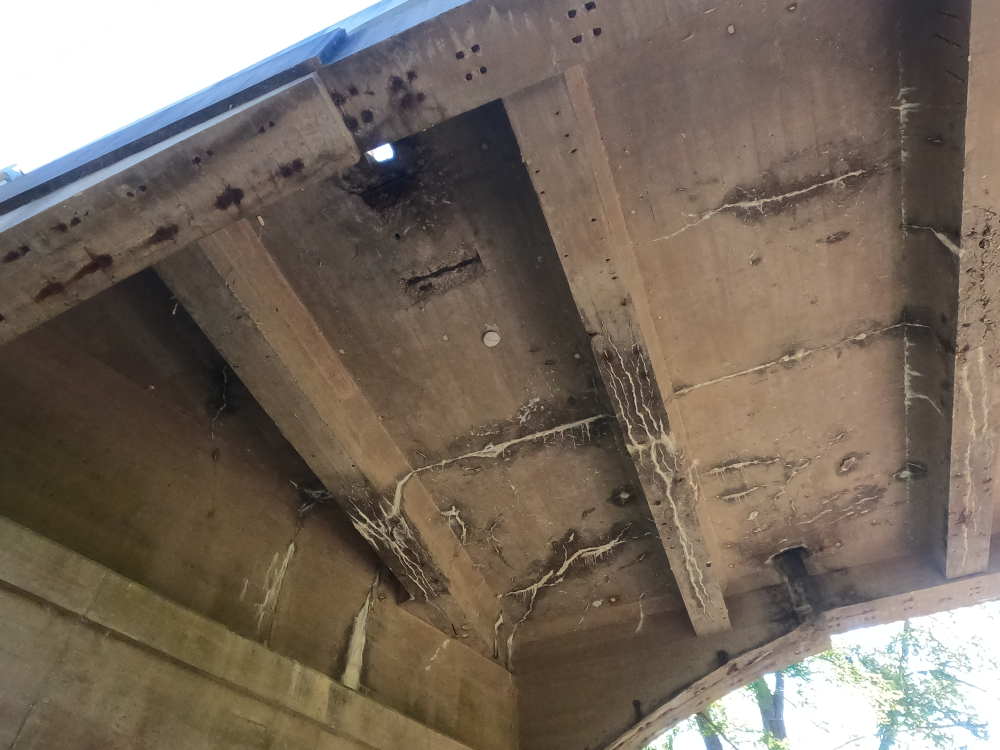
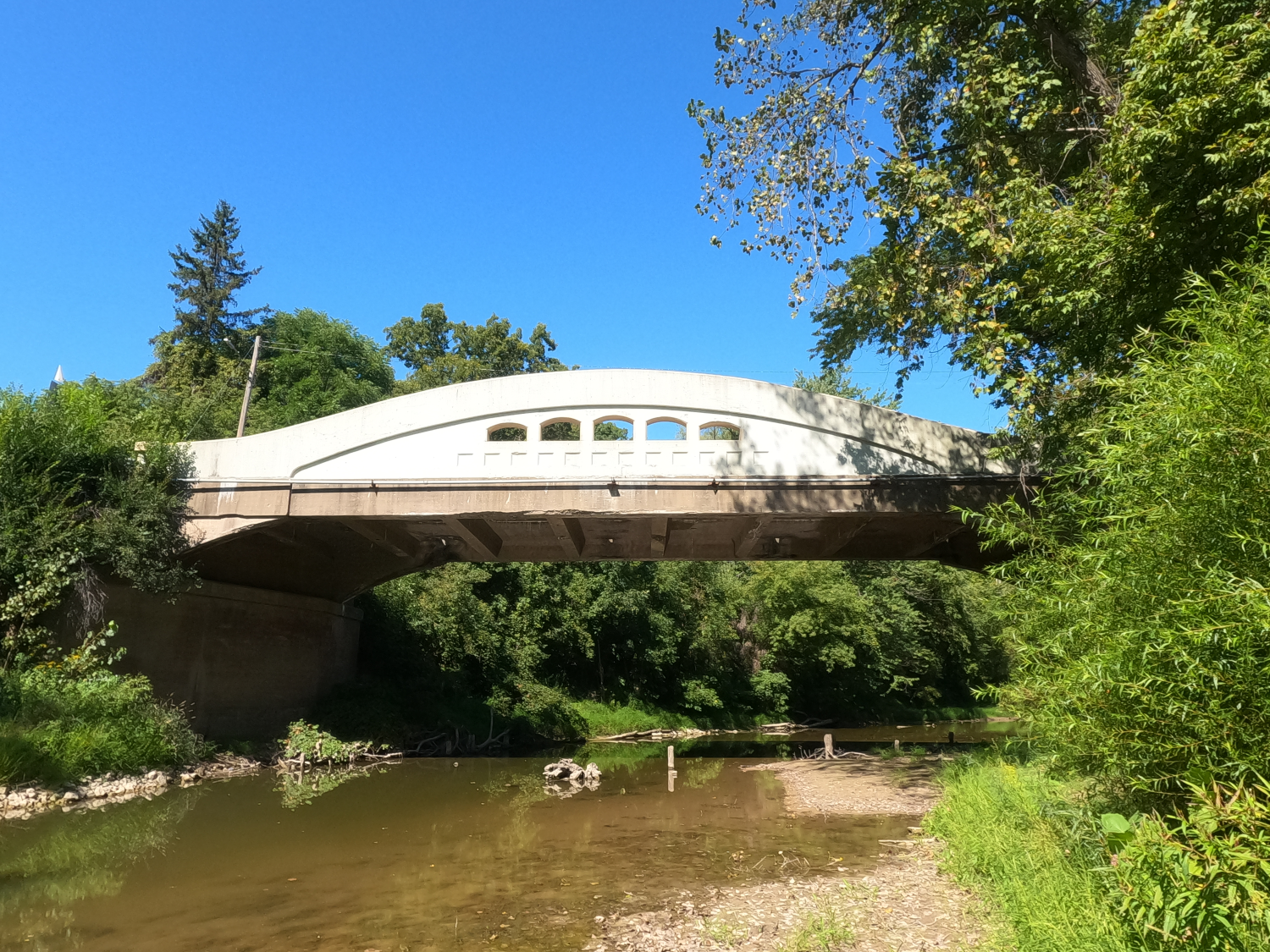
The 7 Mile Road Bridge was built in 1927 and is one of Michigan's unique concrete camelback bridges. These bridges are also called curved chord through girder bridge and are becoming increasingly rare. They were only built in Michigan and are not found in any other state. Approximately 25 of these bridges remain.
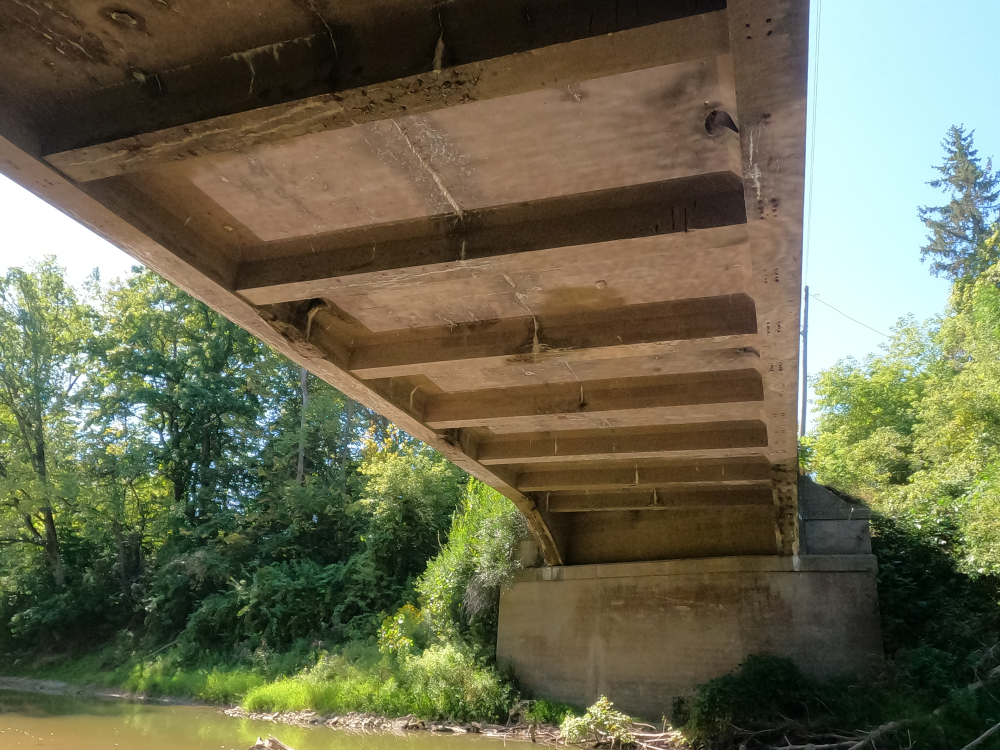
During the 1900’s, many states had a “Standard” bridge, like the warren trusses in New York and the Pratt trusses in Pennsylvania. In the 1920’s the concrete camelback bridge was a standard in Michigan, particularly from 1922 to 1928. While the design may look complicated, these bridges are a simple concrete through girder bridge with an arched design. The bridge plan was easy to follow, used simple materials, and resulted in a strong bridge that did not require a lot of work to maintain. These bridges provide a deep girder where strength is needed (at the center of the span), and a shallower section where there is less moment (at the ends of the span). This crates the arched look that reduces the amount of material that is needed and creates the most economical design. The same basic logic was used to design bridges in other states, by Michigan is the only state that built concrete camelback bridges of this size and with these elegant details.
Michigan had a set of predesigned plans which could be easily adapted for any location. Additional sheets could be added for site specific requirements, such as different substructure types, multiple spans, or skews. The plans were available in five-foot increments from 40-90 feet and with roadway width of wither 20-foot or 22-foot. This particular bridge has a 90-foot span and a 22-foot deck, making it one of the largest bridges of its type.
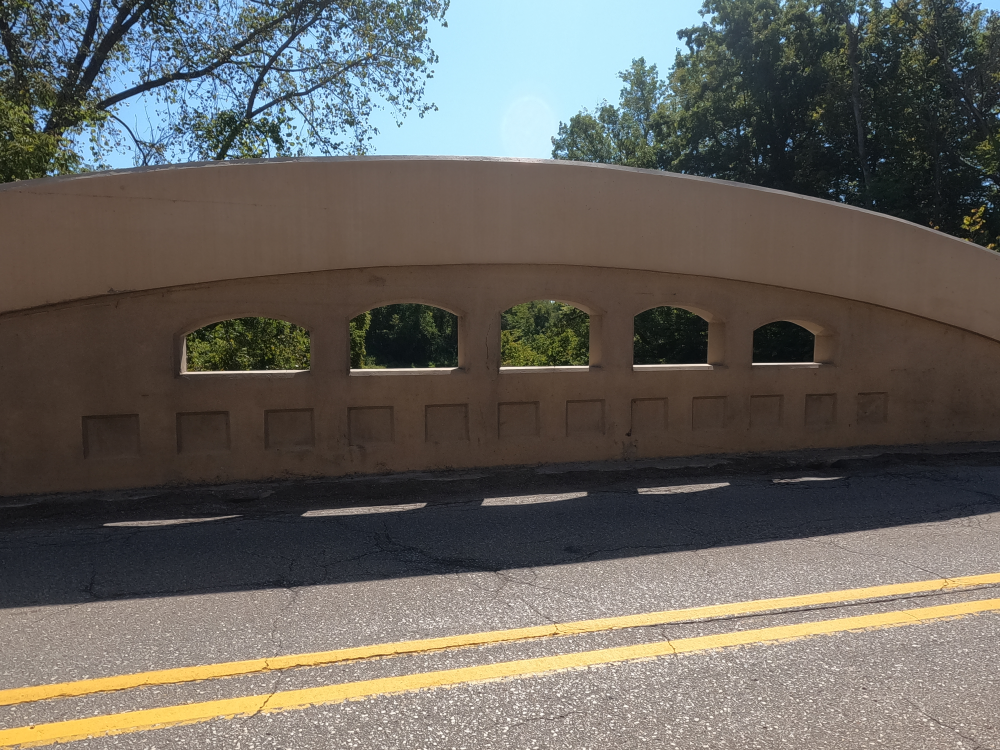
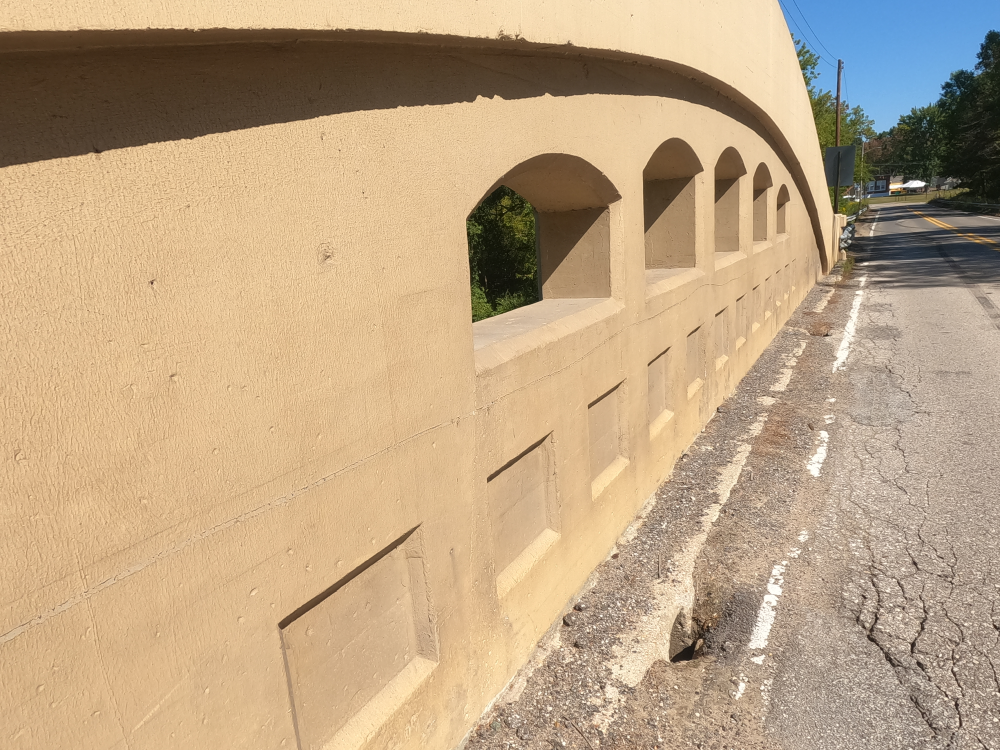
The 40-foot plan only had a slight curving of the chord, while still maintaining the look and details of the larger plans. As the bridges got bigger, the plans stayed relatively similar. The girder depth increased proportionally to the span length, resulting in a more defined curve in the top chord. There were two different sets of architectural details for these bridges, depending on the span length. Bridges 60 foot and smaller had a single row of six inset rectangles with curved tops. Beyond this, the architectural details changed to have two rows. The top row had five pierced openings, which were rectangles with curved tops (similar to the smaller plans). The bottom row had seven pairs small inset squares, with five of the sets directly below each pierced opening.
These bridges were designed to be incredibly strong. Most of these bridges have no posted weight limit, which is rare for bridges this old. Many of these bridges have any survived large floods, including the 2003 Dead River flood and the 2020 Edenville/Sanford flood. This particular bridge was completely underwater during the 2020 flood and survived without requiring any major repairs. Interestingly, both floods were caused by dam failures, with the Silver Lake Dam failing on May 14, 2003, and the Edenville Dam failing on May 19, 2020, which caused the failure of the Sanford Dam which was downstream. Michigan may want to reassess its Dam inspection program.
References