Kinzua Bridge
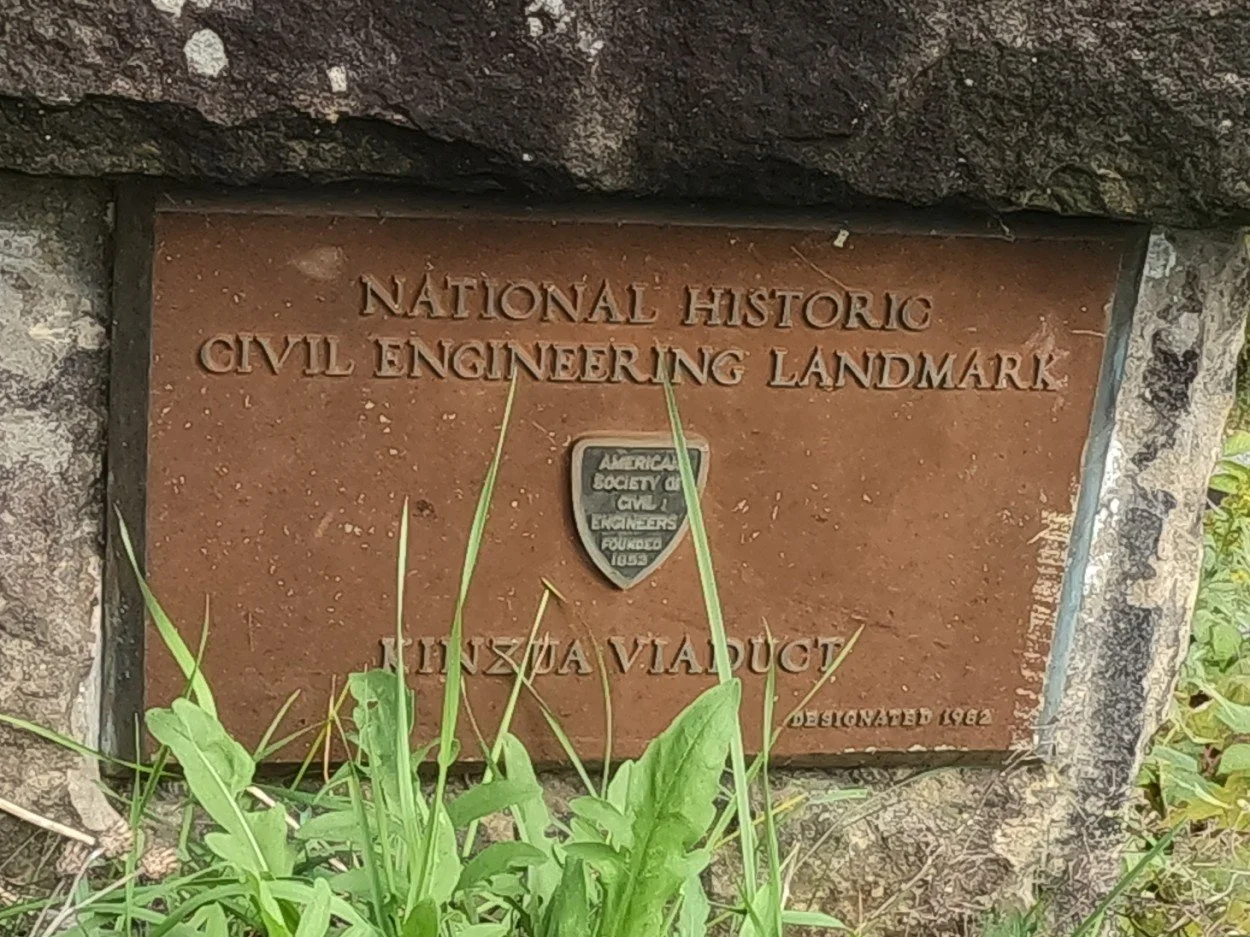
(Kinzua Viaduct)
NBI Information
Location
State: Pennsylvania
County: McKean County
Feature Carried: Pedestrian Path
Feature Crossed: Kinzua Creek
Latitude, Longitude: 41.76149, -78.5888
Structure Open, Posted, or Closed to Traffic: Open to Pedestrians
History
Year Built: 1900
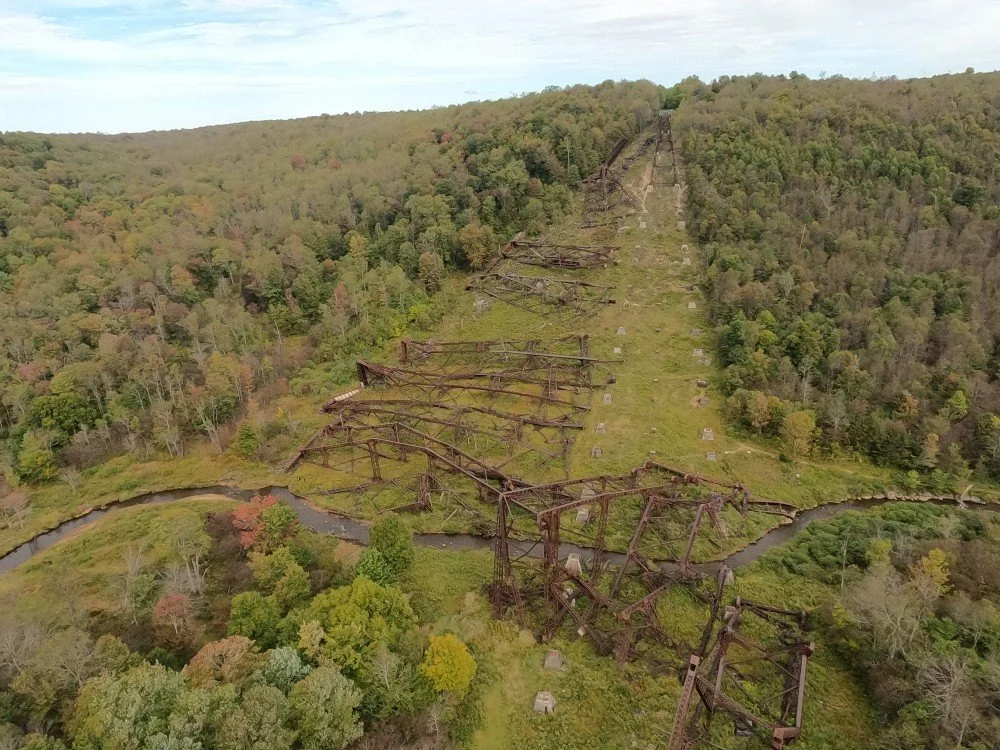
Year Partially Destroyed: 2003
Picture Date: September 27, 2026
Geometry
Lanes on Structure: 1
Lanes under Structure: 0
Number of Main Spans: 21
Main Structure Type: Stringer/Multi-beam or Girder
Main Structure Material: Steel
Condition
Bridge is not on the National Bridge Inventory
Bridge Information
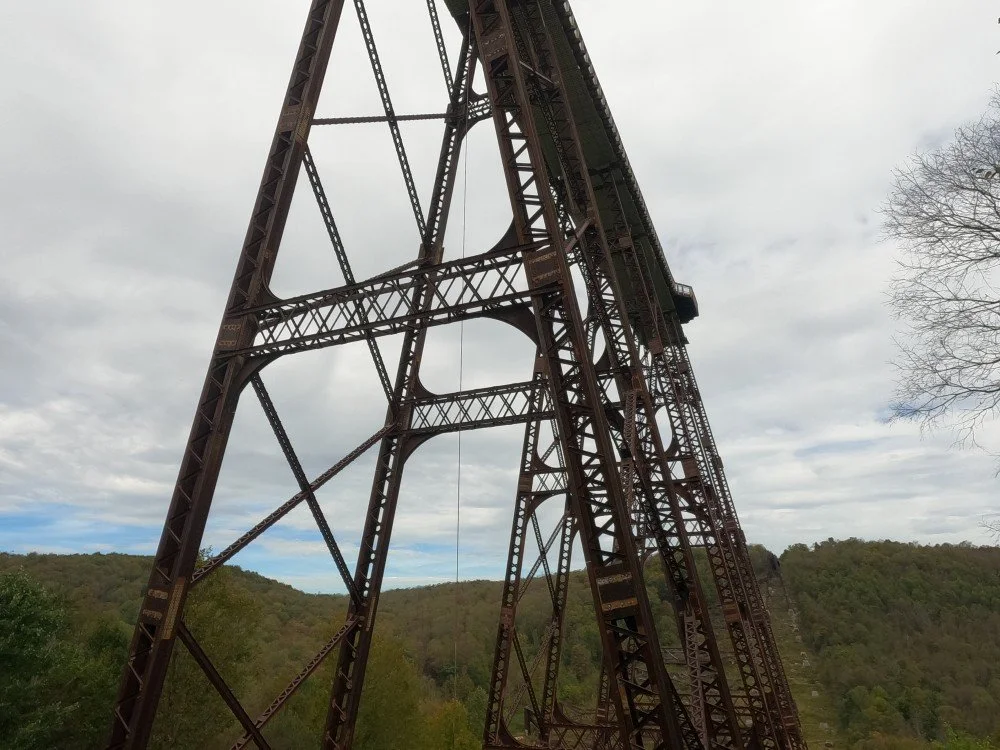
The Kinzua Bridge (also referred to as the Kinzua Viaduct) is the remains of an old railroad bridge.
The original structure was built in 1882 out of wrought iron. It was referred to as the “Eighth Wonder of the World” and was the tallest railroad bridge in the world. In fact, six of the bridge’s twenty towers were taller than the Brooklyn Bridge. The bridge towers utilized patented Phoenix Columns, which were hollow, riveted iron tubes. The columns were lighter and stronger than solid cast iron but looked slender and added to the public’s fascination with the bridge. The bridge was constructed in only 94 days, due to an innovative construction technique. Instead of using scaffolding, the superstructure was constructed using a traveling crane that mounted on the piers.
Trains crossing the bridge were restricted to 5 miles per hour, because the locomotive and wind would cause the bridge to vibrate. By 1900, the locomotives had become significantly heavier, and the bridge was no longer strong enough to safely carry trains. The structure was dismantled starting on May 24, 1900, and a new steel structure wis simultaneously erected. The substructure and the bolts used to hold the towers to the anchor blocks were reused from the original structure. The bridge also had no diagonal cross-braces between the towers, which was unusual at that time.
The new bridge opened on September 25, 1900. It still maintained the 5-mph speed limit and had weight restrictions. Heavy trains pulled by two steam locomotives were forced to stop before the bridge, and the engines would cross one at a time. Diesel locomotives were lighter and did not have this restriction.
In the late 1950’s, the Erie Railroad obtained track rights on the nearby Baltimore and Ohio Railroad (B&O) line. This allowed them to bypass the Kinzua Bridge, and commercial service ended on June 21, 1959. It was sold to the Kovalchick Salvage Company. However, the head of the salvage company was reluctant to dismantle the bridge due to its historical significance and unique design. Instead, he worked with local groups who wanted to save the structure, and the bridge and nearby land was purchased by the state to create Kinzua Bridge State Park.
The park was opened to the public in 1970, but it wasn’t until 1975 that an access road, parking lot, and facilities were built near the bridge. In 1987, the bridge was reopened for trains as part of sightseeing trips through the Allegheny National Forest.
In 2002, the bridge was closed to all traffic (both pedestrian and railroad), because it was determined that during high winds, the bridge’s center of gravity could shift, putting weight onto only one side of the bridge and causing it to fail. Additional inspections found that several of the steel elements were rusted through, and the bridge showed signs of stress and fatigue. A rehabilitation project was started in February 2003 to restore the bridge.
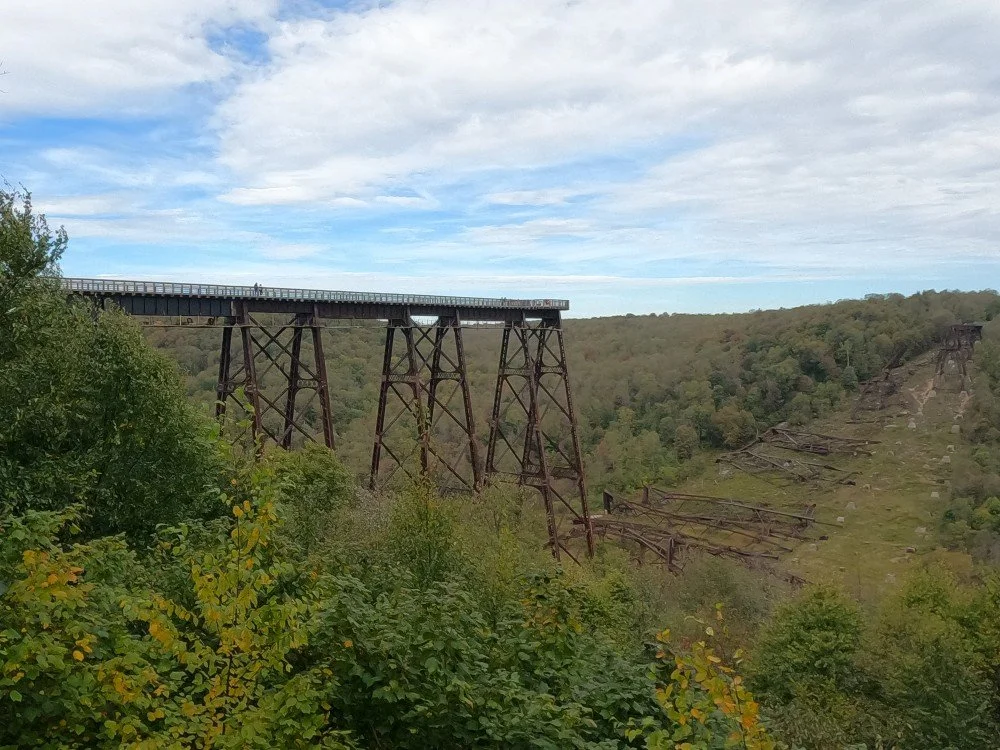
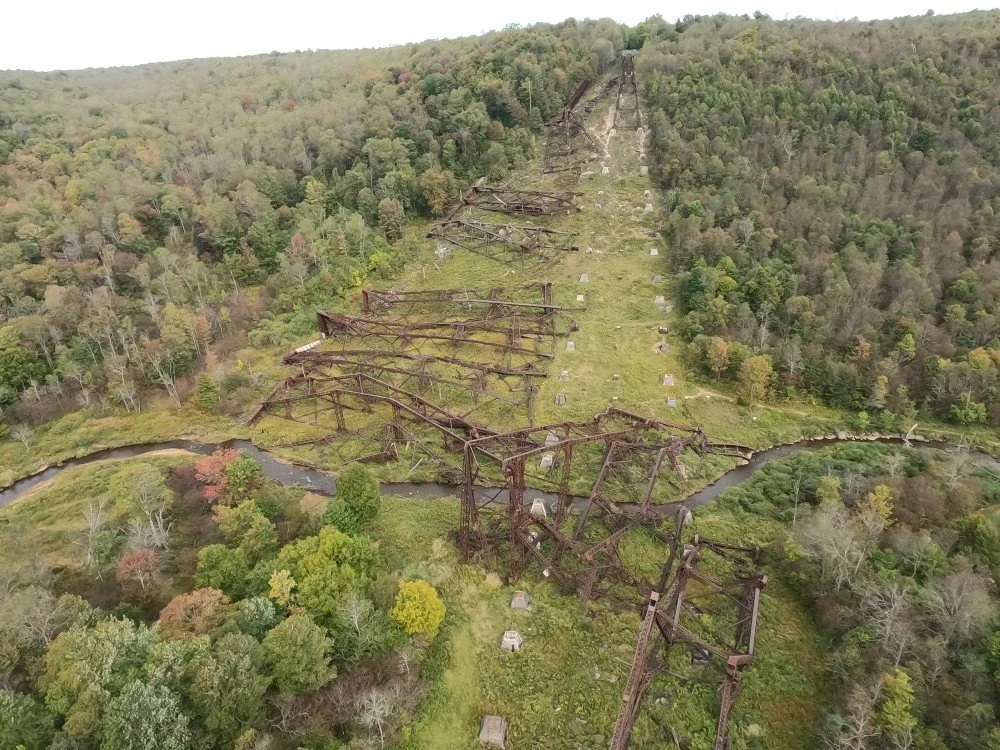
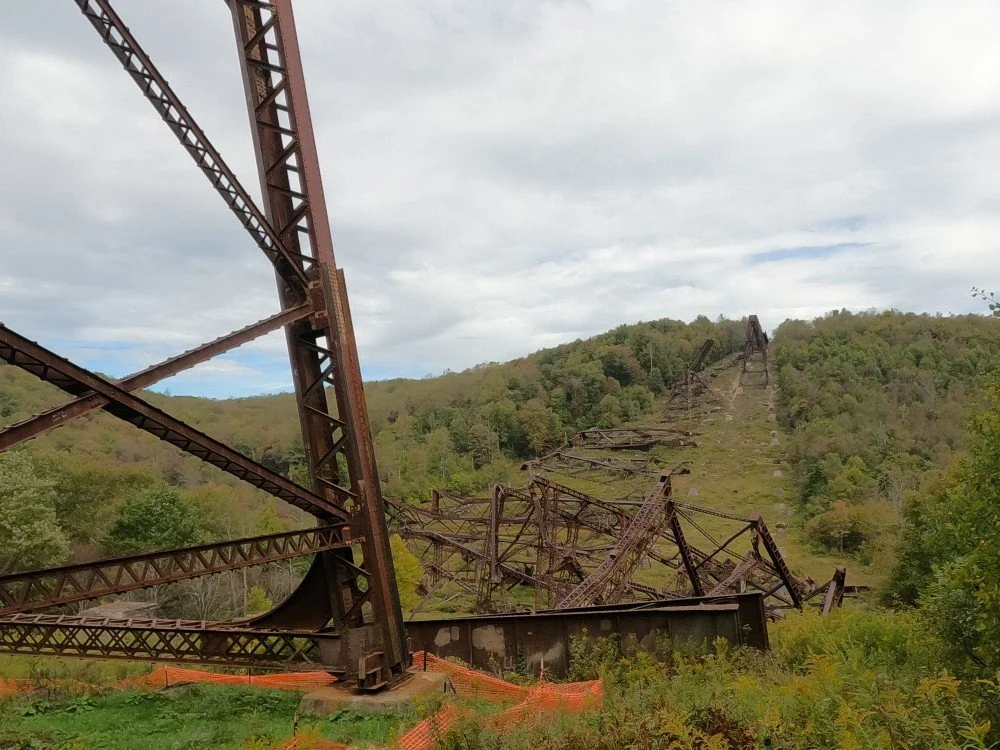
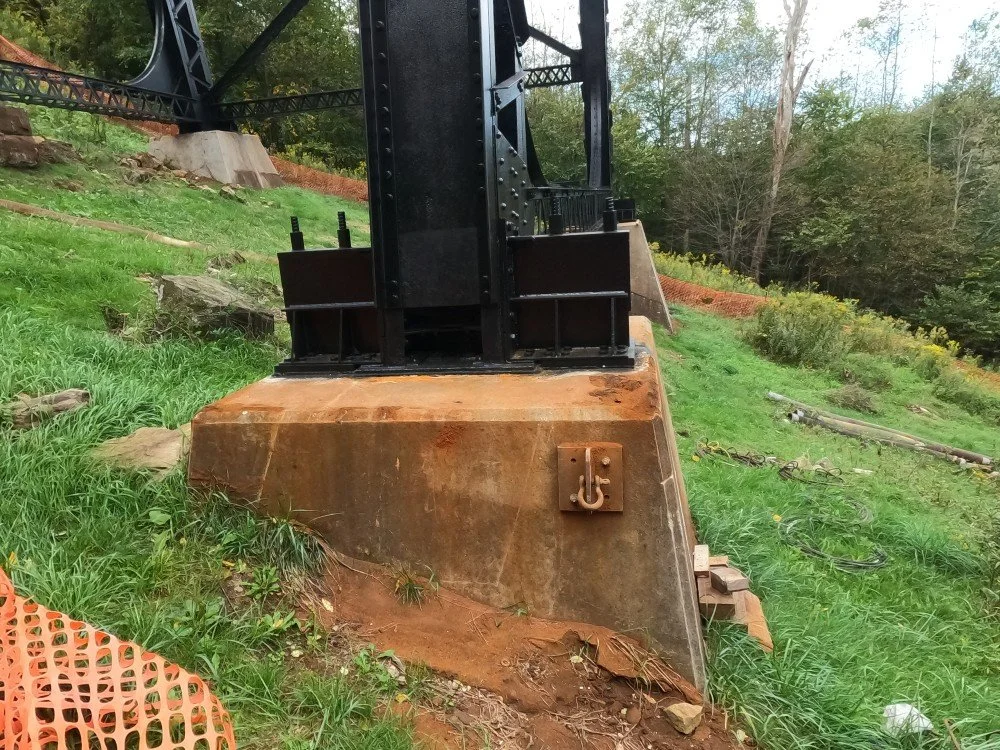
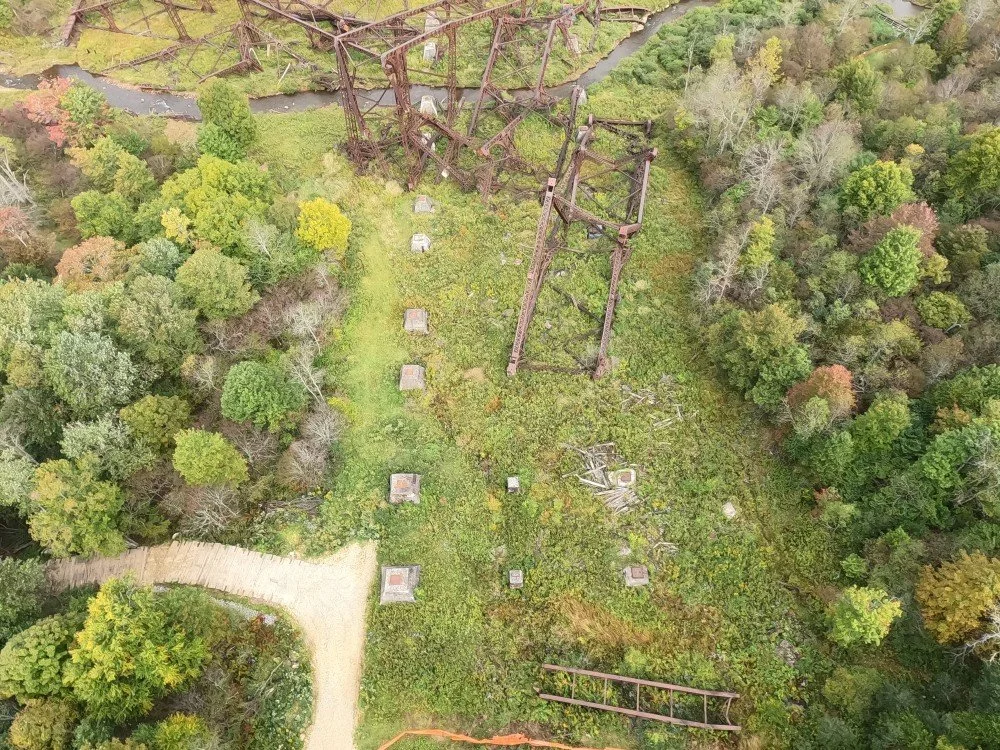
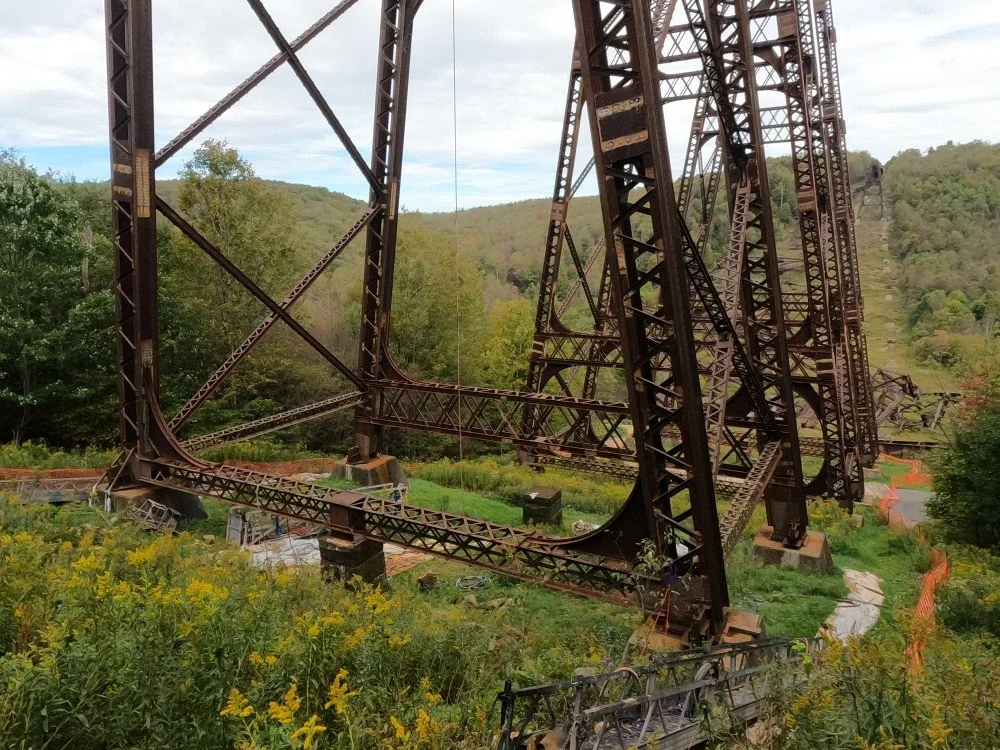
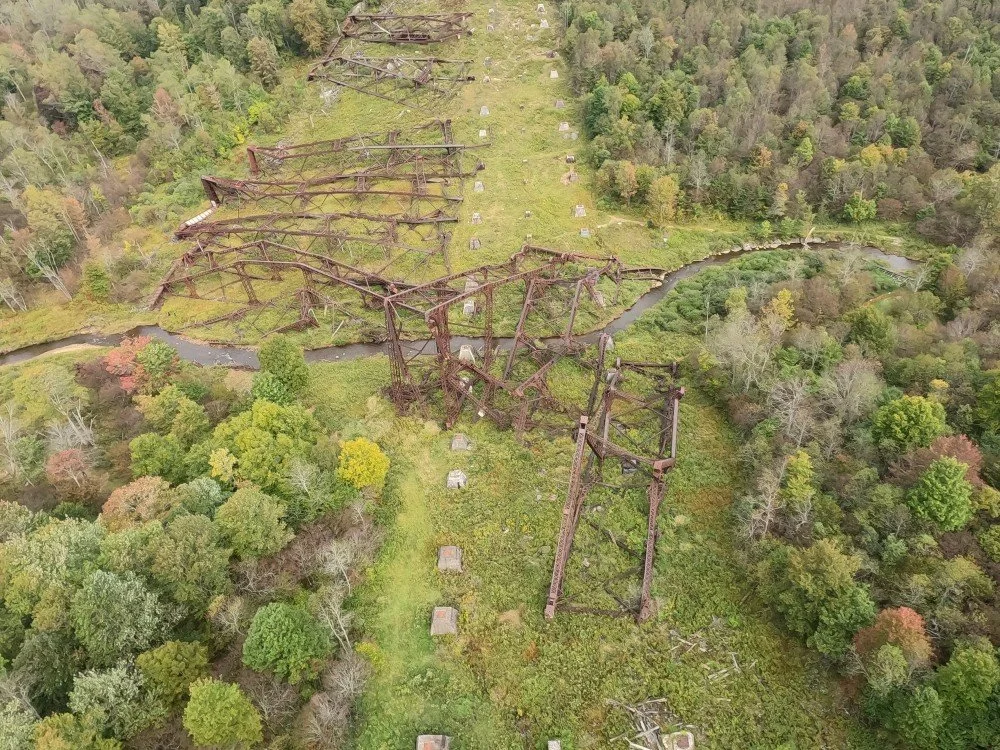
On July 21, 2003, an F1 tornado struck the bridge, causing 11 of the 20 bridge towers to collapse. The failure was caused by badly rusted iron base bolts holding the bases of the towers to the concrete anchor blocks. These were the bolts that were reused from the original structure. It is hypothesized that the whole structure oscillated laterally four or five times before fatigue caused the bolts to fail. The towers fell intact and suffered damage when they hit the ground.
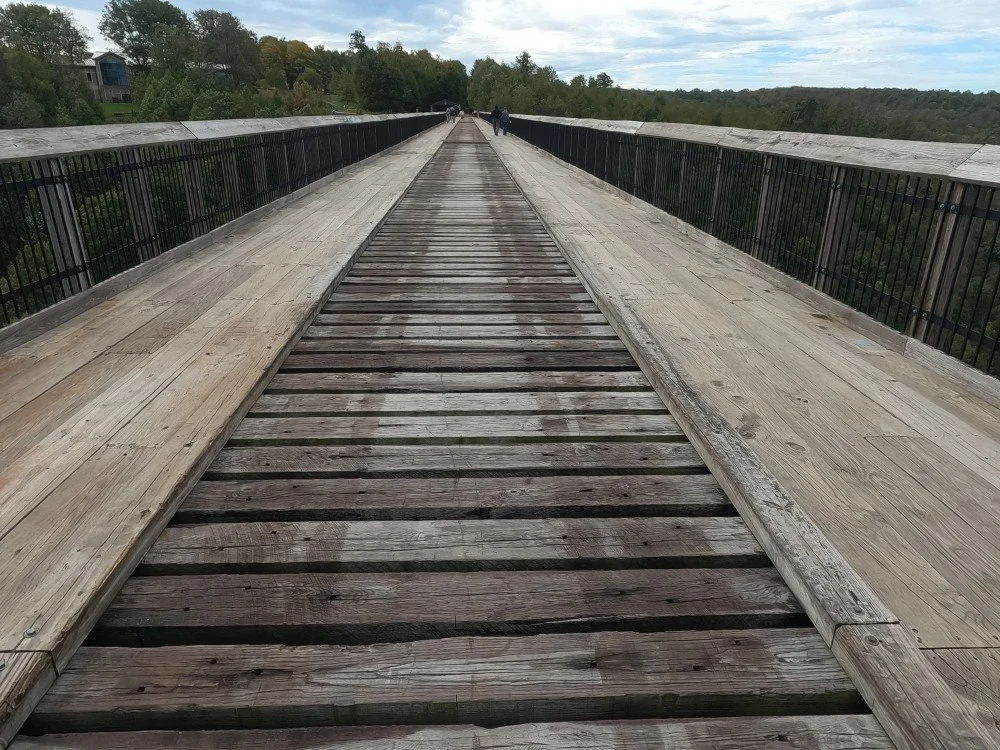
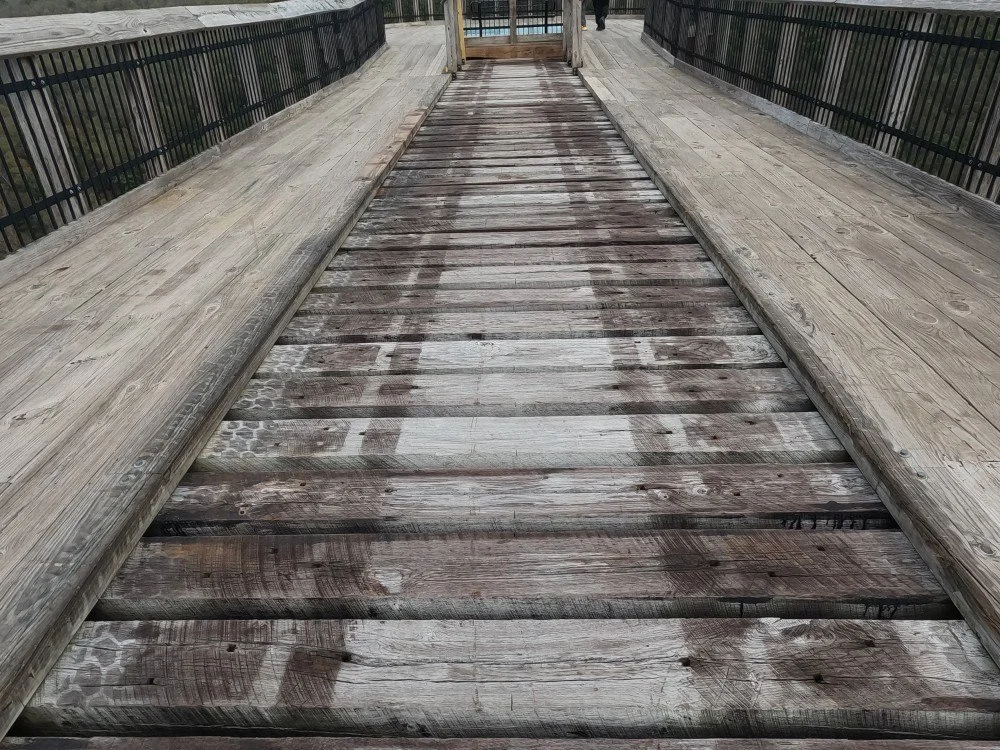
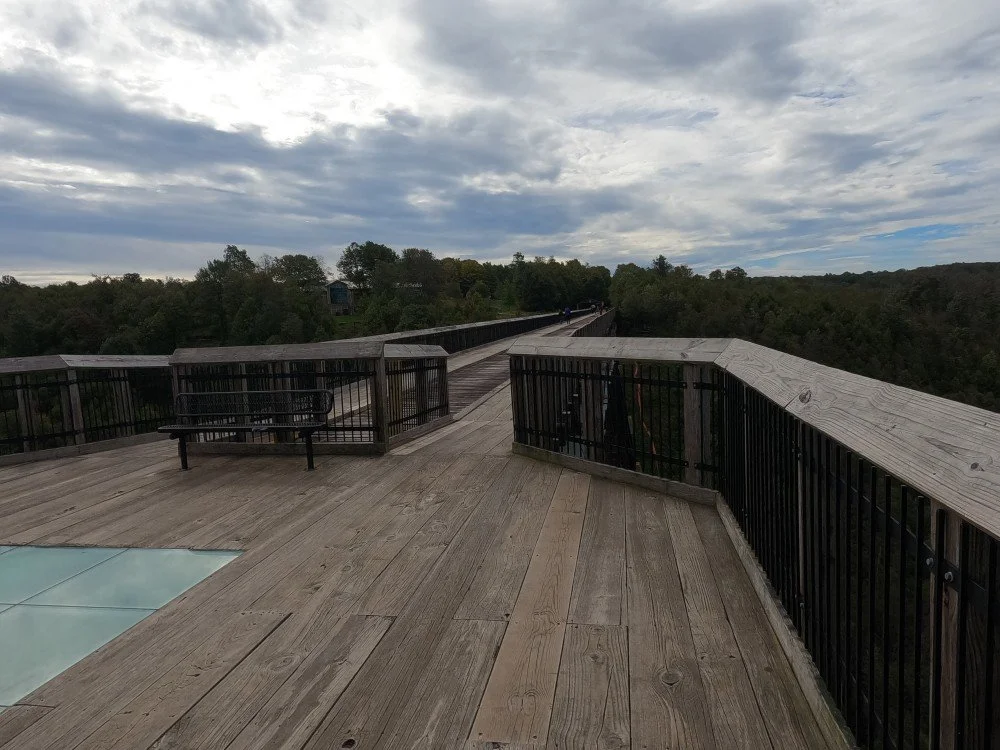
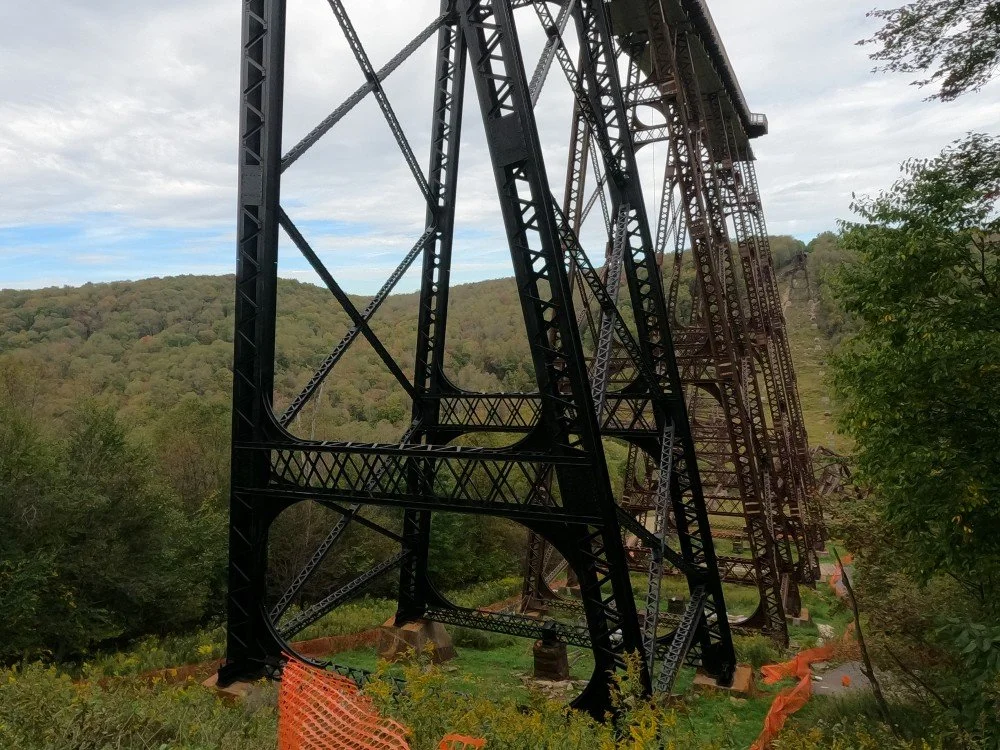
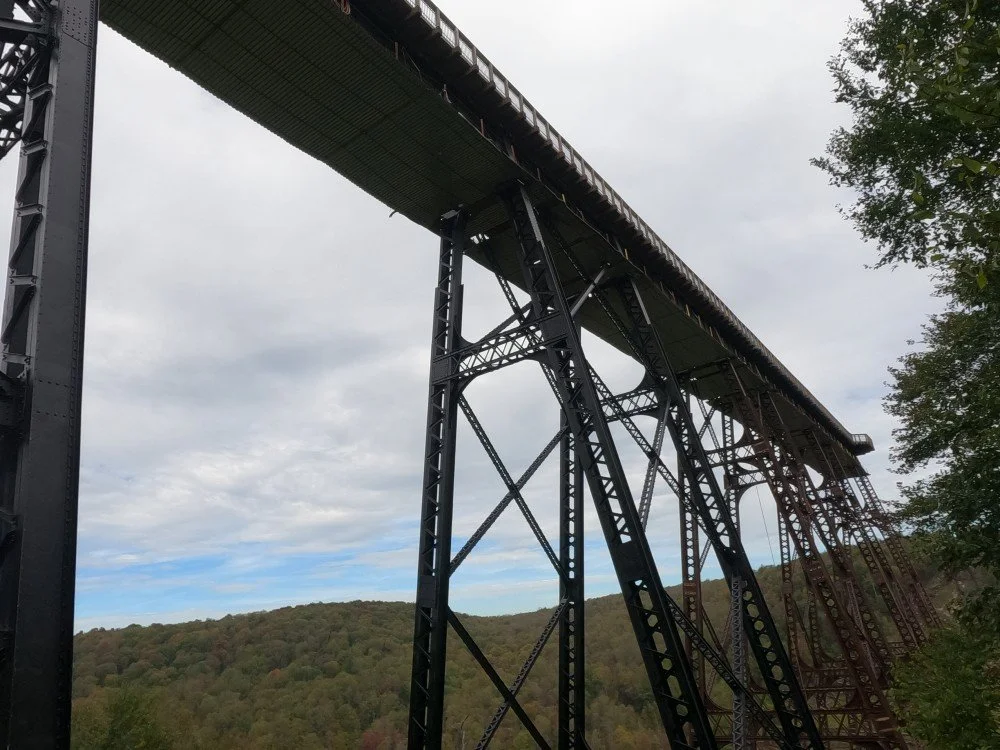
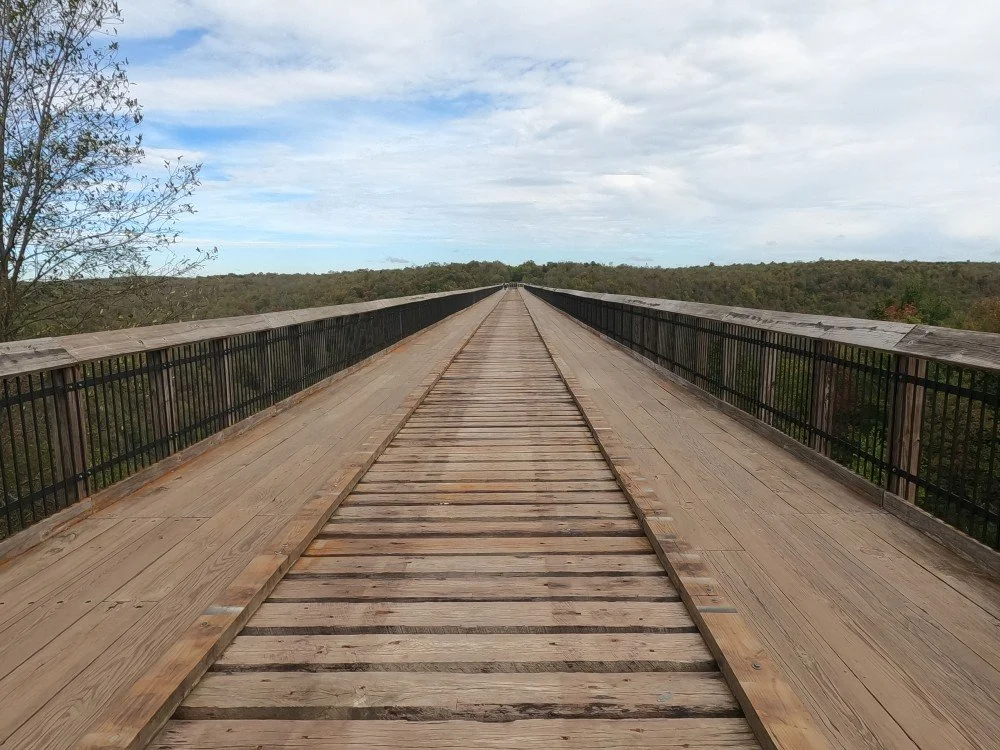
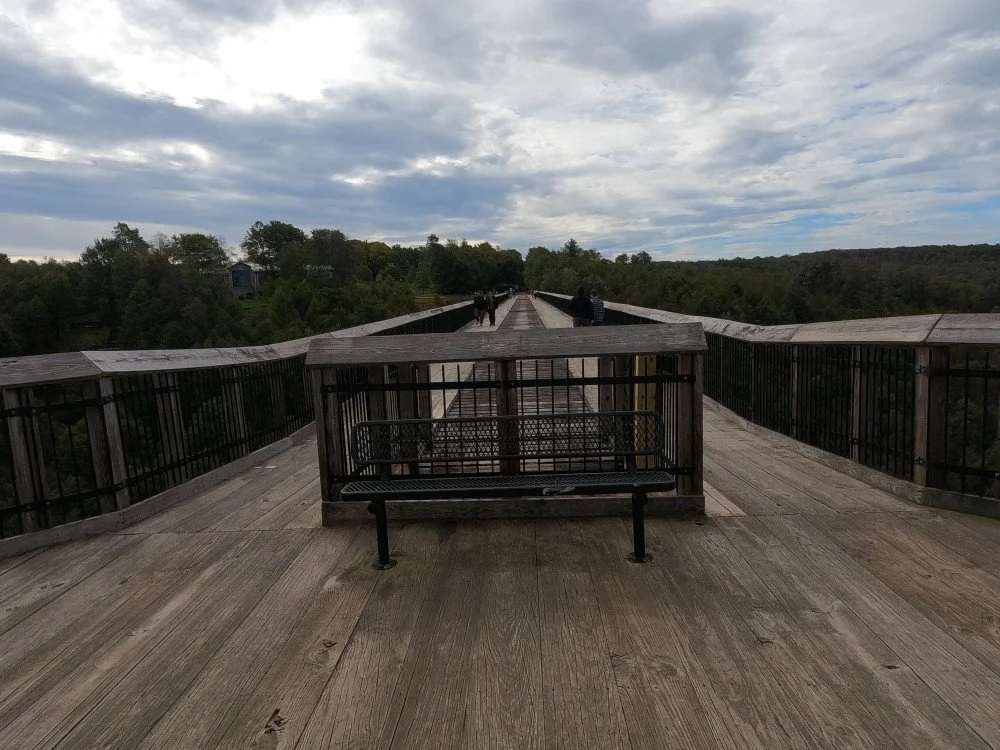
The cost to rebuild the bridge was prohibitive, and instead, the state decided to use the ruins as a visitor attraction to show the forces of nature at work. The remaining structure was strengthened and opened as a Skywalk in 2011.
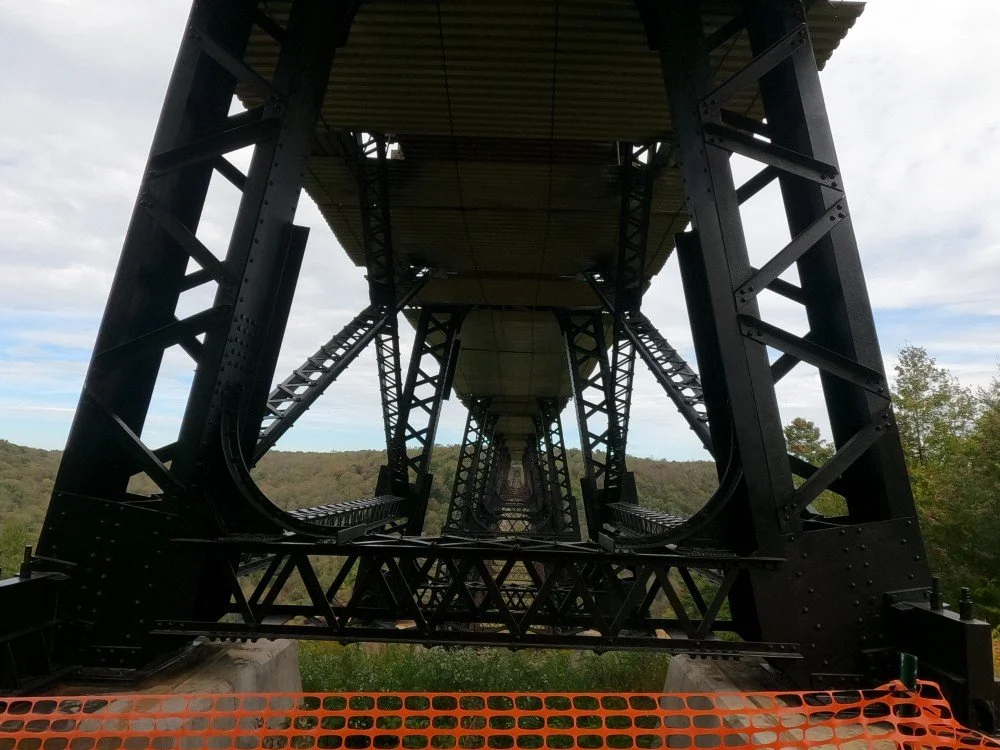
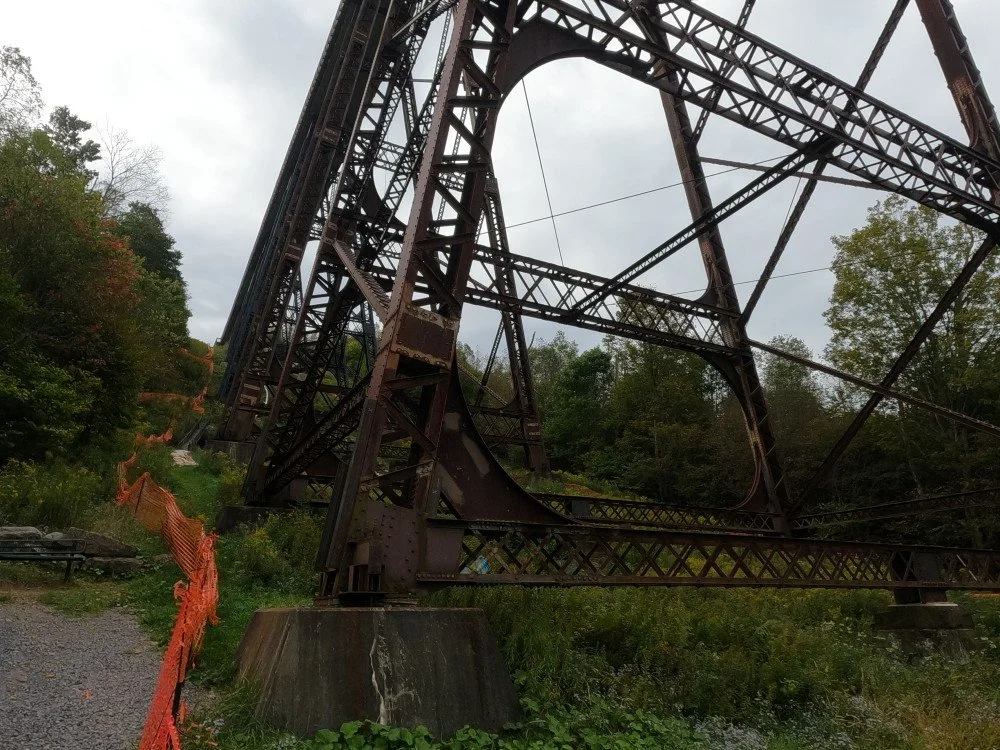
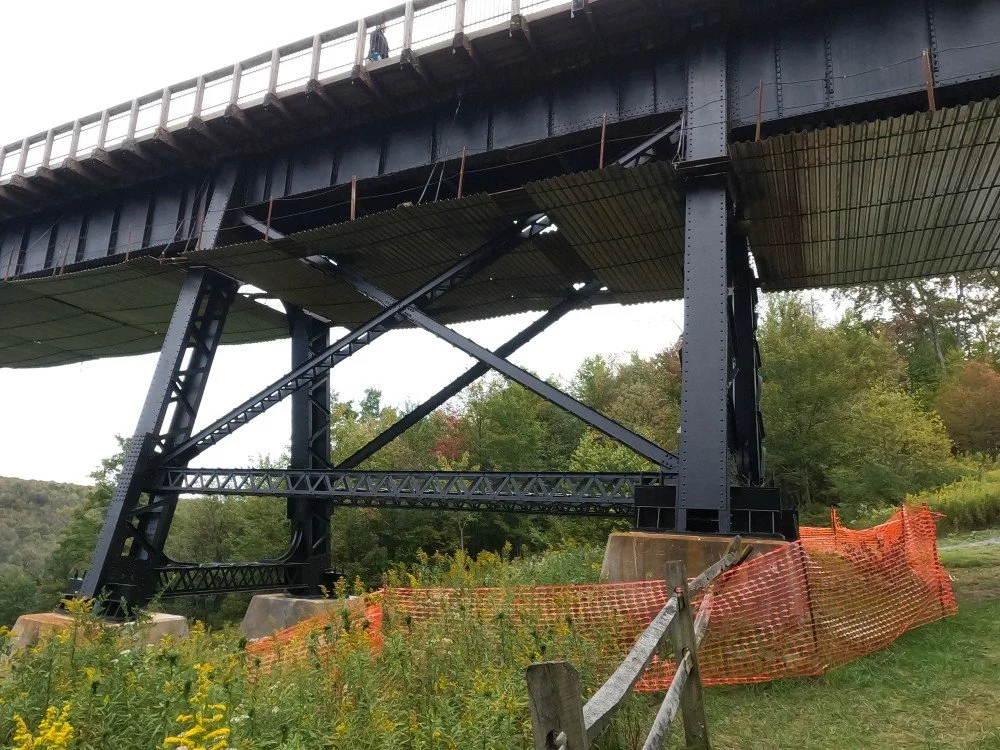
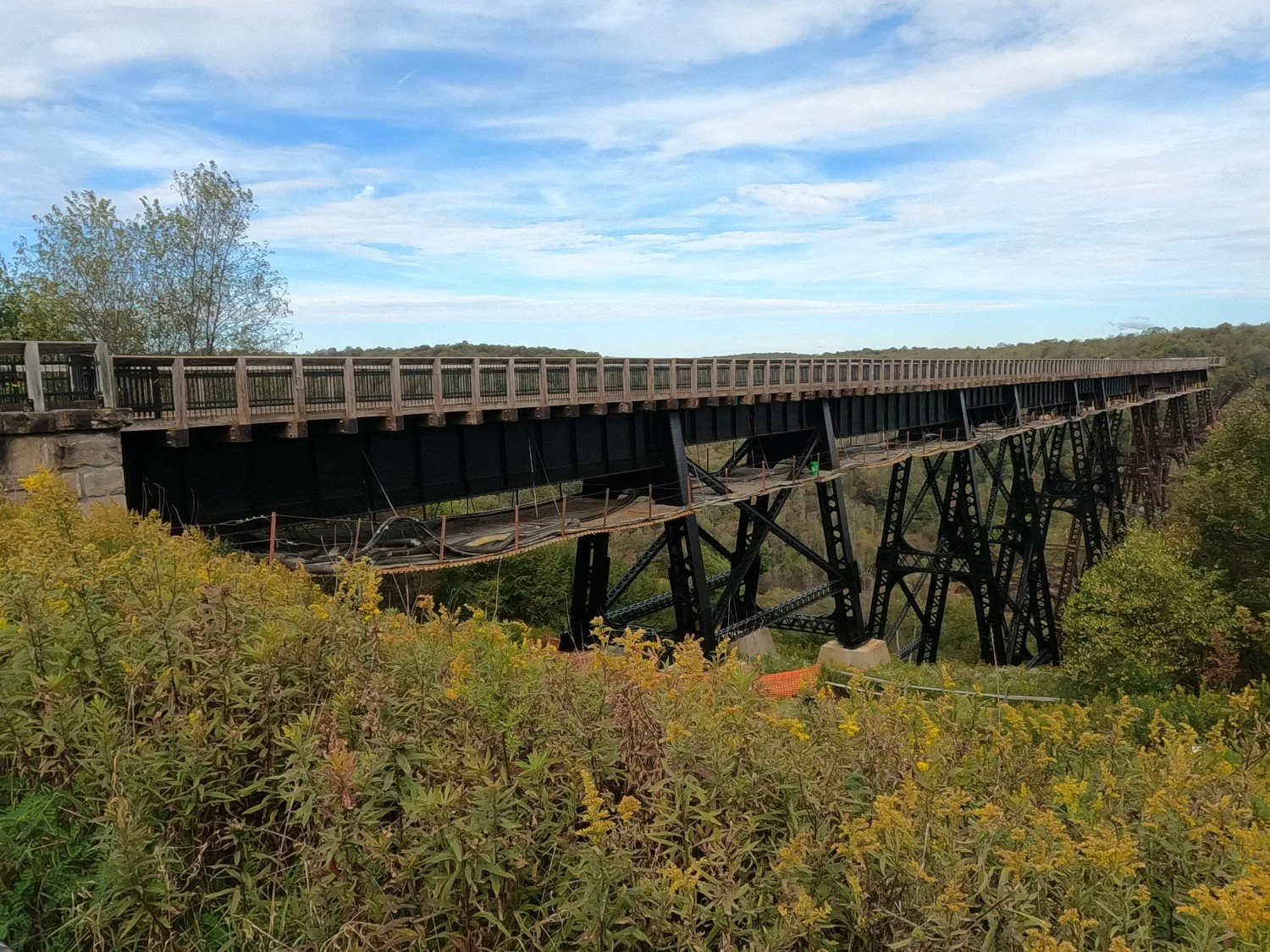
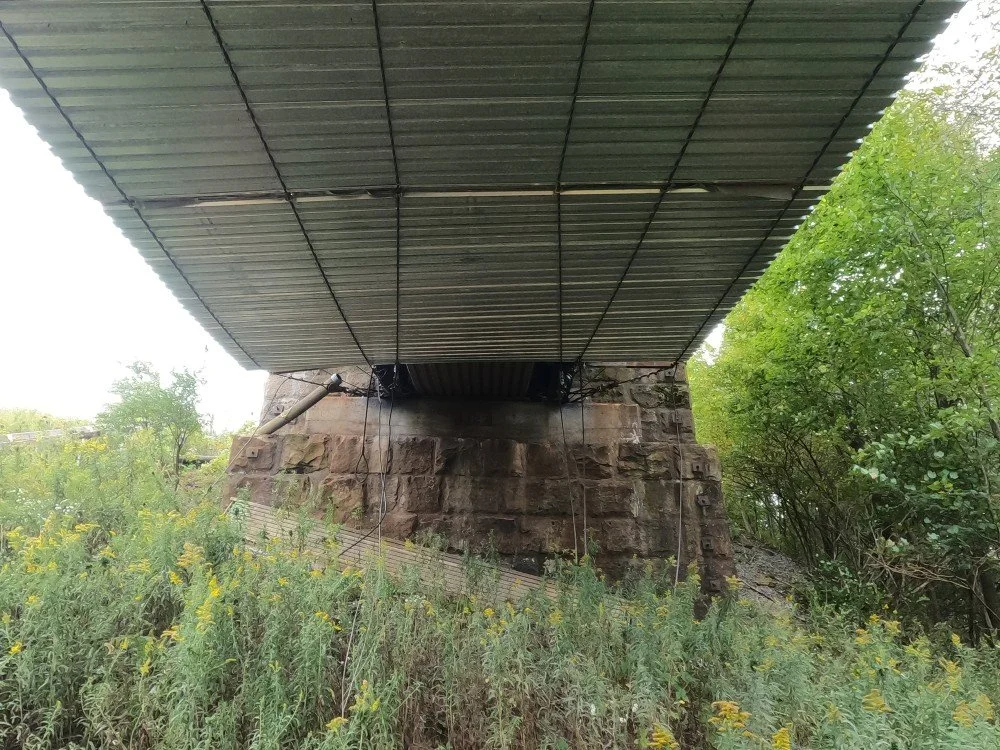
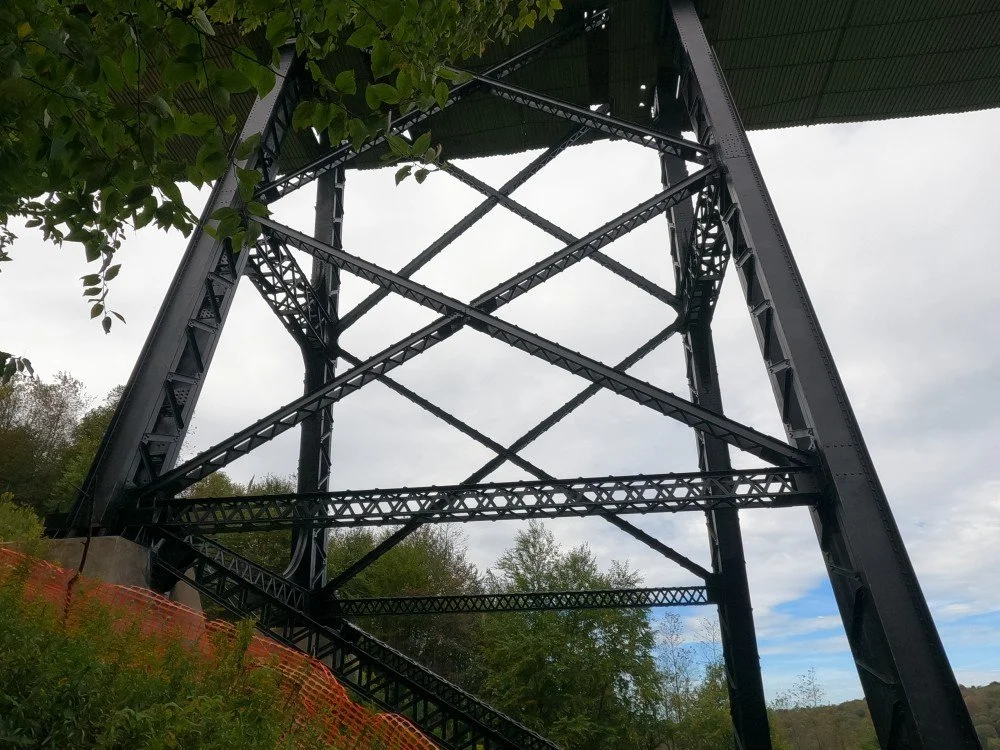
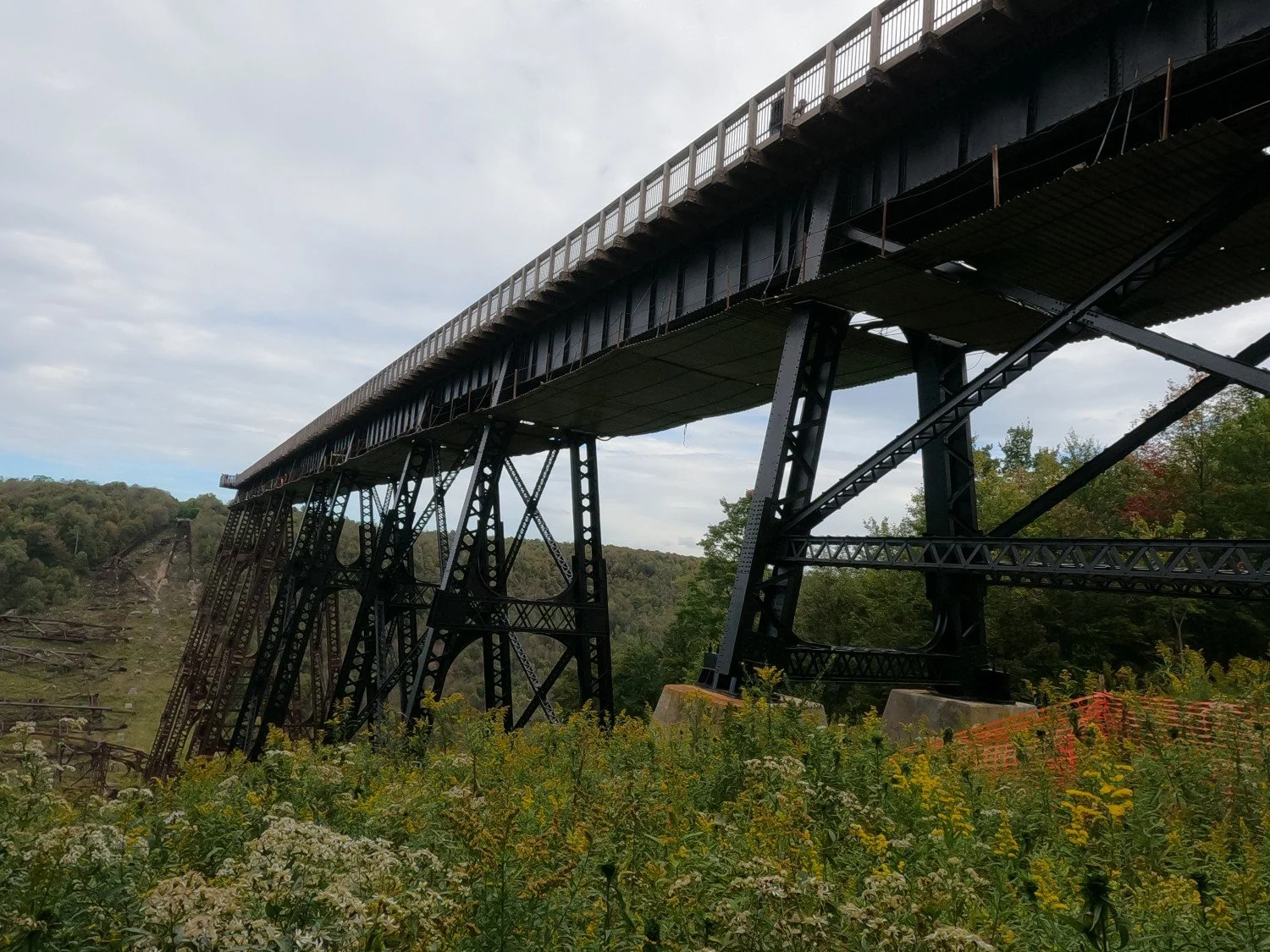
The Skywalk is undergoing renovations from 2025 to 2027 and is closed except for brief periods during the fall foliage seasons. The safe span scaffolding can be seen under the bridge in these pictures. This renovation includes adding new steel to some areas which have deteriorated, as well as repainting the structure. The decking and railroad ties are also being removed and reinstalled.
References
Madera, Britt. “Things to Do Around Kinzua Bridge State Park During Skywalk Renovations.” Pennsylvania Wilds, 20 Jan. 2025, https://pawilds.com/things-to-do-kinzua-bridge-renovations/. Accessed 12 Oct. 2026.
Northeast Times. “Kinzua Bridge State Park: History and Things to Do.” Northeast Times, 6 May 2025, https://northeasttimes.com/entertainment/kinzua-bridge-state-park-activities/. Accessed 12 Oct. 2026.