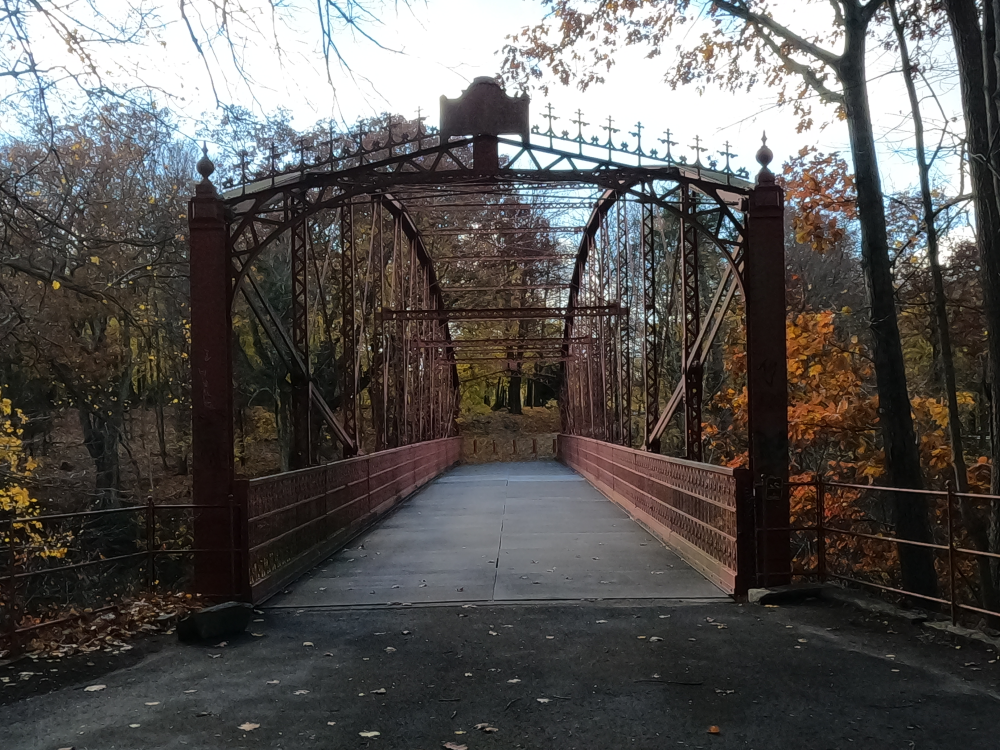
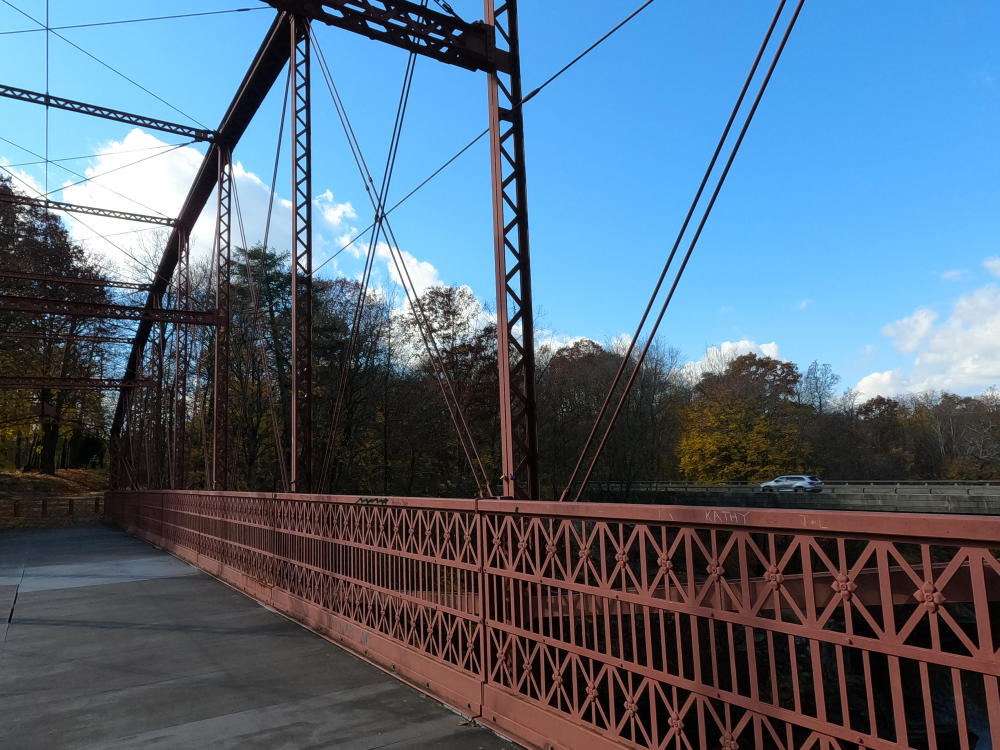
Lovers Leap Bridge
NBI Information
Location
State: Connecticut
County: Litchfield County
Feature Carried: Pedestrian Path
Feature Crossed: Housatonic River
Latitude, Longitude: 41.5442,-73.4070
Structure Open, Posted, or Closed to Traffic: Open to Pedestrians
History
Year Built: 1895
Year Closed: 1977
Picture Date: November 8, 2025
Geometry
Lanes on Structure: 1
Lanes under Structure: 0
Number of Main Spans: 1
Main Structure Type: Truss - Thru
Main Structure Material: Metal
Condition
Bridge is not on the National Bridge Inventory
Bridge Information
The Lovers Leap Bridge is one of the last remaining lenticular truss bridges in Connecticut. It was built in 1895 and was one of the last iron bridges built by the Berlin Iron Bridge Company, as steel was rapidly becoming the preferred bridge building material. The nearby Boardman Bridge was built a few years prior, and the local officials in New Milford were pleased by that bridge that they decided to go with a similar design.
The bridge operated until 1977 when the adjacent Grove Street Bridge was opened. It was then closed to traffic and was abandoned. In 1994 efforts to restore the bridge began. The restoration took place from 2004 to 2006 and coincided with the formal dedication of Lovers Leap State Park in 2007. Unfortunately, this rehabilitation made numerous changes to the design of the bridge, which diminished its historical significance.
The bridge and the surrounding state park were both named after the nearby Lover’s Leap, which is a dramatic cliffside that plunges into the Housatonic River. According to Native American Legend, Princess Lillinonah, the beautiful daughter of Chief Waramaug of the Weantinock tribe, found a white man lost in the woods and the two instantly fell in love. The two returned to her village along the banks of the great falls, where she fed and cared for him. He stayed with her until the beginning of winter, when he left, promising to return. Lillinonah waited for him to return, but as time passed, she despaired and Chief Waramaug decided to marry her to a member of their tribe. Before the wedding, Lillinonah boarded a canoe and rowed toward the great falls and certain death. Just as her boat entered the falls, the young man returned through the woods. Upon spotting Lillinonah, he threw himself into the water to go over the falls with her, and they both perished.
References