Sarah Mildred Long Bridge
NBI Information
Location
State: New Hampshire and Maine
County: Rockingham County and York County
Feature Carried: US-1 Bypass
Feature Crossed: Piscataqua River
Latitude, Longitude: 43.0867,-70.7610
Toll: On free road
Maintenance Responsibility: State Toll Authority
Structure Open, Posted, or Closed to Traffic: Open, no restriction
History
Year Built: 2018
Historical Significance: Historical significance is not determinable at this time.
Year Reconstructed: None
Picture Date: August 9, 2025
Geometry
Lanes on Structure: 2
Lanes under Structure: 5
Skew: 0 degrees
Number of Main Spans: 1
Main Structure Type: Movable - Lift
Main Structure Material: Steel
Number of Approach Spans: 10
Approach Structure Type: Channel Beam
Approach Structure Material: Prestressed Concrete
Condition
Inspection Date: April 2023
Deck Condition: Very Good
Superstructure Condition: Very Good
Substructure Condition: Very Good
Channel Condition: Very Good
Culvert: Not Applicable
NBI Year: 2024
Bridge Information
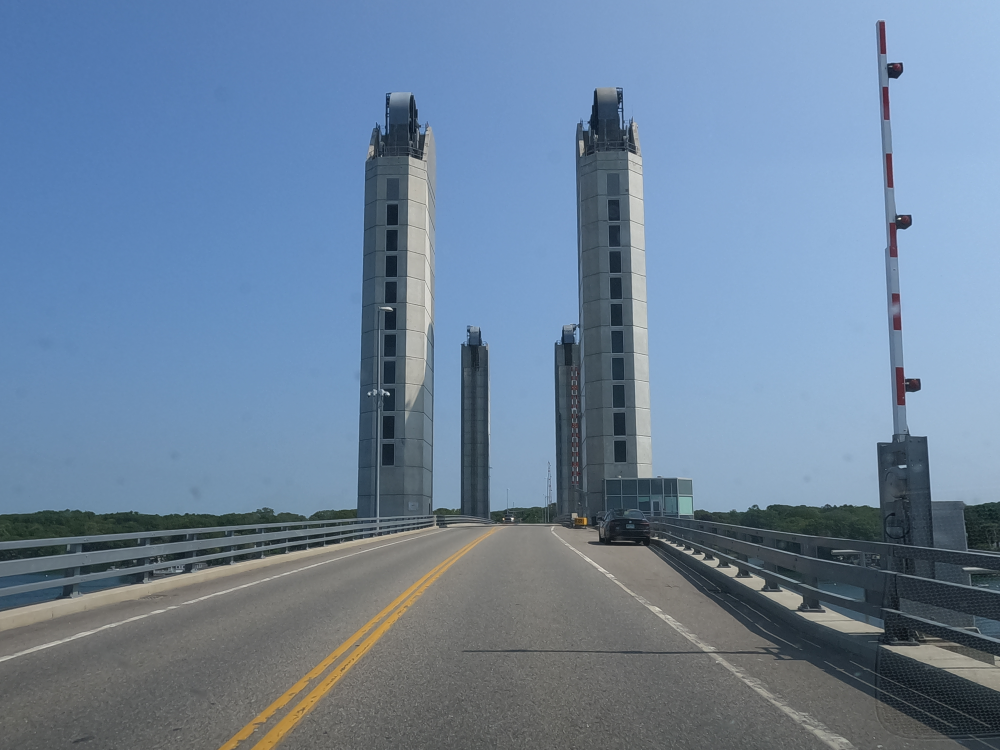
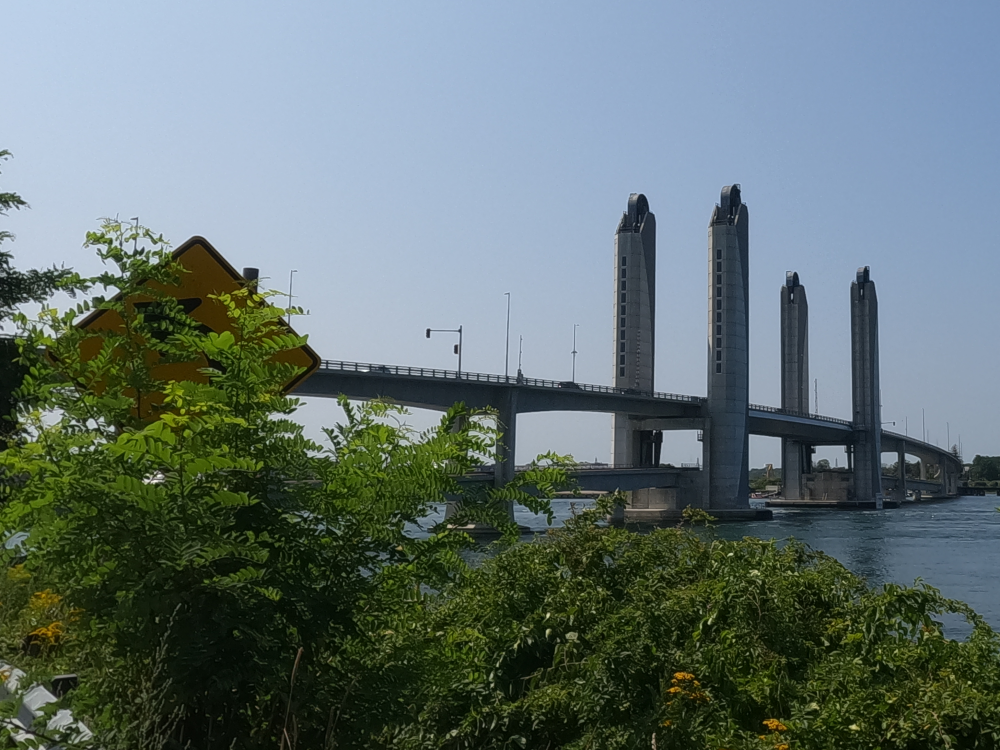
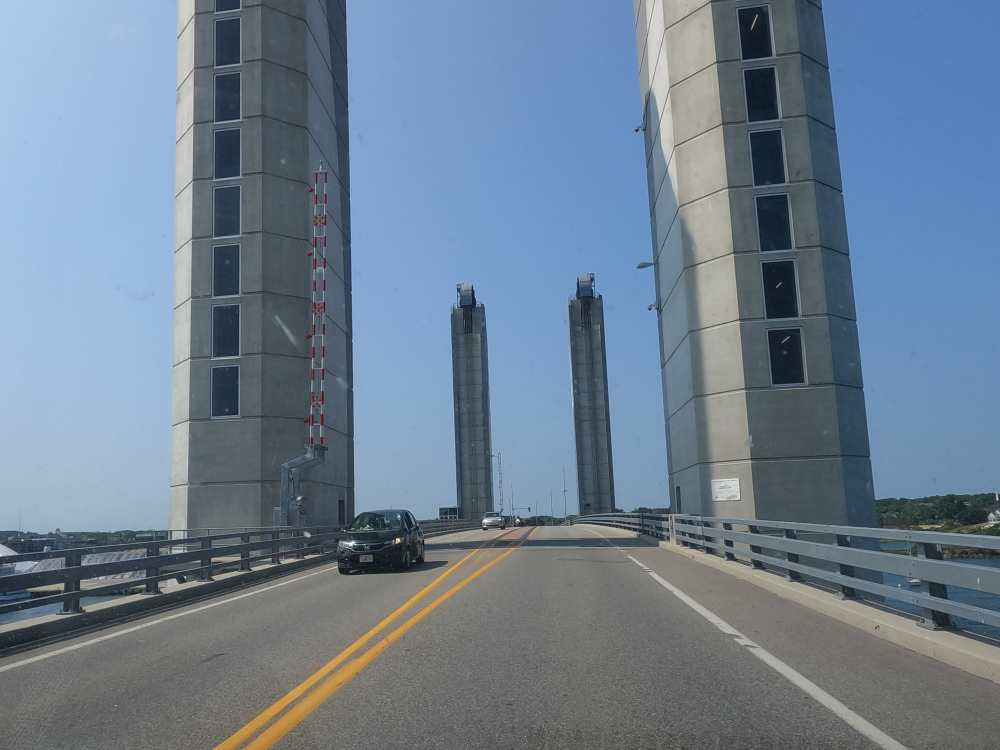
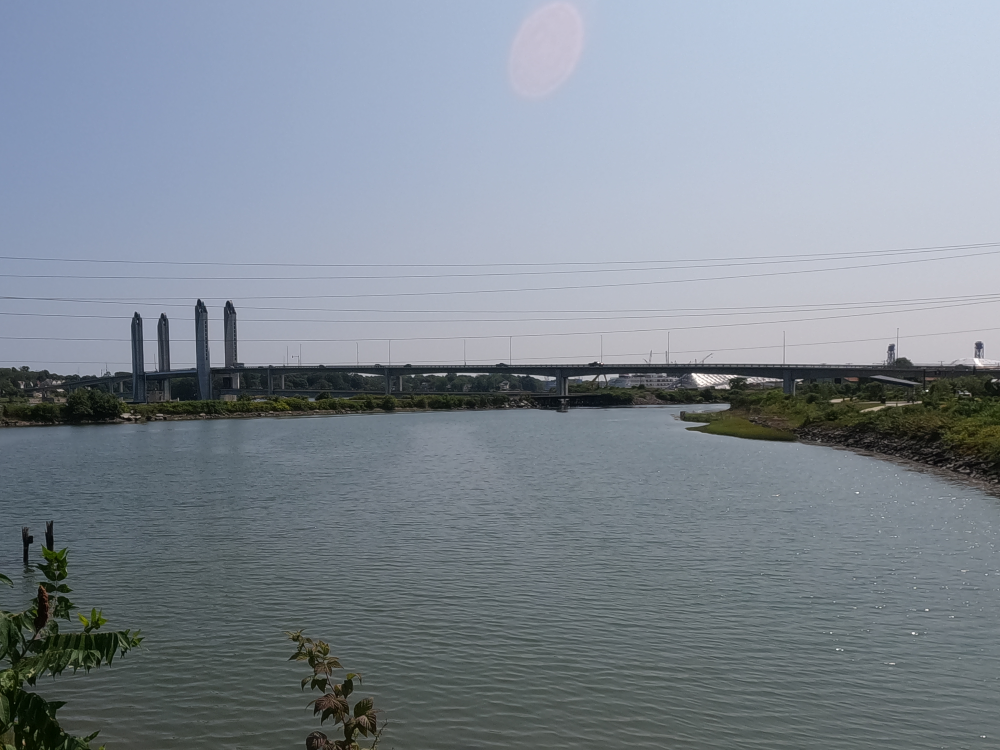
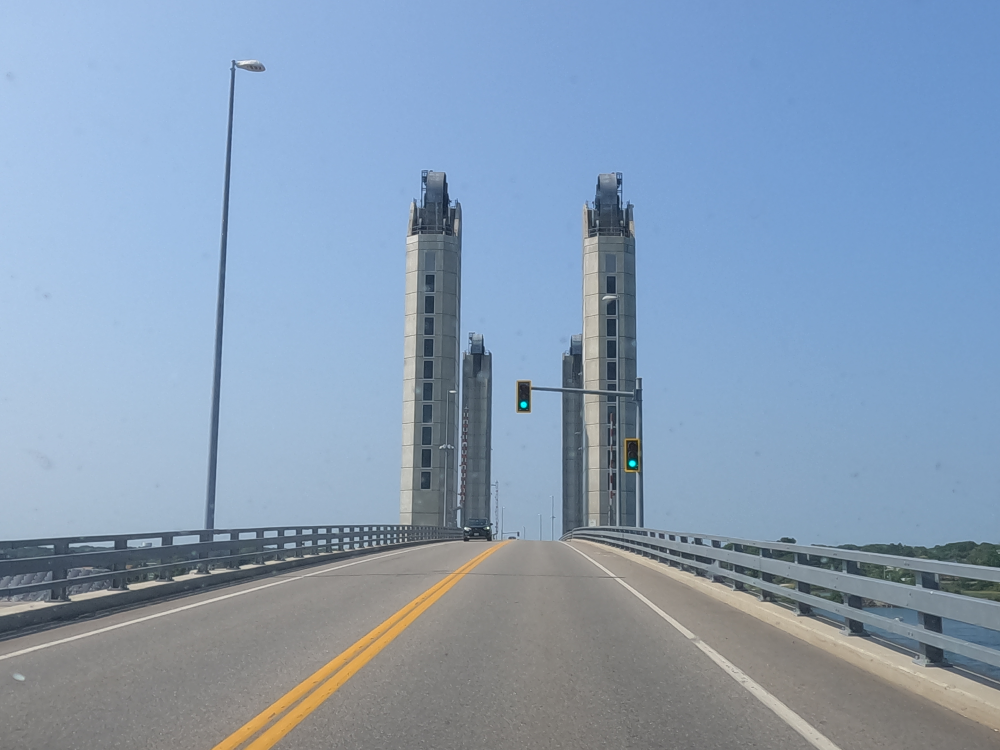
The Sarah Mildred Long Bridge is a vertical lift bridge that connects Maine and New Hampshire over the Piscataqua River. It was built to allow for larger cargo ships to travel up the river in the wake of the Panama Canal expansion.
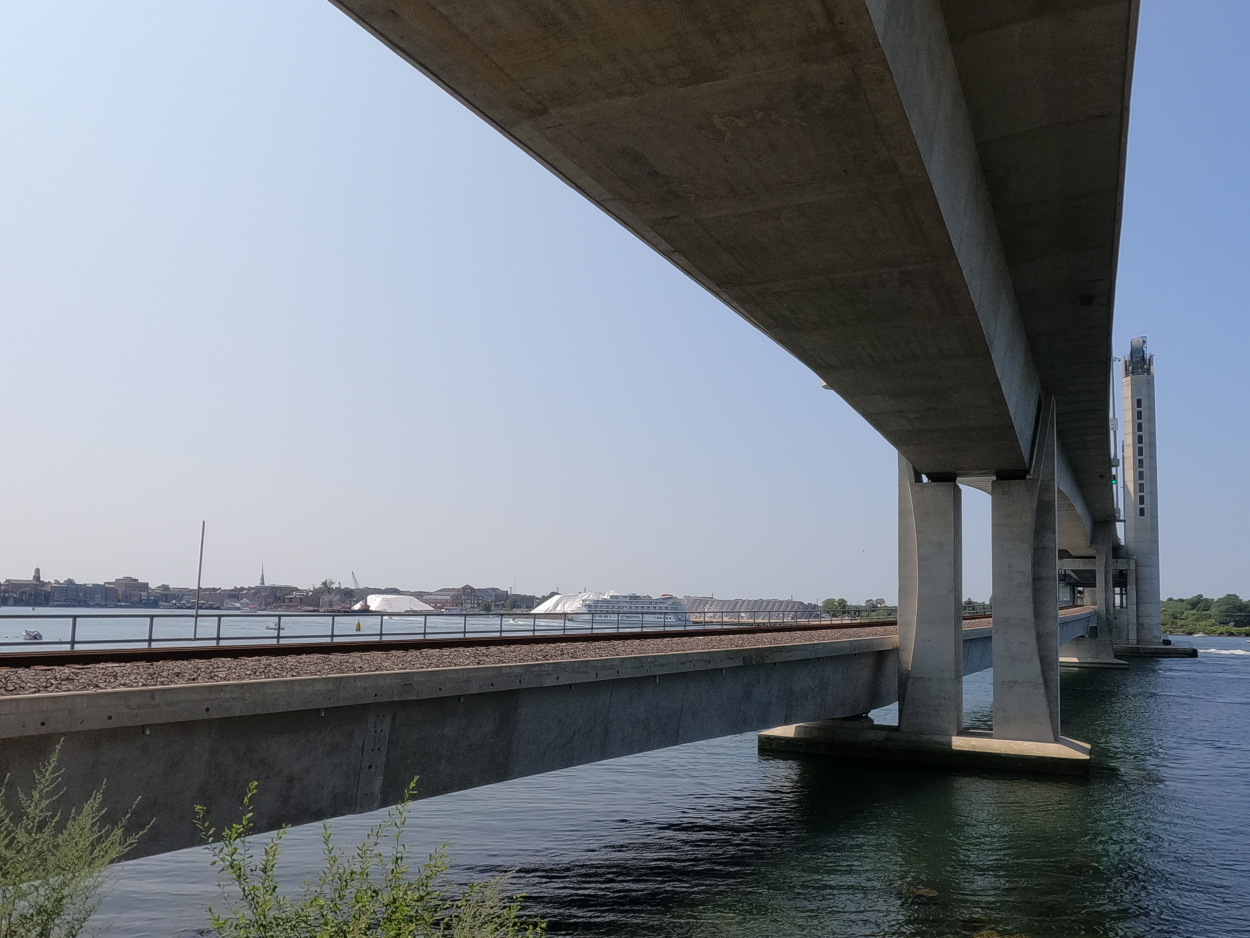
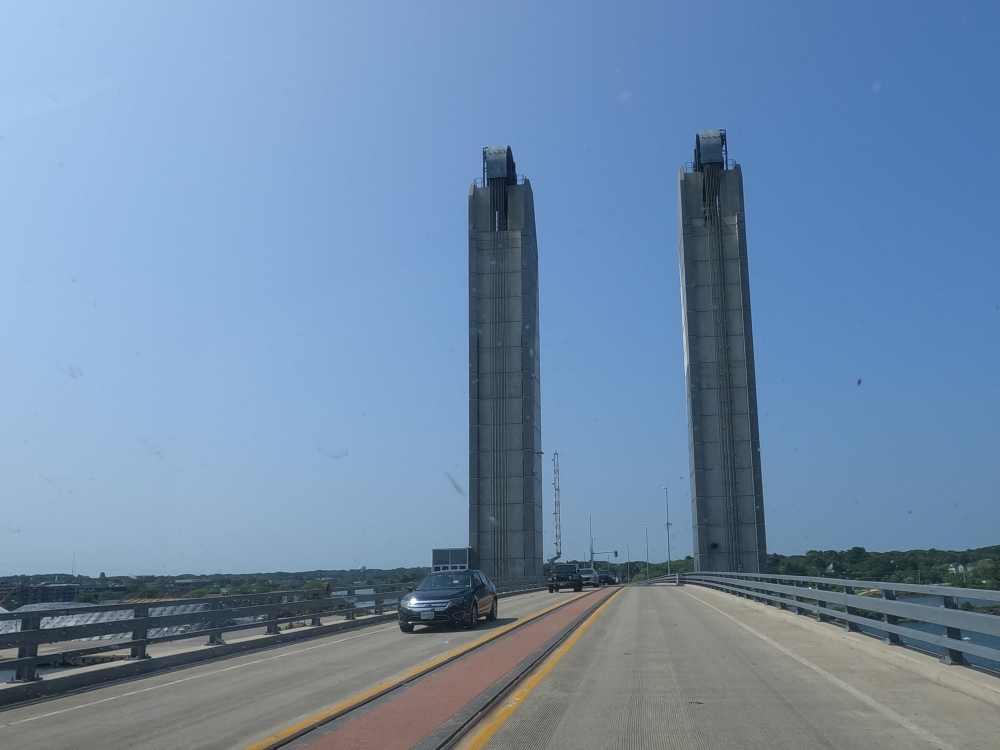
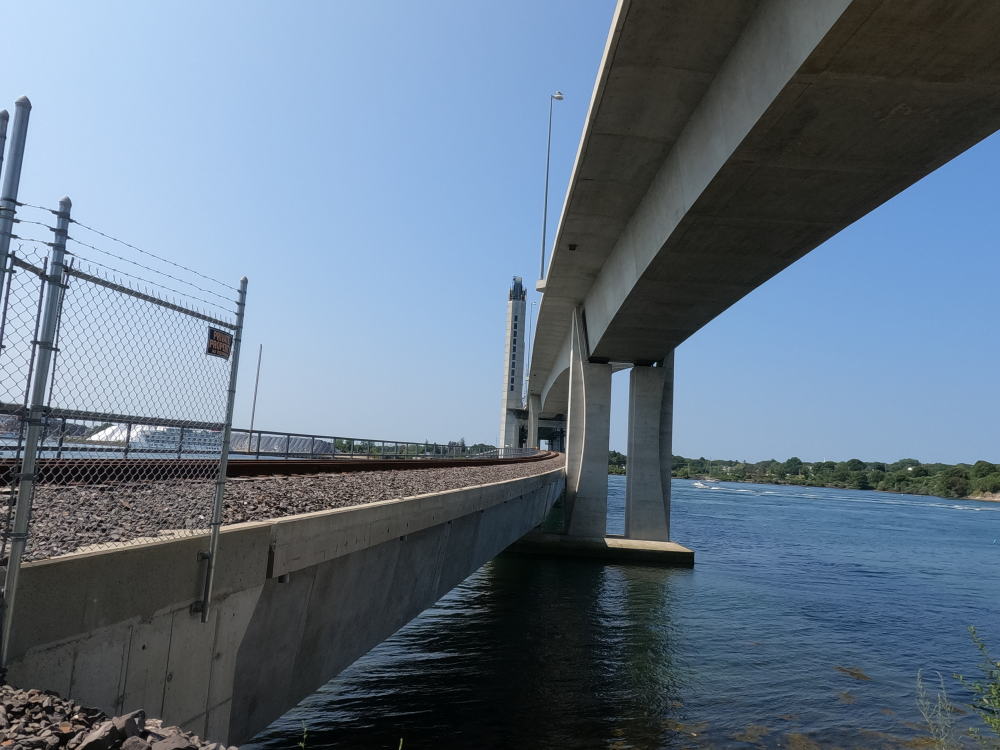
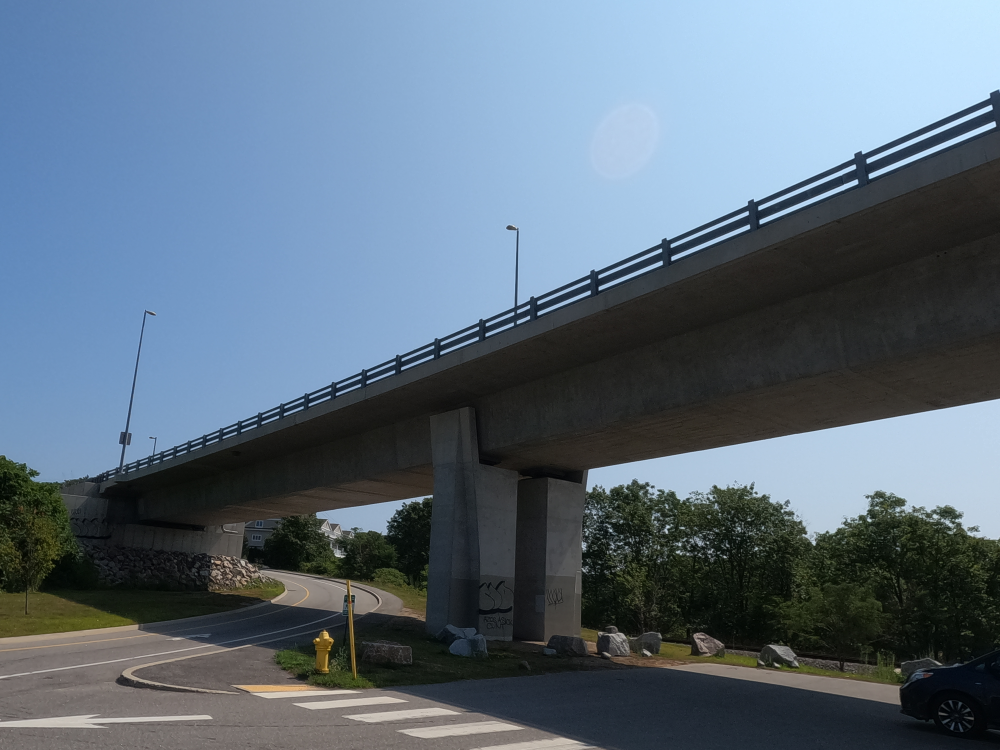
This bridge is coined “three bridges in one” as it serves three modes of transport. The approach spans have two levels, with the upper level carrying vehicular traffic and the lower level carrying rail traffic to the naval shipyard. The dual-use lift section has an integrated set of rails in the median and lowers to the railroad level when rail traffic must cross. The bridge also acts as a traditional lift bridge to allow large ships to pass underneath.
The bridge is one of the first bridges to use precast post-tensioned concrete for the lift span towers. The towers are hollow to accommodate the lift span counterweight and maintenance access stairs. In addition, the operating machinery is located in the tower base instead of at roadway level. The 300-foot-long lift span is constructed from steel box girders. These boxes were fabricated off-site, traveled by rail to a waterfront facility, then were barged to the bridge site. The approach spans for both the levels utilized precast post-tensioned box segments, with a total of 355 segments being used. These were also constructed off site and were transported to the site by tractor trailer. They were erected using the balanced cantilever construction method using both land-based cranes and barge-mounted cranes. The railroad bridge was constructed first and was used as a work platform to construct the vehicular bridge.
One of the biggest challenges during construction was the Piscataqua River itself. This river has tidal swings up to 8 feet, and river flow velocities of up to 4.5 miles per hour, which ranks it within the top six highest velocities in the United States.
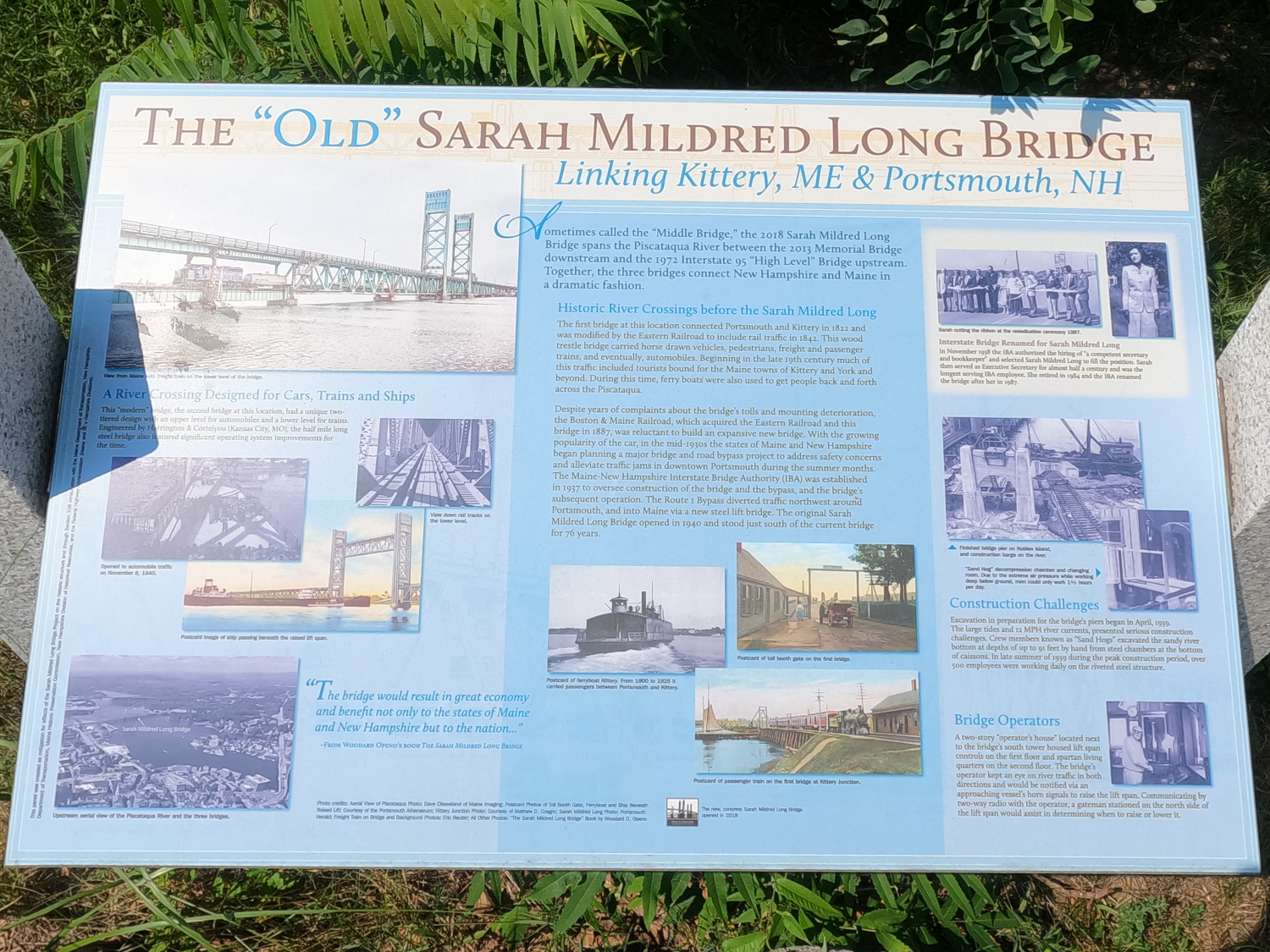
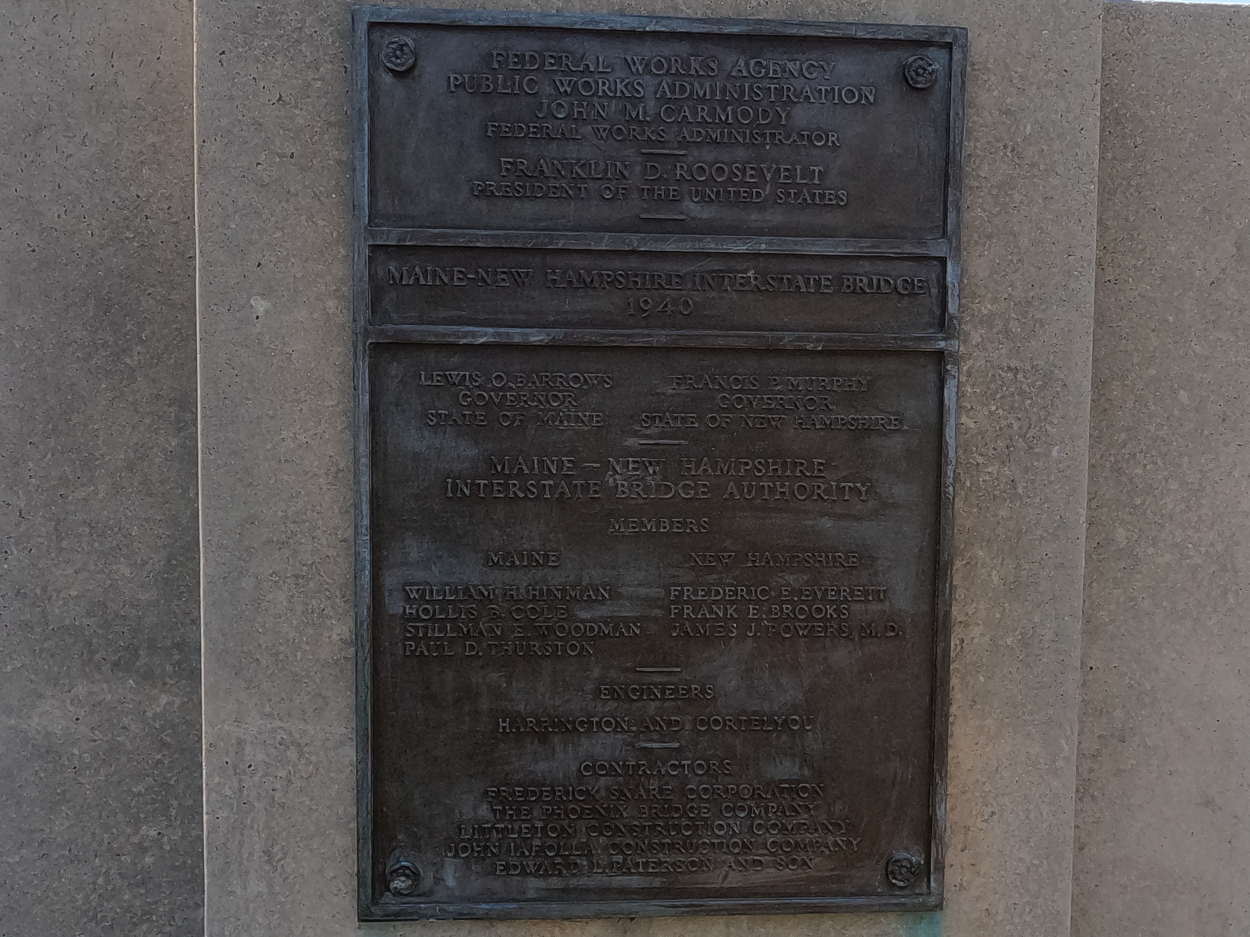
There was previously another bridge at this location with the same name, which was in operation from 1940 until 2016. Similar to the new structure, the previous bridge was a double decked structure, with vehicular traffic on the upper level and rail traffic on the lower level. The previous utilized a warren truss design between the levels. It also had two separate movable spans: the central main lift and a retractable bridge for rail traffic near the Kittery shore. When it wasn’t in use, this retractable span would lift and retract on top of railroad tracts within the trusswork. This allowed smaller boats to pass under the bridge without requiring the main lift span to operate. Retractable bridges are the rarest type of moveable bridge, with only about four remaining in the United States.
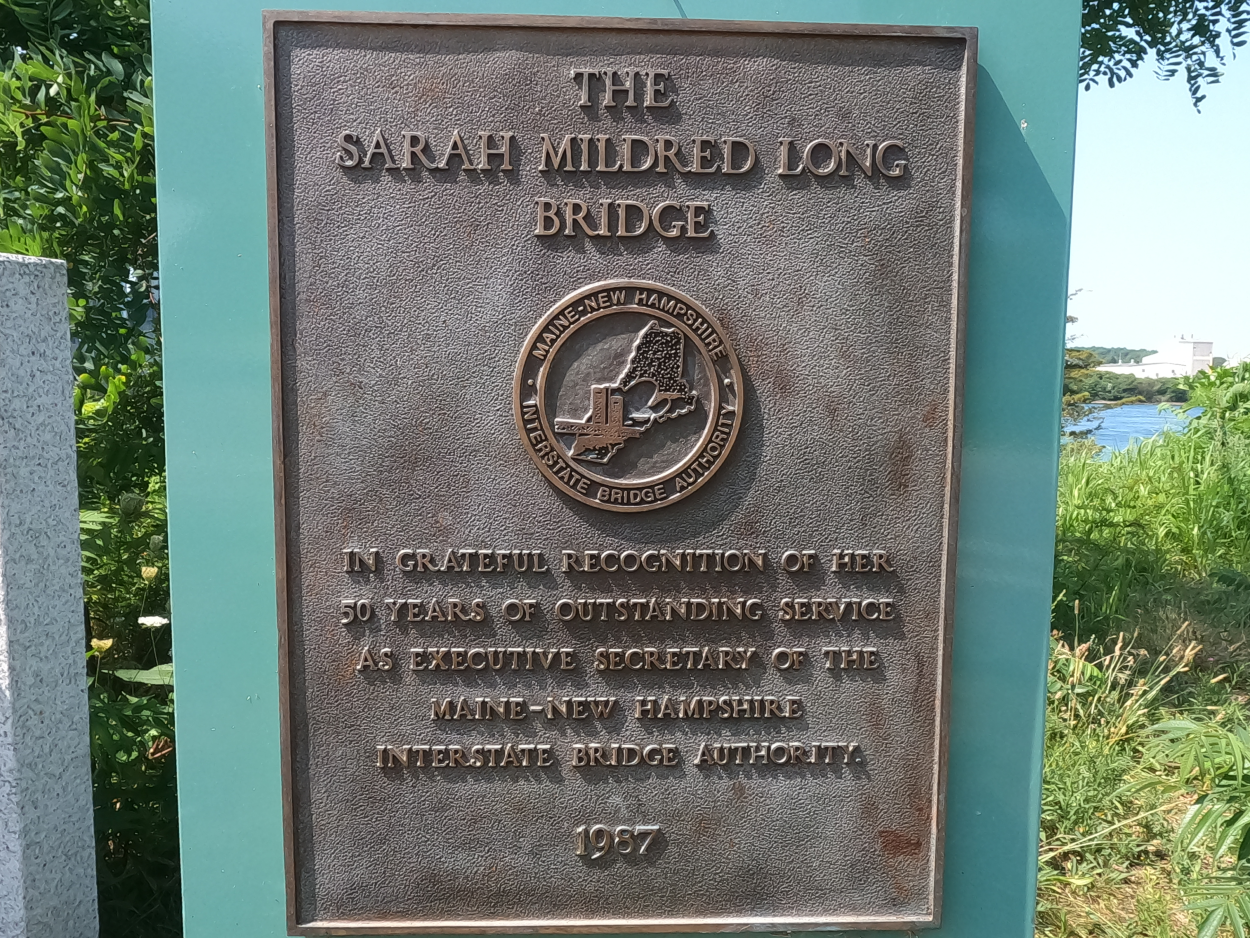
The bridge was originally called the Maine-New Hampshire Bridge, but it was renamed the Sarah Mildred Long Bridge in 1987 in honor of Sarah Mildred Long, the longest-serving employee of the Bridge Authority. The adjacent high level Piscataqua River Bridge was built in 1971, which reduced the traffic volume on this bridge. On April 1, 2013, a large tanker struck the bridge, which caused severe structural damage and required a temporary closure. The bridge was rapidly repaired and reopened on May 13, 2013.
On August 21, 2016, the bridge became stuck in the closed position due to mechanical failure. It was determined that one of the trunnions (the part that rotates at the top of the tower) shifted, causing the sheave and thrust block (the pulley and counterweight) to jam inside the south tower. The officials were able to partially raise the span the next day, as ships have priority over road traffic. It was determined that it was unsafe to resume regular lifting, and the bridge was permanently closed. Fortunately, plans for a new bridge were already underway, and the bridge had been set to close in November 2016.
The original vehicular bridge at this crossing was built in 1822. The original railroad trestle was located just upstream and collapsed on September 10, 1939.
References