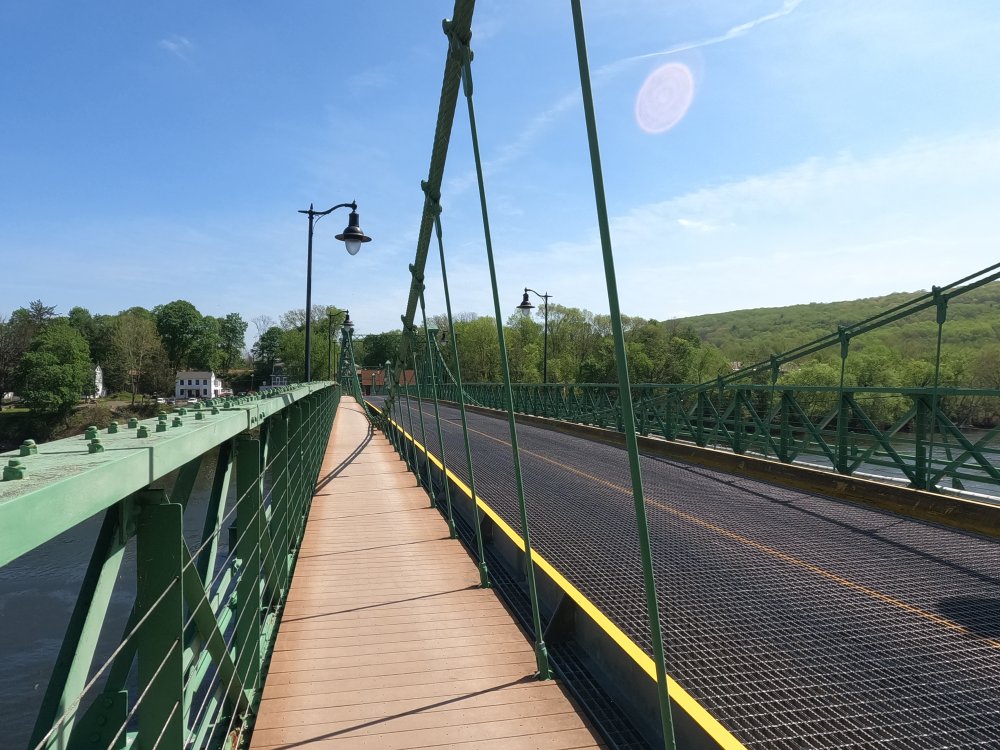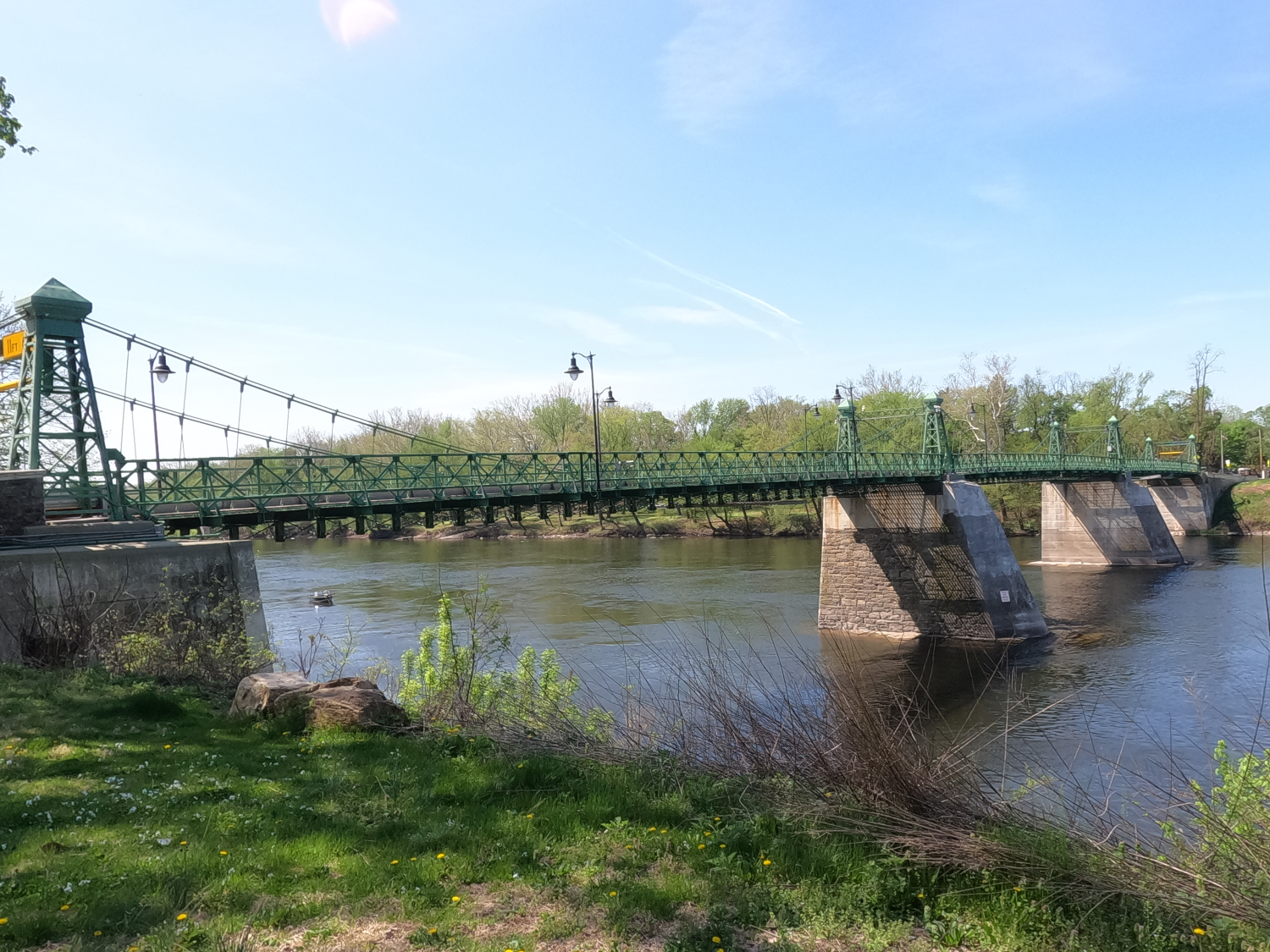
Riegelsville Bridge
NBI Information
Location
State: Pennsylvania
County: Bucks County
Feature Carried: PA-1016
Feature Crossed: Delaware River
Latitude, Longitude: 40.5943,-75.1907
Toll: On free road
Maintenance Responsibility: Local Toll Authority
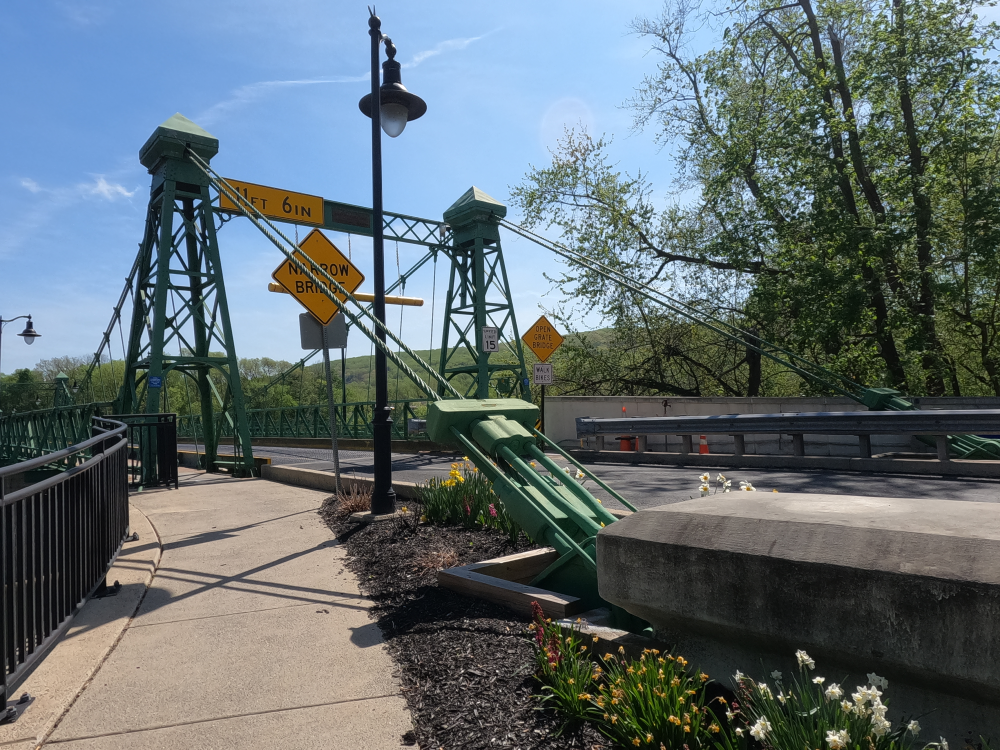
Structure Open, Posted, or Closed to Traffic: Posted for load (may include other restrictions such as temporary bridges which are load posted)
History
Year Built: 1904
Historical Significance: Bridge is eligible for the National Register of Historic Places.
Year Reconstructed: 2010
Picture Date: April 18, 2026
Geometry
Lanes on Structure: 2
Lanes under Structure: 0
Skew: 0 degrees
Number of Main Spans: 3
Main Structure Type: Suspension
Main Structure Material: Steel
Number of Approach Spans: 0
Approach Structure Type: None
Approach Structure Material: None
Condition
Inspection Date: May 2024
Deck Condition: Good
Superstructure Condition: Satisfactory
Substructure Condition: Fair
Channel Condition: Good
Culvert: Not Applicable
NBI Year: 2025
Bridge Information
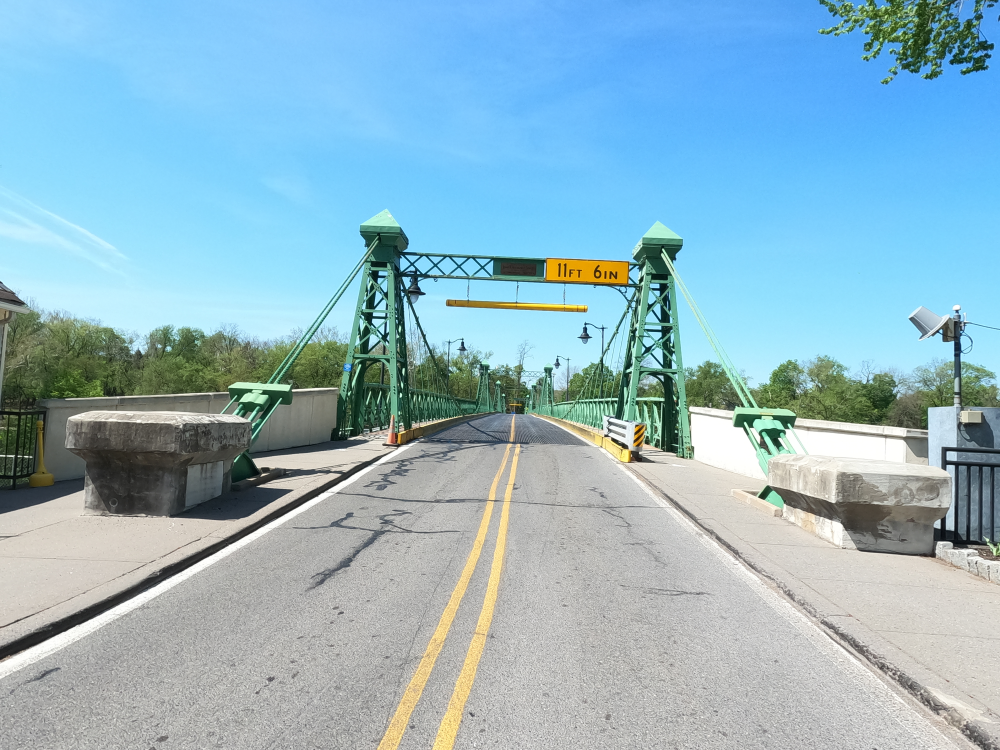
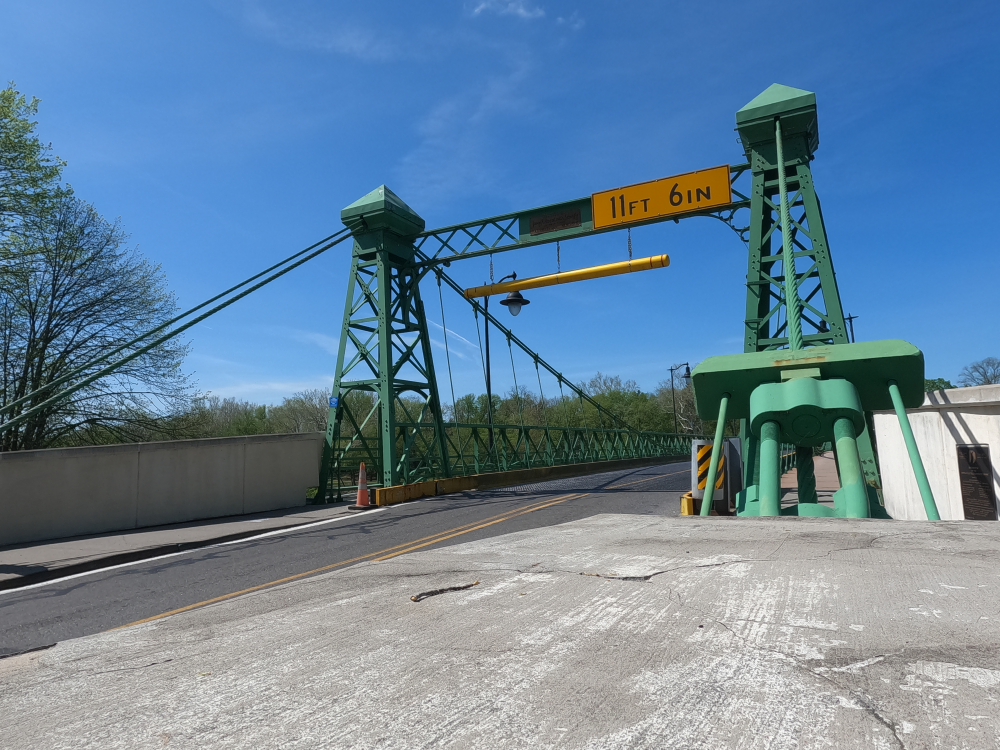
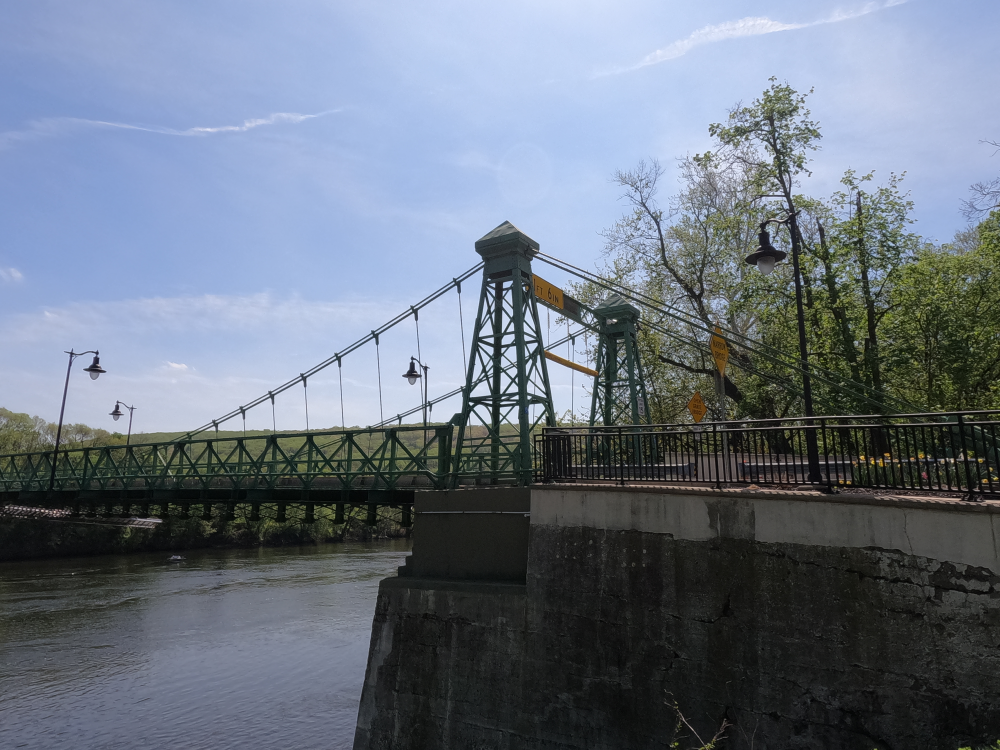
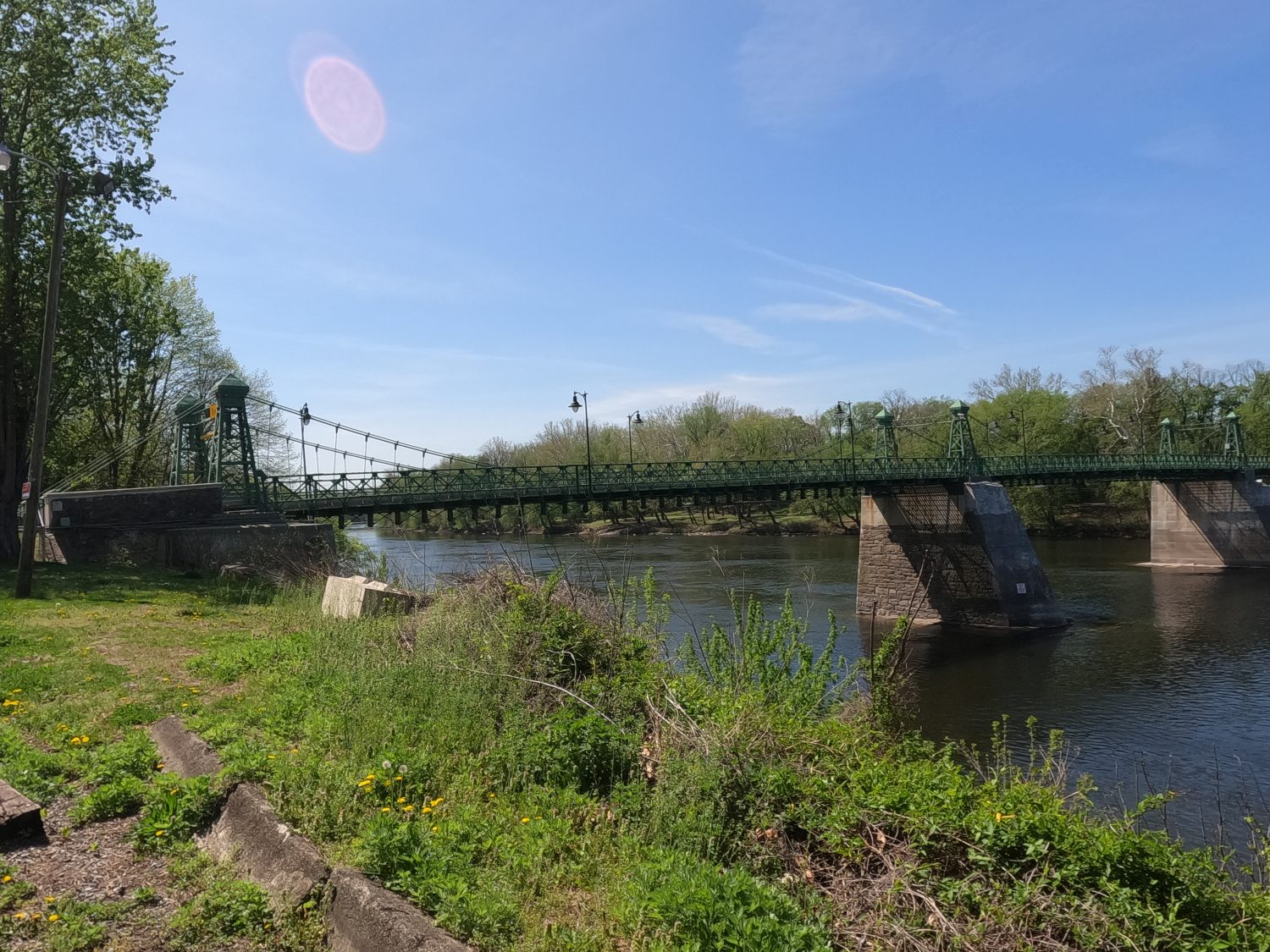
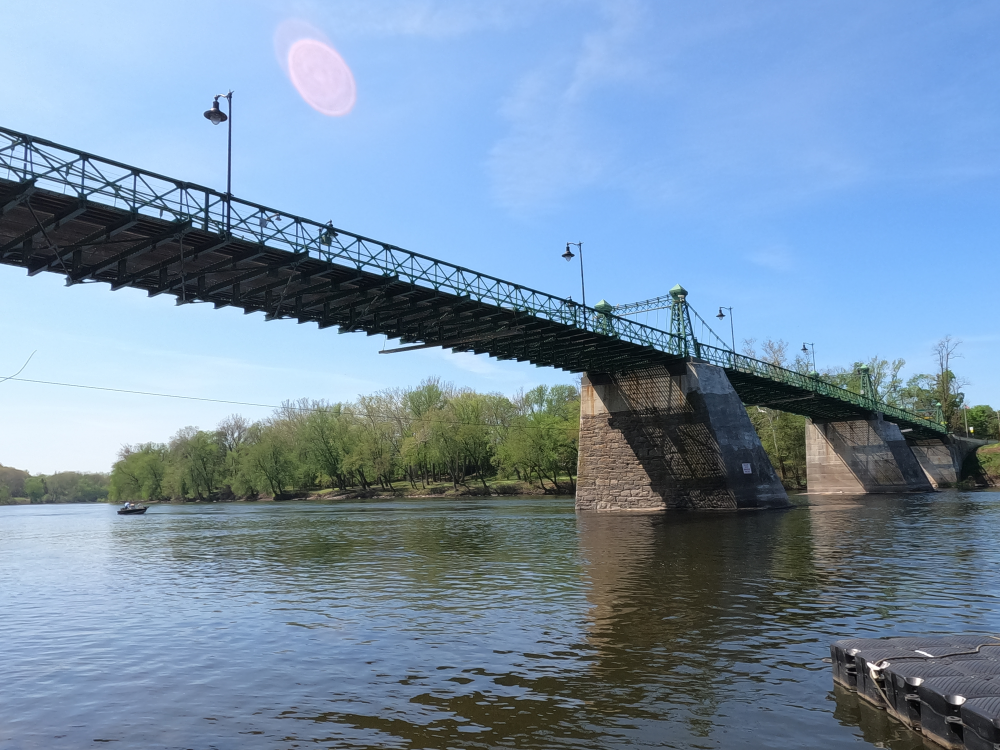
The Riegelsville Bridge (also called the Riegelsville Free Bridge and the Riegelsville Toll-Supported Bridge) was built in 1904, by John A. Roebling’s Sons Company. This bridge is owned and operated by the Delaware River Joint Toll Bridge Commission, which uses the proceeds collected at its toll bridges to cover the costs of operating and maintaining the toll-supported bridges.
The original bridge at this location was a three-span burr-truss-arch wooden bridge, which was opened on December 15, 1837. It was a toll bridge, which was financed and operated by the Riegelsville Delaware Bridge Company. The span on the New Jersey side was destroyed in a catastrophic winter flood in the Delaware Valley, named the “Bridges Freshet”, on January 8, 1841. The bridge was reconstructed, and continued top operate until it washed away in the “Pumpkin Flood” on October 10, 1903.
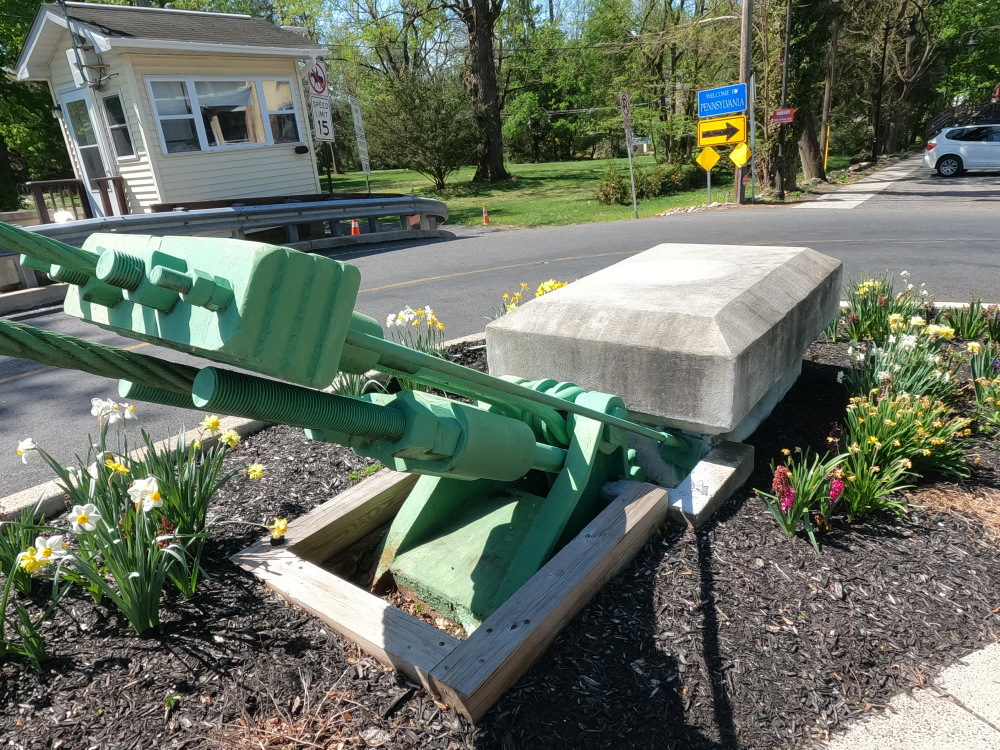
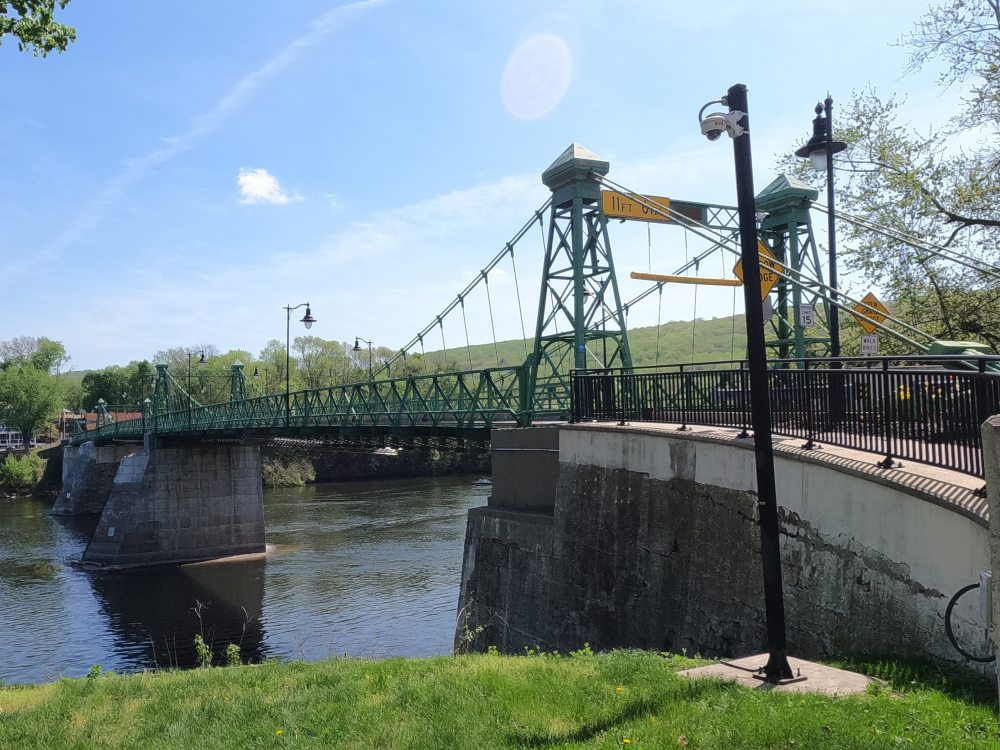
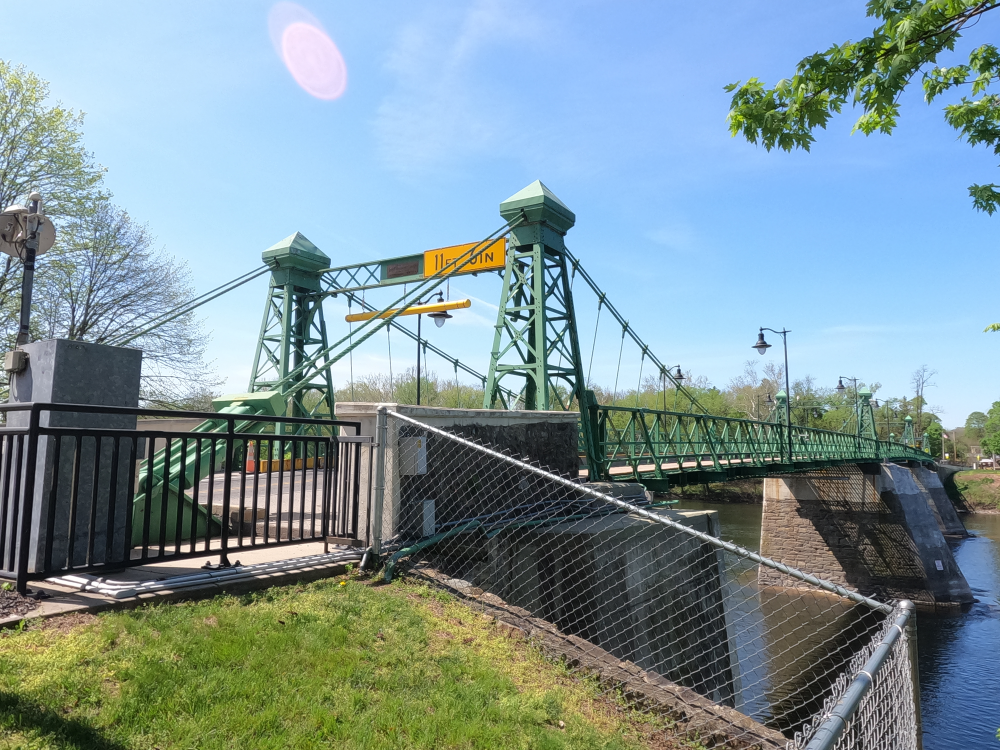
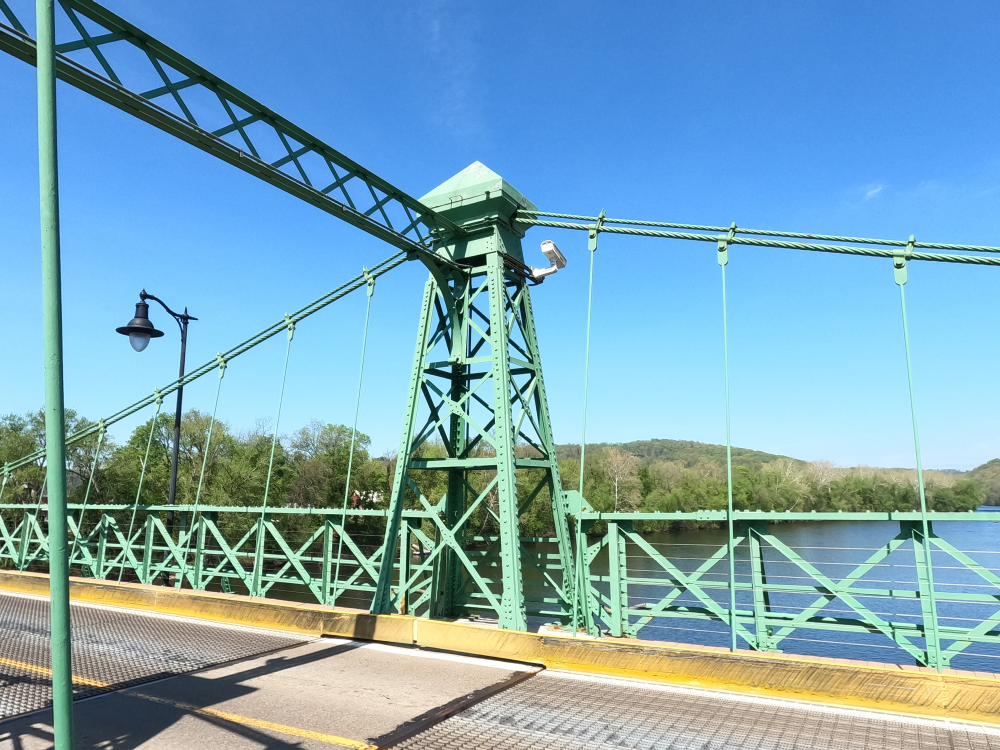
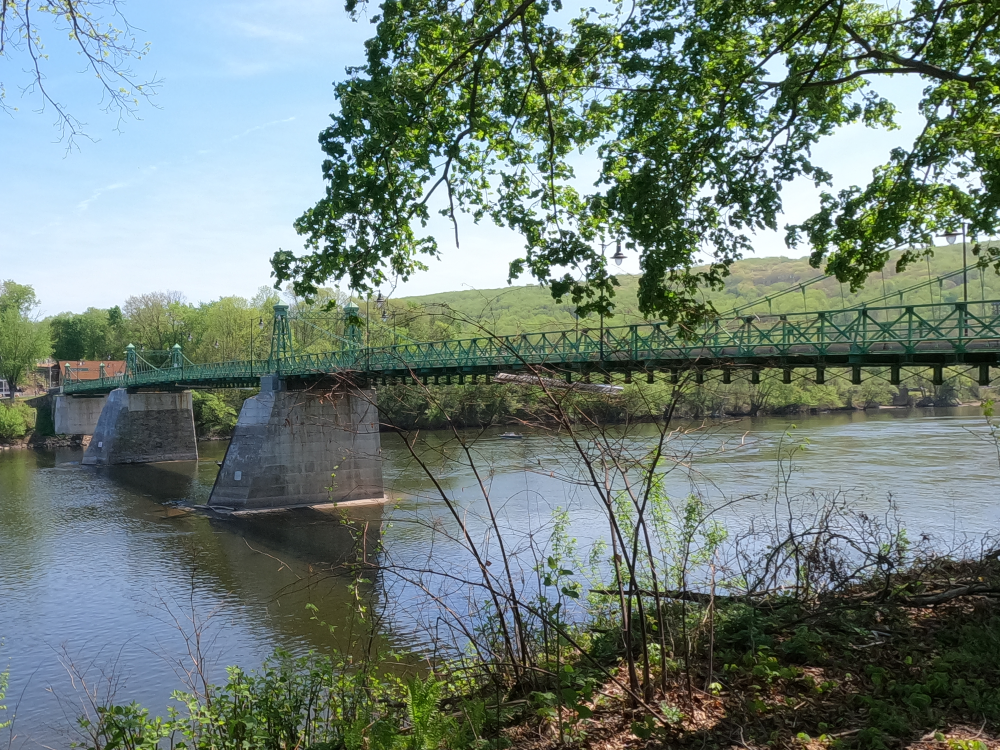
The Riegelsville Delaware Bridge Company hired John A. Roebling’s Sons Company to build a new bridge. The new bridge was a steel wire rope suspension superstructure, which was built on the original masonry abutment and piers. This gives the bridge an unusual design. It contains 4 suspension towers with relatively short, suspended spans, whereas most suspension bridges only have 2 towers. The new bridge opened on April 18, 1904.
The bridge employed main cables of 2 5/8” in diameter. Shortly after the bridge was completed, Professor James Madison Porter III, the grandson of the builder of the earlier Riegelsville bridge, questioned the adequacy of the design, and two additional 1 ¾” cables were added to provide additional support.
Like its wooden predecessor, this bridge operated as a toll bridge. The toll was removed on January 1, 1923, in preparation for the sale of the bridge to the states of Pennsylvania and New Jersey. This sale was facilitated by the Joint Commission for Elimination of Toll Bridges – Pennsylvania-New Jersey, which was the predecessor to the Delaware River Joint Toll Bridge Commission (DRJTBC).
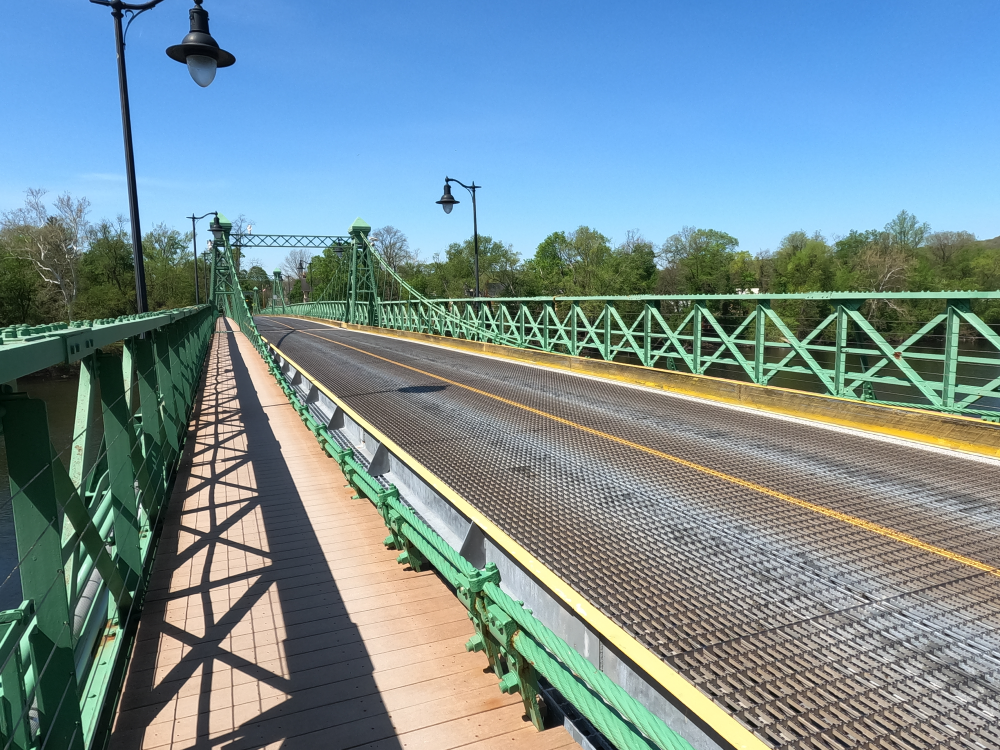
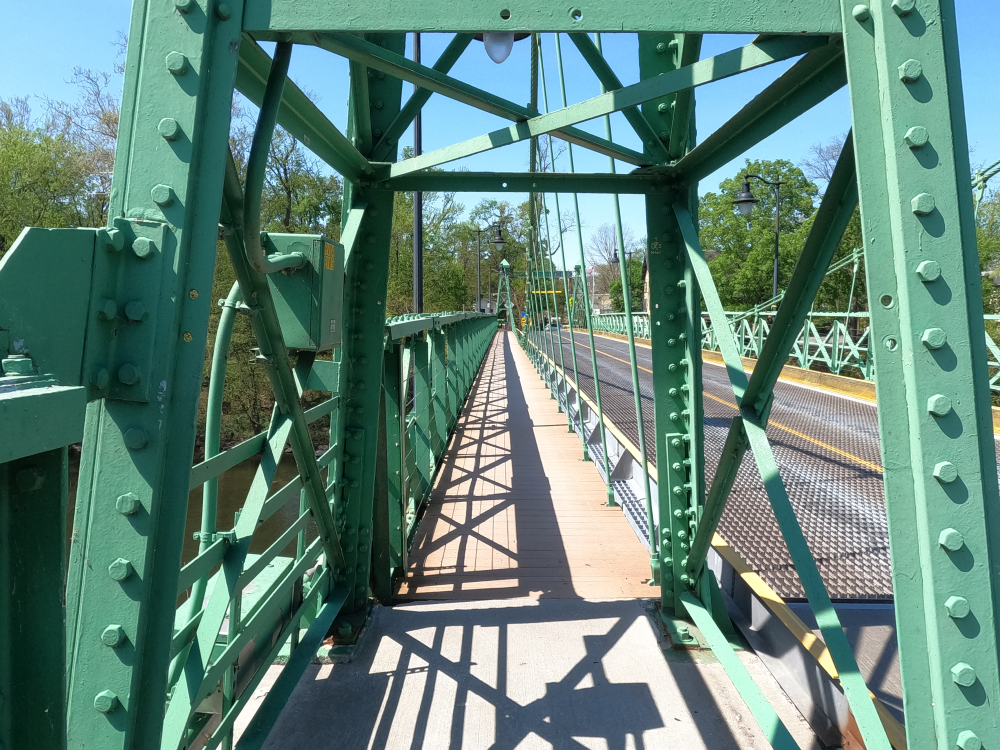
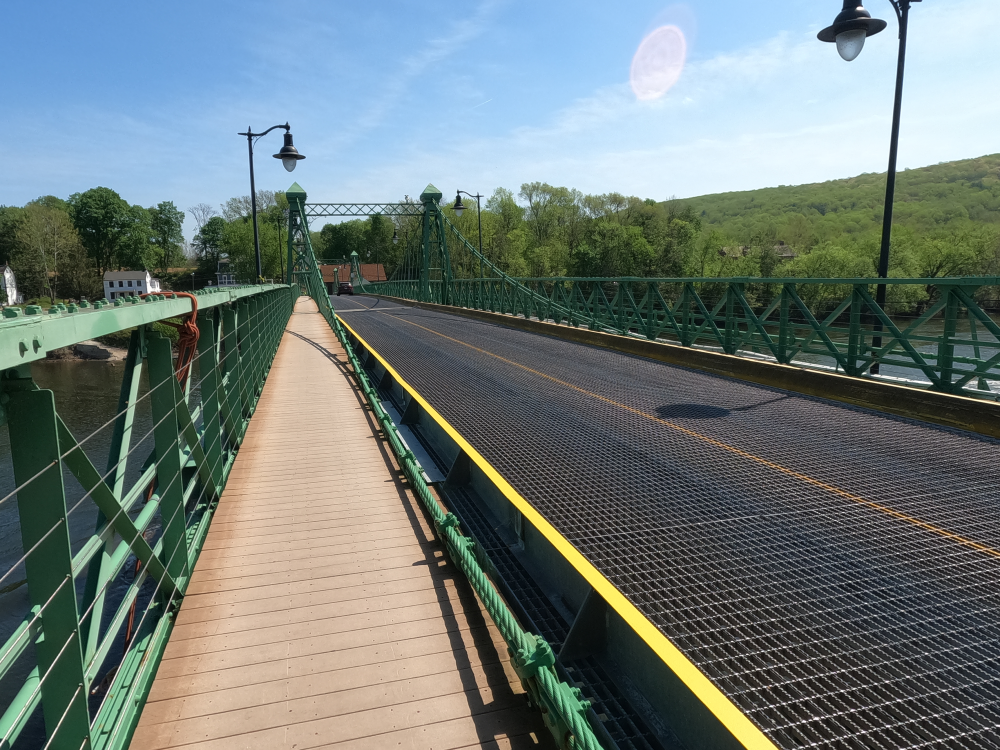
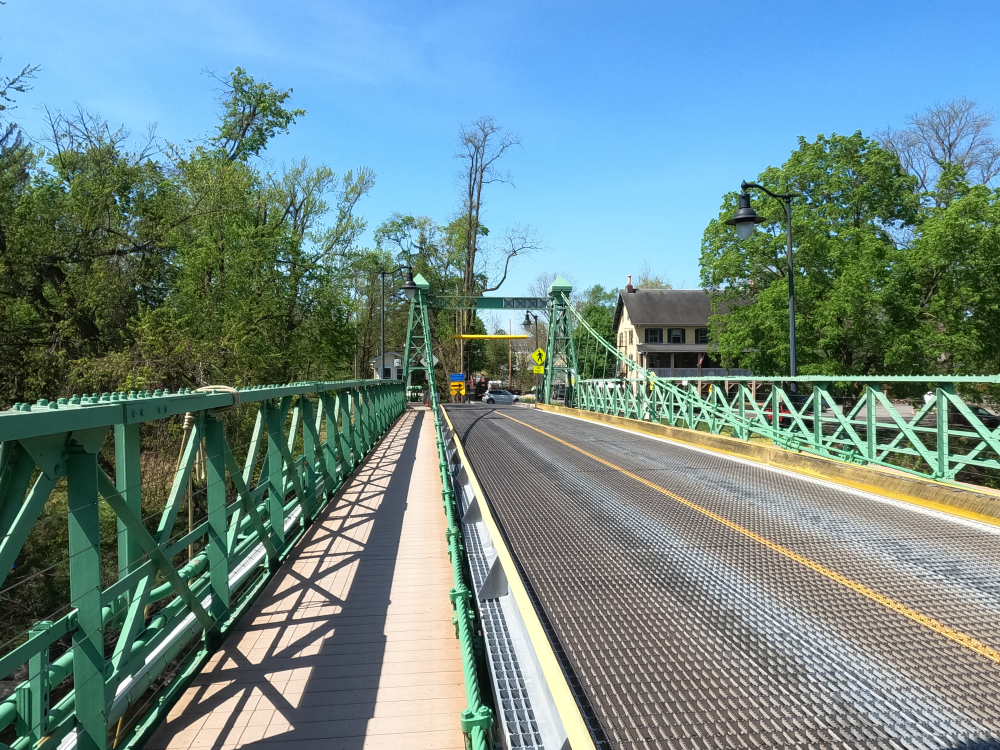
The pier on the Pennsylvania side of the bridge was demolished during a flood in 1936 and was reconstructed using reinforced concrete. In 1984, the timber-plank floor was replaced with a steel open-grid deck.
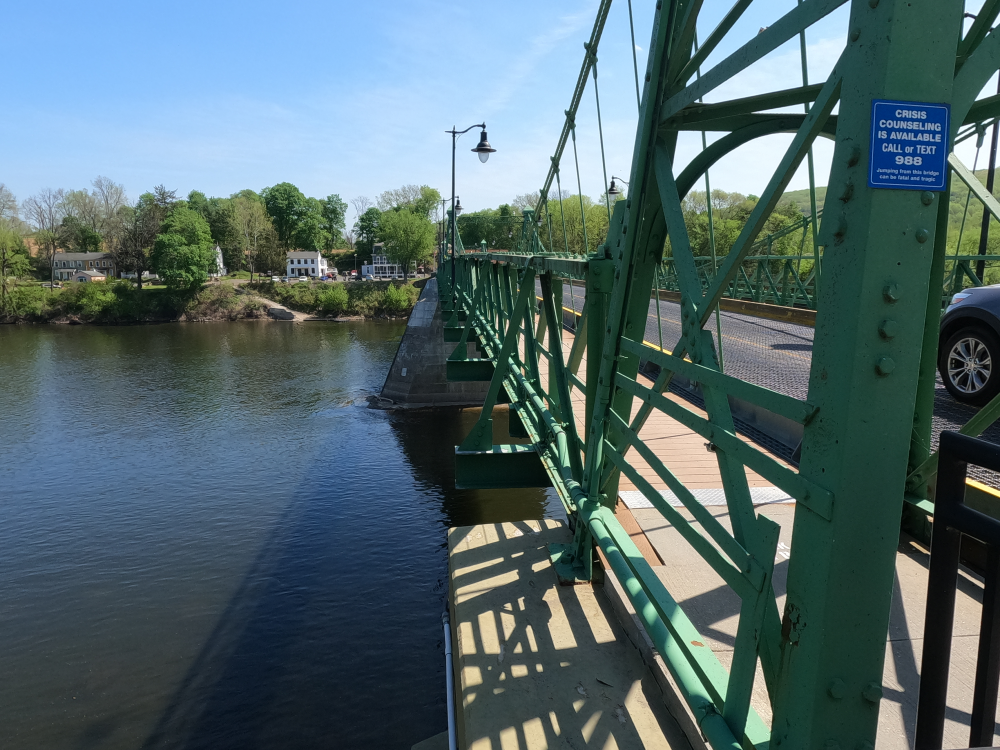
The bridge underwent a major rehabilitation project in 2010, which included replacing the sidewalks and floor structure, repainting the structures, and repairs to the piers and abutments. In addition, the lighting was upgraded and signage was improved. The rehabilitation allowed the weight limit on the bridge to increase from 2.5 tons to 3 tons. Another rehabilitation project is planned for 2029.
References