Cochran Hill Tunnel
(Cherokee Park Tunnel)
NTI Information
Location
State: Kentucky
County: Jefferson County
Feature Carried: Interstate 64
Latitude, Longitude: 38.2432, -85.6955
Toll: On free road
Owner/Operator: State Highway Agency
Tunnel Load Posting Status: No restriction
History
Year Built: 1970
Year Rehabilitated: 2002
Picture Date: April 26, 2026
Geometry
Number of Lanes: 4
Number of Bores: 2
Tunnel Shape: Horseshoe
Portal Shapes: Horseshoe
Tunnel Information
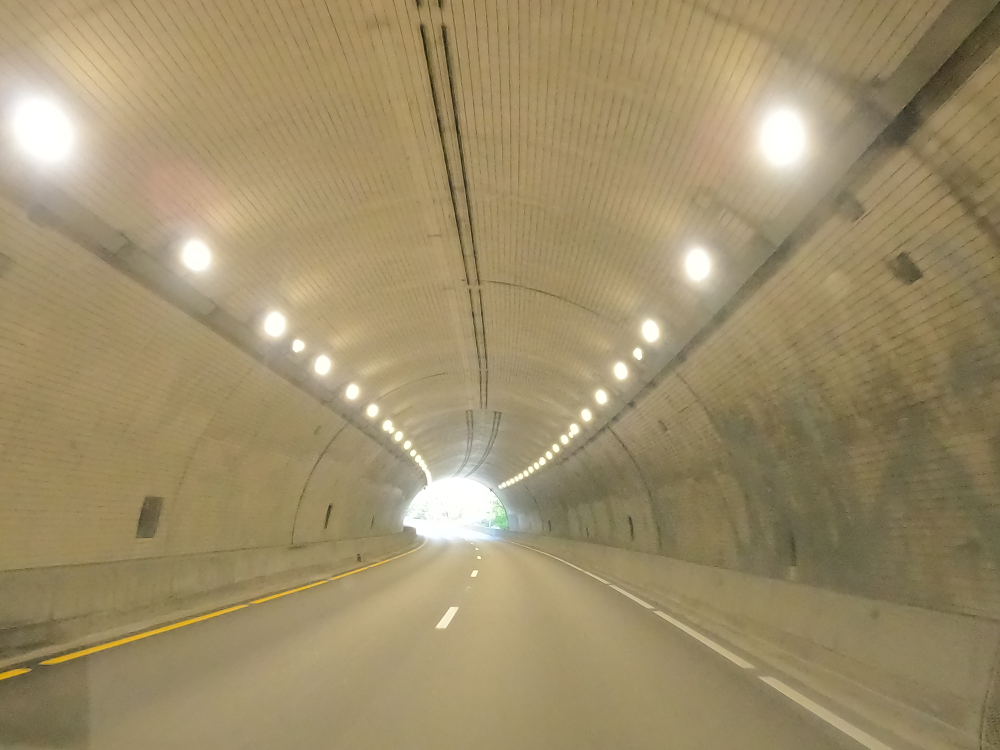
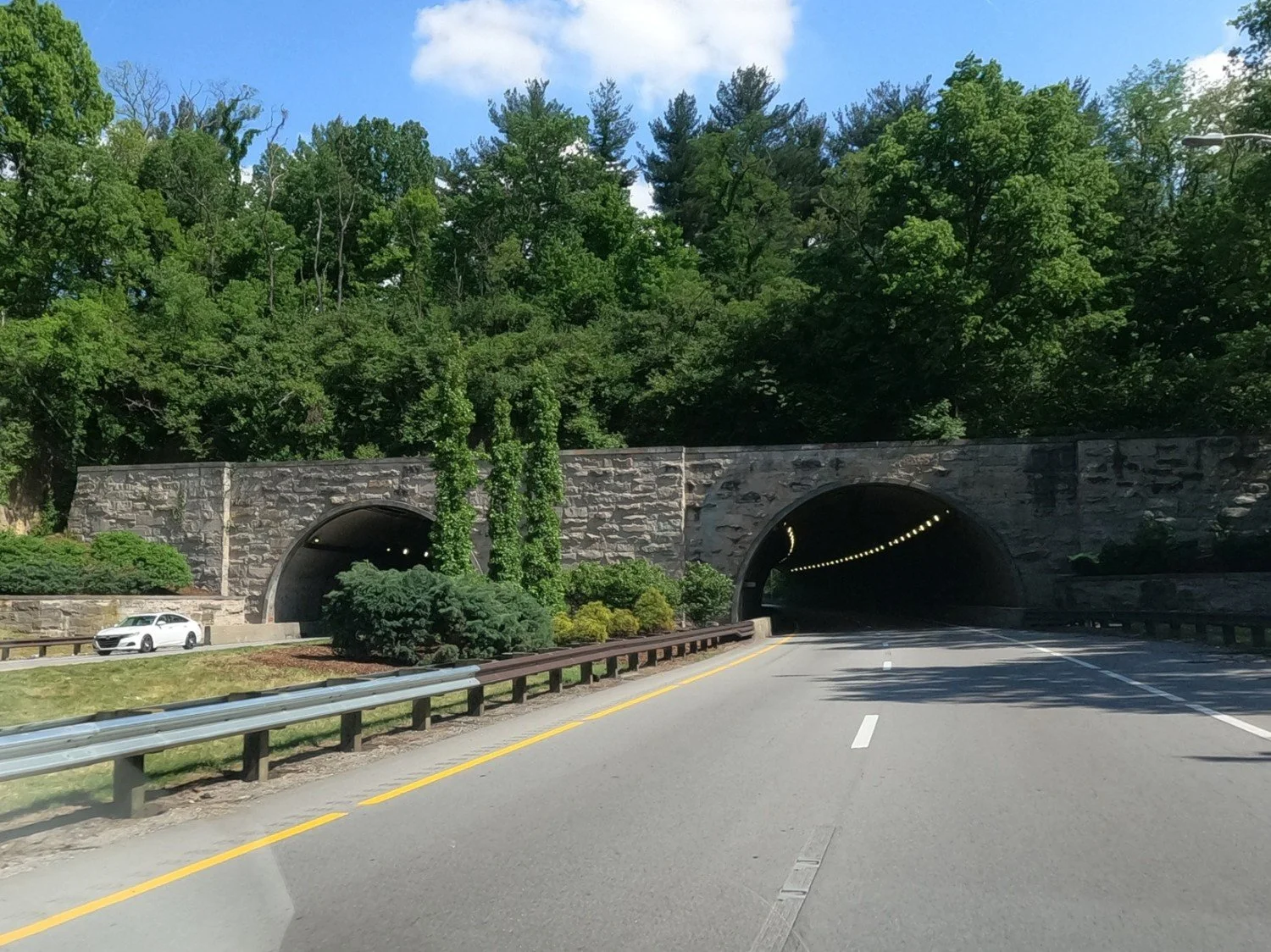
The Cochran Hill Tunnel, also called the Cherokee Park Tunnel, carries Interstate 64 under Cherokee Park. The twin-bore tunnel was built from 1970 to 1974 as a compromise to save the park’s historic landscape while also constructing the interstate. It is a
The tunnel is deemed as “Nationally and Exceptionally Significant” by the Federal Highway Administration. It received this designation due to its significance in development of environmentally sensitive design in the area of transportation engineering. This environmentally sensitive tunnel was developed to avoid destroying the important Olmstead landscape. This was the first attempt to reduce the effects of highway construction on a Kentucky roadway
The tunnel was reconstructed in 2001, which included reconstruction of the concrete pavement, installing of new tiles and improvements to the lighting.
In 2021, an I-64 Corridor Study was completed to assess the feasibility of widening the roadway. The project would widen the tunnel by adding an additional bore, as well as widening the approach roadways leading up to the tunnel. This would require clear cutting of trees, reduce park acreage and open the park to unmanaged and aggressive invasive species. It was ultimately decided that widening the roadway would not be possible given the project cost, environmental impact and public opposition.
The tunnel underwent another rehabilitation in 2023. A 6-mile stretch of road (including the tunnel) was closed for 2 weeks. This allowed for work to be done on the adjacent bridges and approach roadways, as well as to the tunnel. The entire concrete tunnel floor was removed, aggregate base was installed, and full-depth asphalt pavement was constructed for the full length of the tunnel. The project was complicated by the unknown subsurface conditions and the limited clearance inside the tunnel.
References