New River Gorge Bridge
NBI Information
Location
State: West Virginia
County: Summers County
Feature Carried: US-19
Feature Crossed: New River, CSX Railroad and WV-82
Latitude, Longitude: 38.0694,-81.0817
Toll: On free road
Maintenance Responsibility: State Highway Agency
Structure Open, Posted, or Closed to Traffic: Open, no restriction
History
Year Built: 1977
Historical Significance: Bridge is not eligible for the National Register of Historic Places.
Year Reconstructed: None
Picture Date: May 1, 2017 and April 27, 2026
Geometry
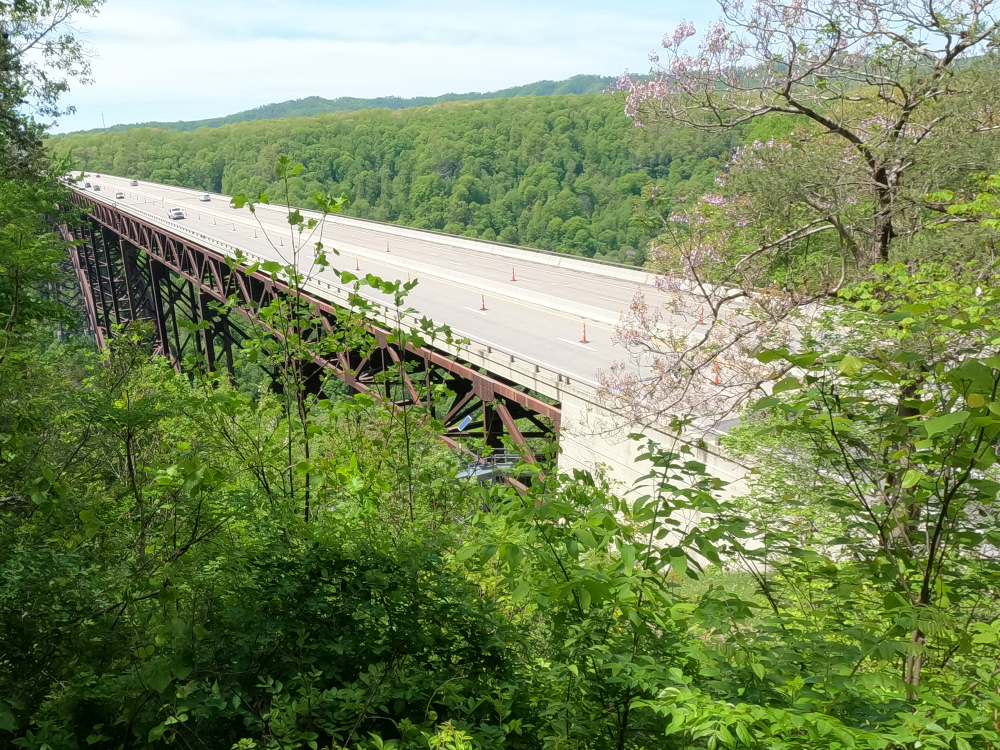
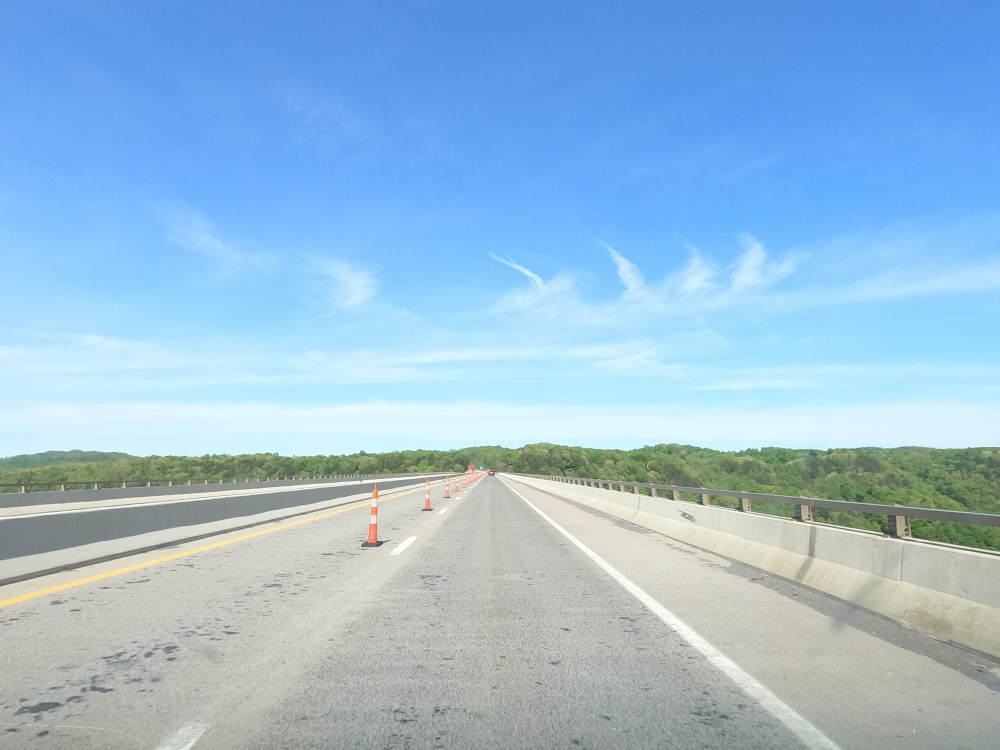
Lanes on Structure: 4
Lanes under Structure: 2
Skew: 0 degrees
Number of Main Spans: 1
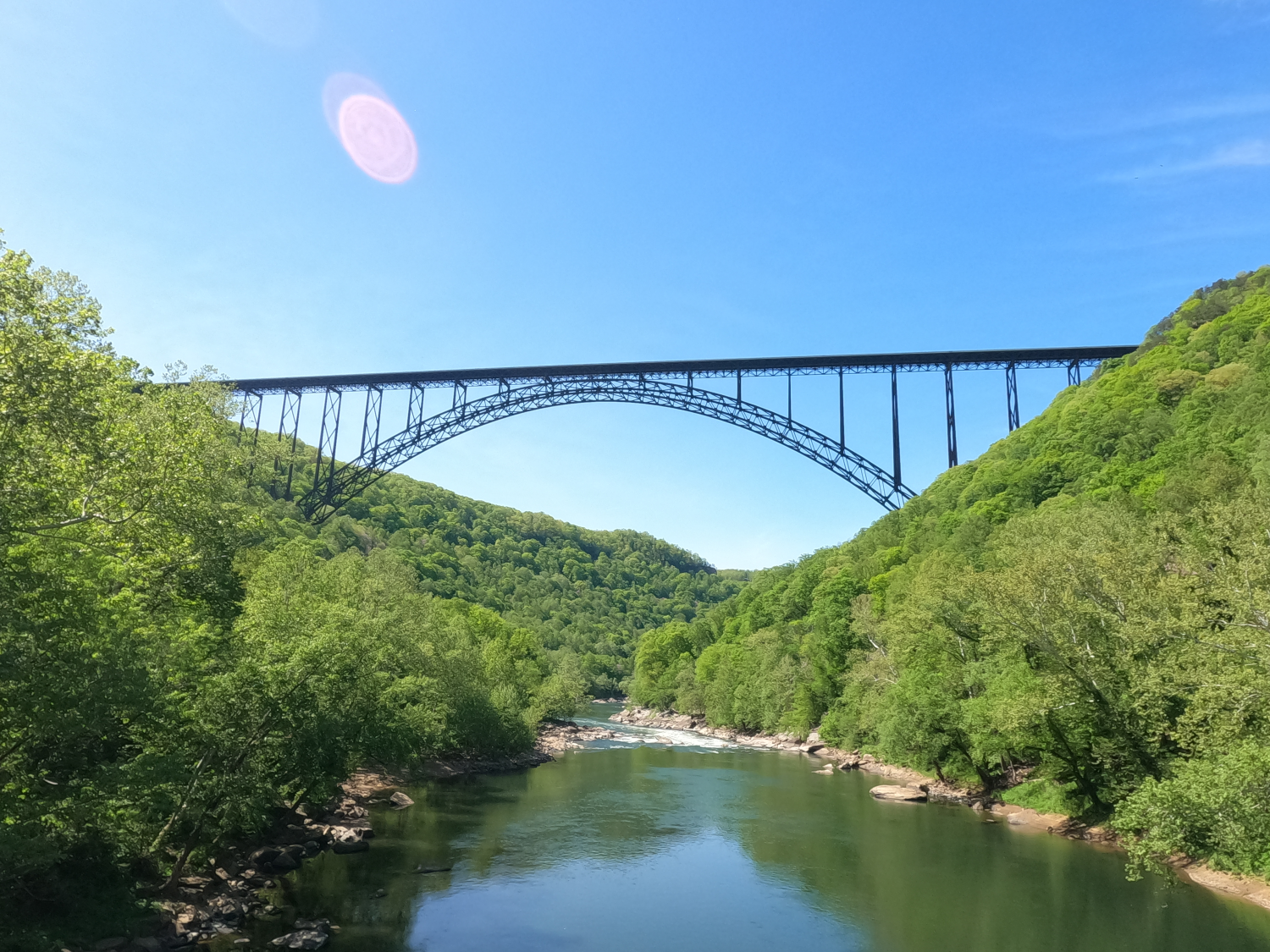
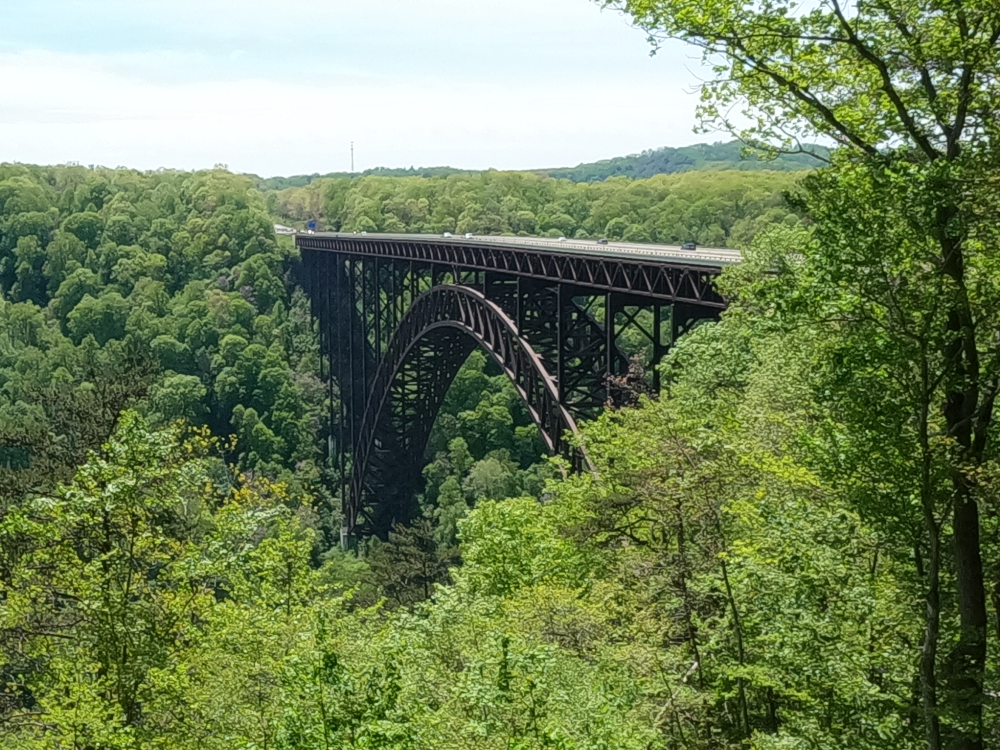
Main Structure Type: Arch - Deck
Main Structure Material: Steel
Number of Approach Spans: 9
Approach Structure Type: Mixed Types
Approach Structure Material: Mixed Types
Condition
Inspection Date: September 2023
Deck Condition: Satisfactory
Superstructure Condition: Fair
Substructure Condition: Fair
Channel Condition: Excellent
Culvert: Not Applicable
NBI Year: 2025
Bridge Information
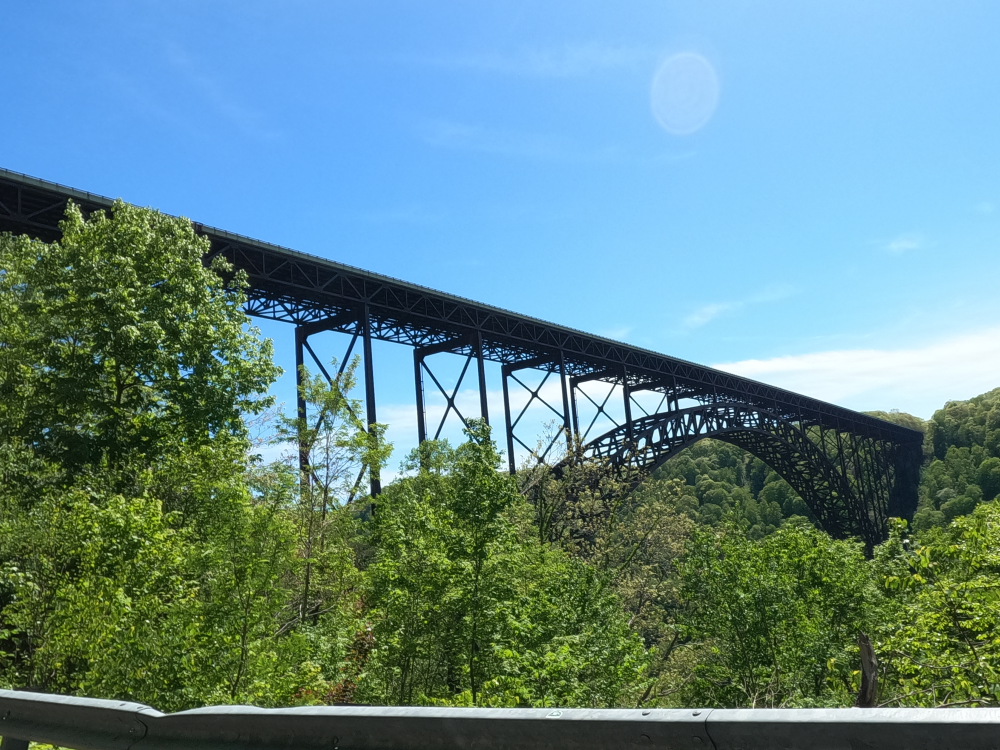
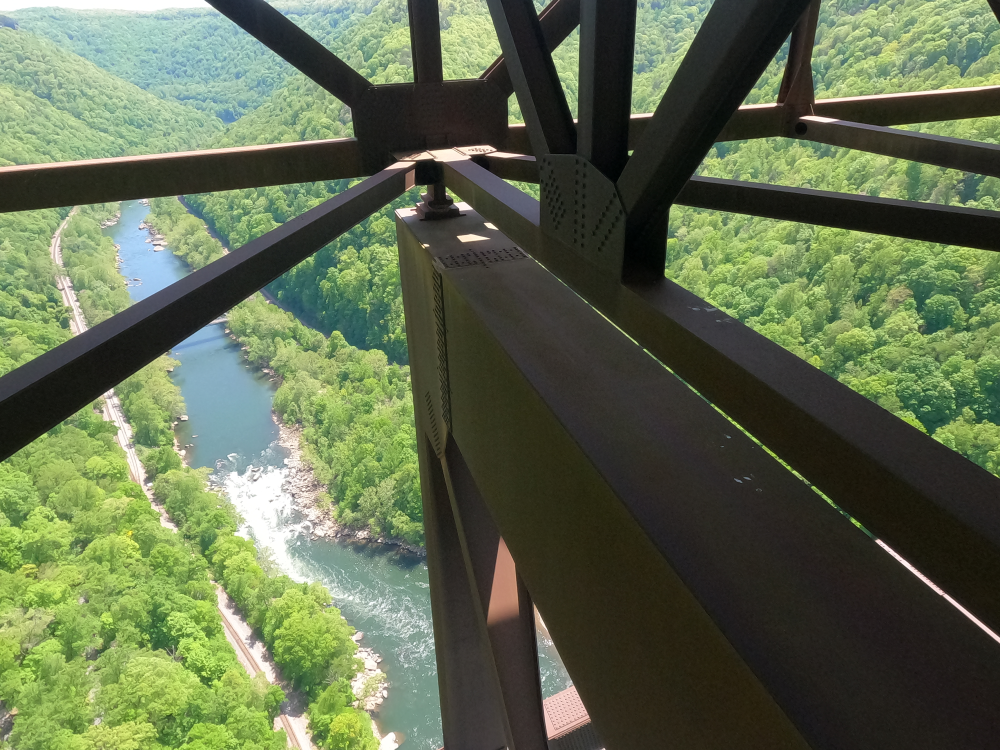
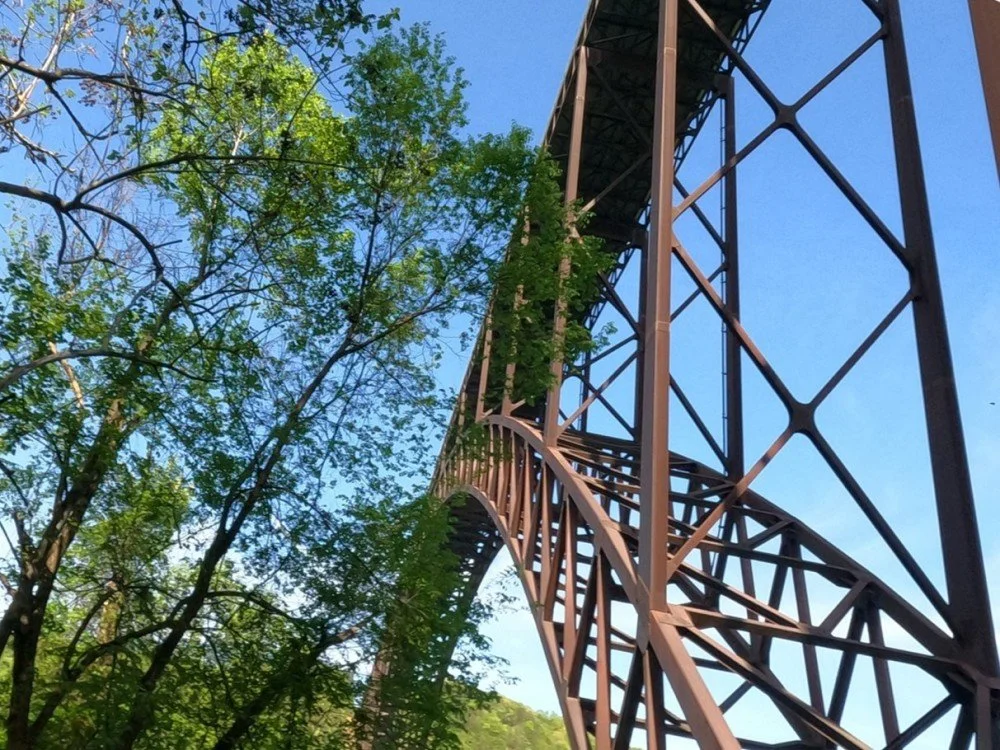
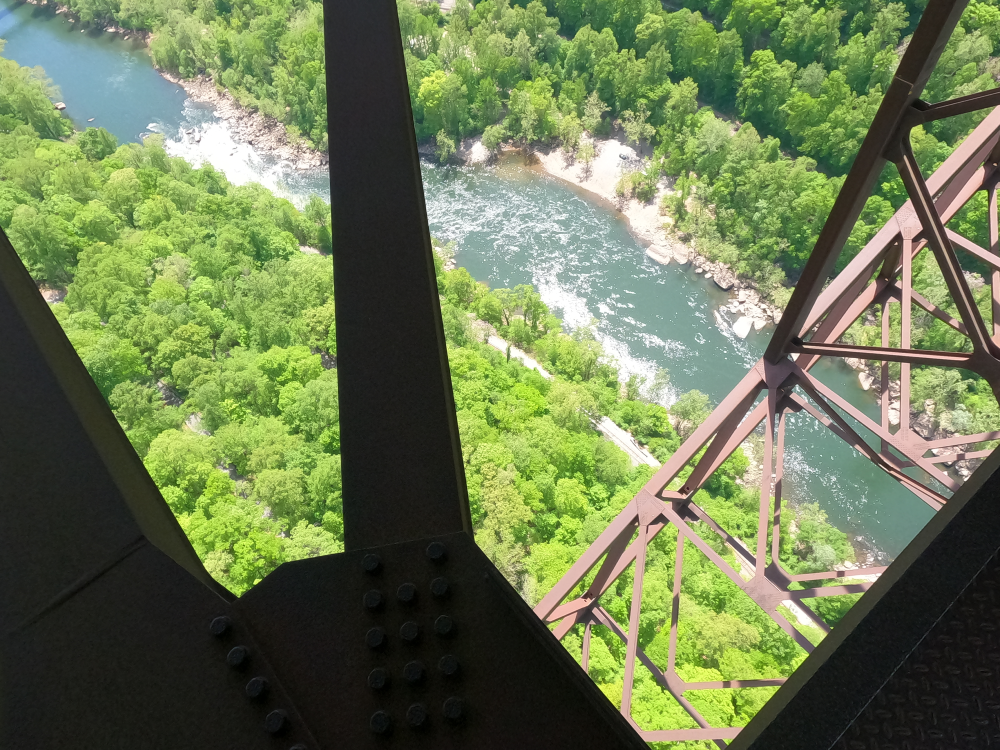
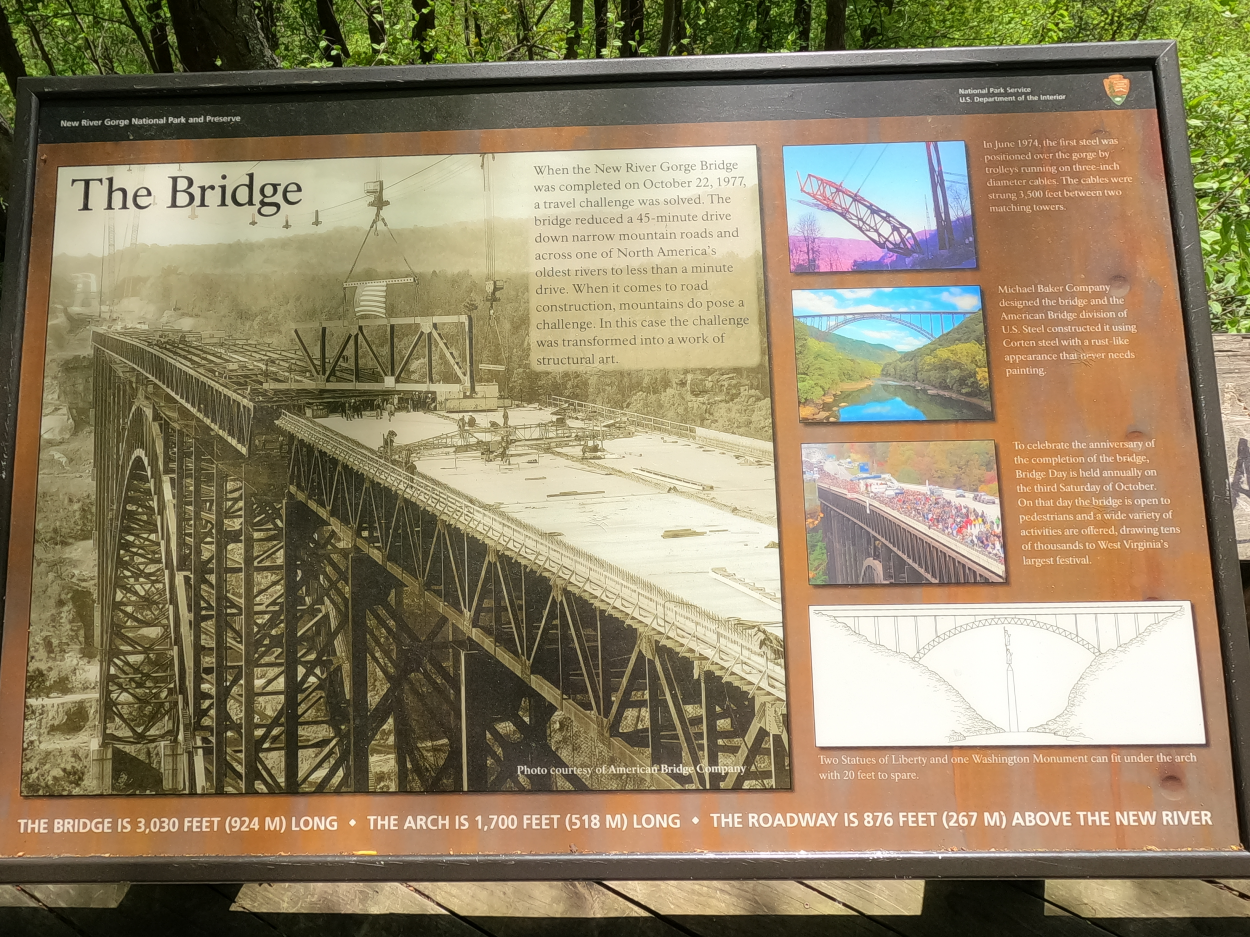
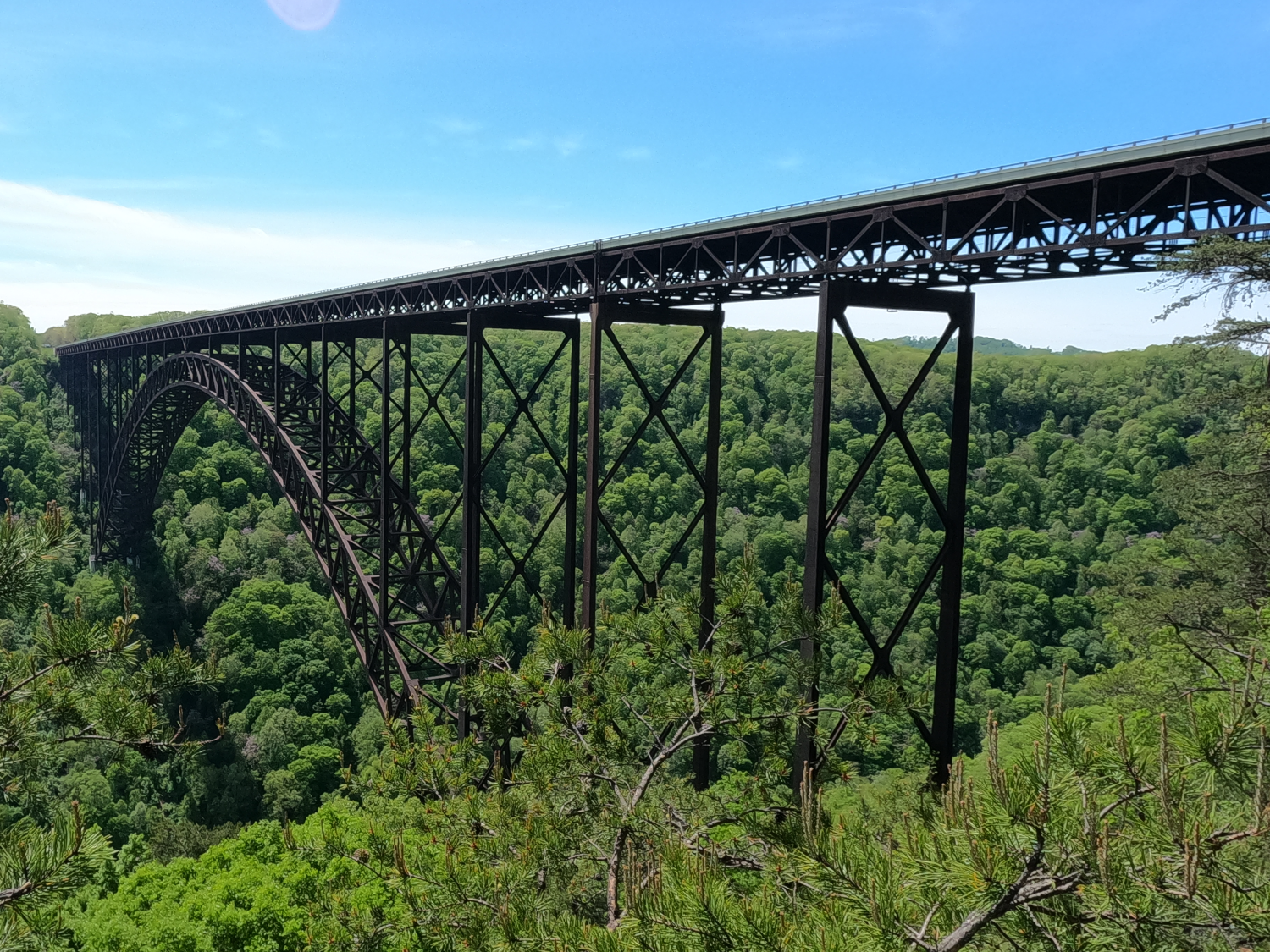
The New River Gorge Bridge was completed in 1977 and reduced the 40-minute drive down the narrow mountain roads to a drive that is less than a minute. It is a 3,030-foot-long steel deck arch, which is 876 above the new river. When it was constructed, this bridge was the world's longest single-span arch bridge. It is now the seventh longest in the world, with the others all being in China (It is still the longest in the Western Hemisphere). It is also the second highest vehicular bridge in the United States (the Mike O'Callaghan–Pat Tillman Memorial Bridge is the highest).
One of the main drivers in the construction of this bridge was tourism. This area of West Virginia was originally settled by the coal mining industry. As mining became more automated and required less people, these regions became ghost towns. The Appalachian Regional Commission was created in 1965 to try and recover the economy of the area. They saw the potential tourist opportunities in the area, however, the only way to reach it was the long and treacherous road through the valley and across the Fayette Station Bridge. The Corridor L project aimed to cut the time it took to travel to the region. This new roadway was a four-lane road that would connect the West Virginia Turnpike in the south with I-79 in the north. Construction began in 1974 and was completed with the construction of the New River Gorge Bridge in 1977.
Although the design of this bridge is fairly conventional, the location and scale created many challenges during construction. It is located in a remote part of West Virginia and is surrounded by the Appalachian Mountains. Due to the depth of the gorge, innovative engineering and construction techniques were required to build the bridge. Rail lines at the bottom of the gorge on either side of the river transported machinery and materials to the site. A four-tower cableway was constructed across the gorge and allowed airborne trolleys to move the steel elements into place. These trolleys ran on three-inch diameter cables which were strung 3,500 feet between tower at either side of the gorge. The first cable was carried across the gorge by helicopter.
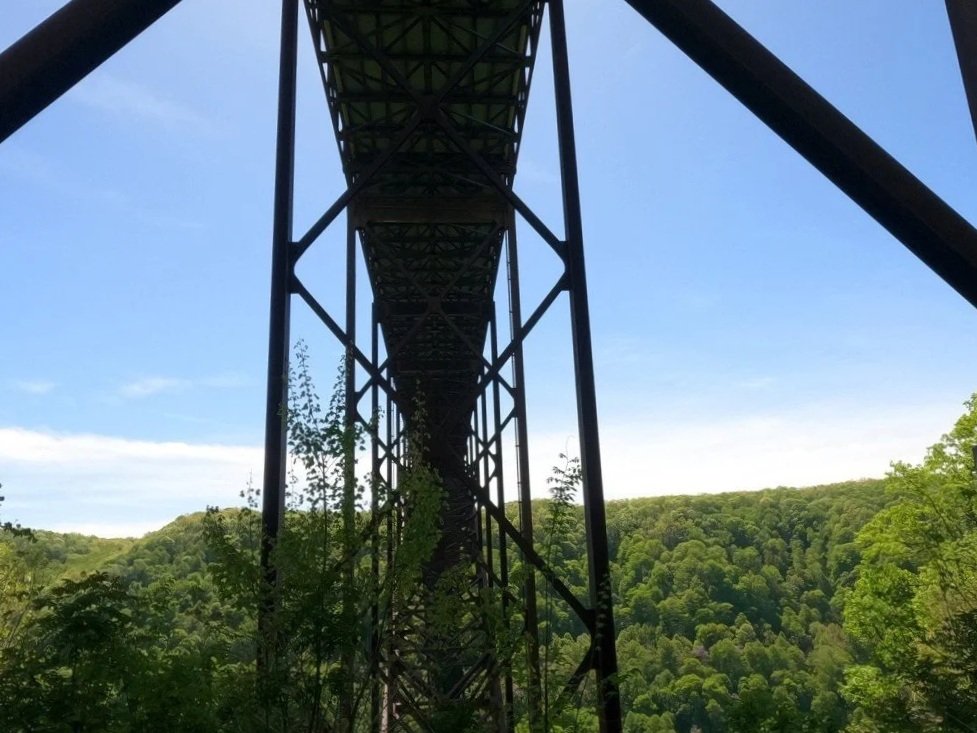
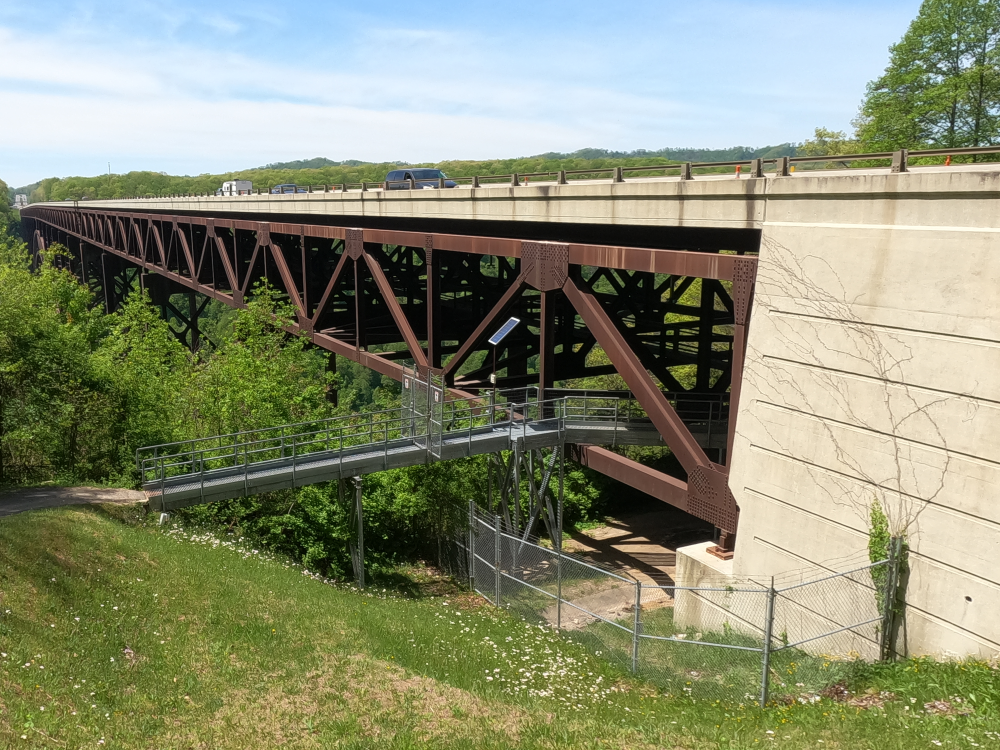
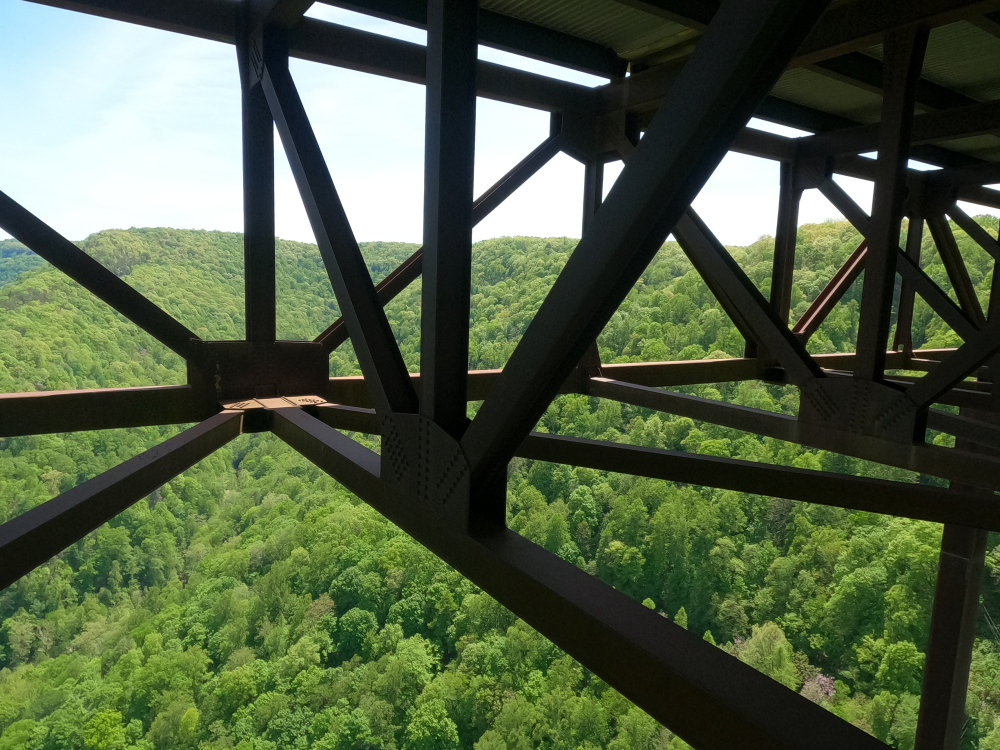
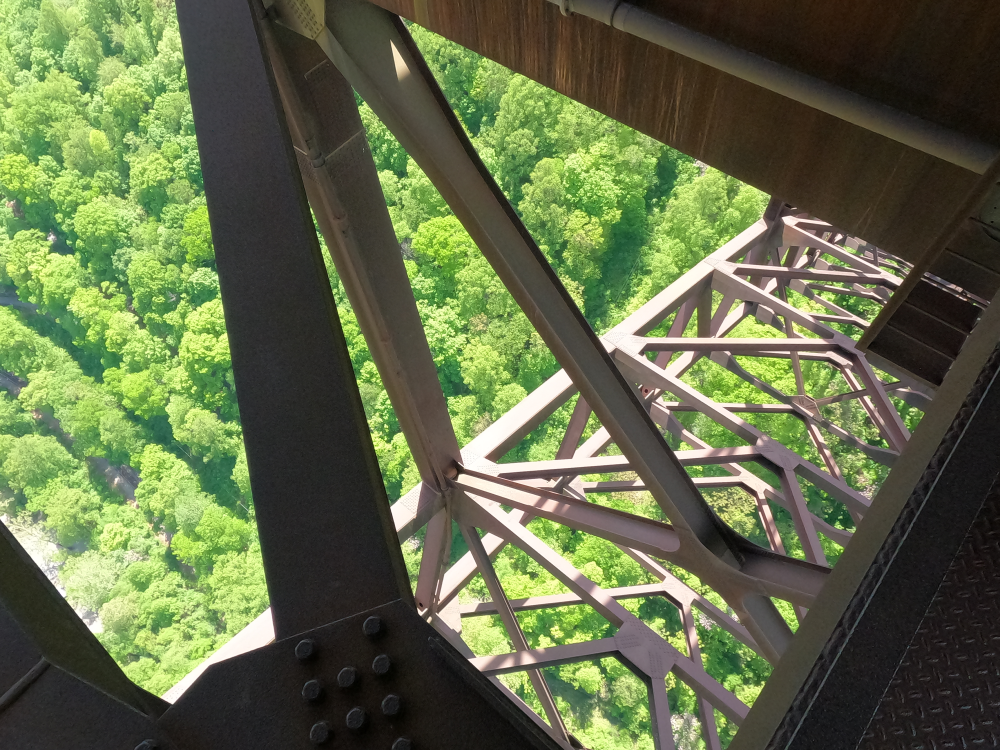
The structural steel used for the Bridge is USS COR-TEN B Steel, which is a type of weathering steel. This steel oxidizes when it is exposed to the elements and forms a protective coating around the steel. This eliminates the need for painting, but increased the complexity of the design, since all of the elements need to weather at the same rate. In addition, when traditional salt spread was used to remove snow and ice, it had adverse effects on the bridges steel. This required the deicing chemicals be switched to Calcium magnesium acetate, which was much more time-consuming to apply. It would blow off the bridge surface if it was applied at speeds over 15 mph, which created long lines of backed-up traffic during spreading activities. More recently, liquid potassium acetate has been used along with specialized equipment. This product adheres to the deck better and can be applied at speeds up to 50 mph.
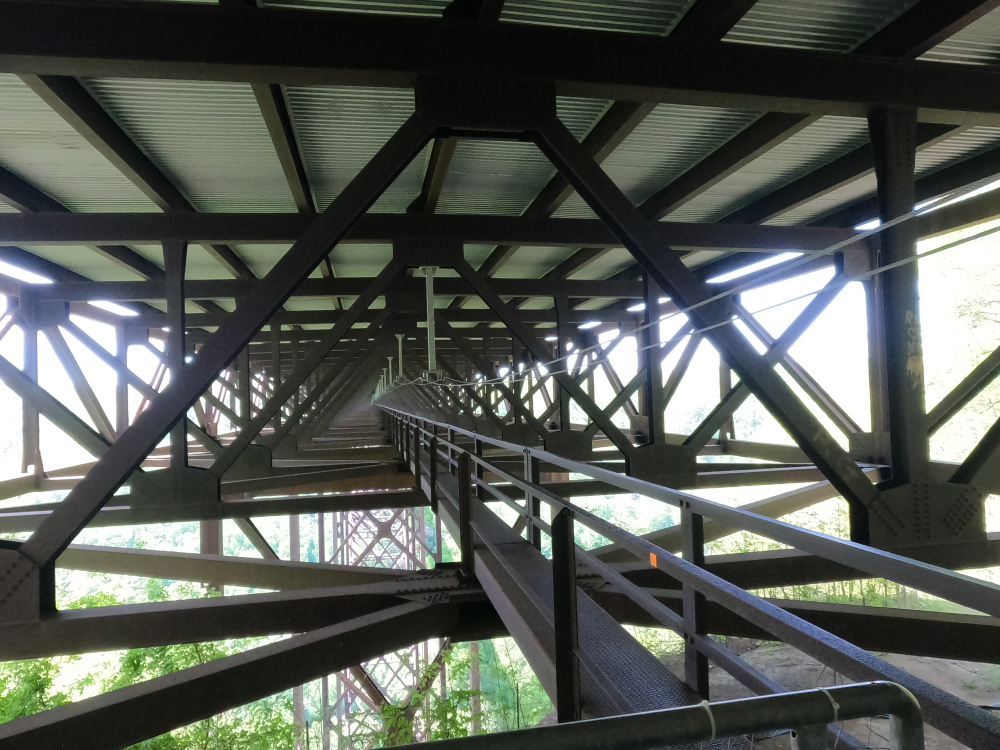
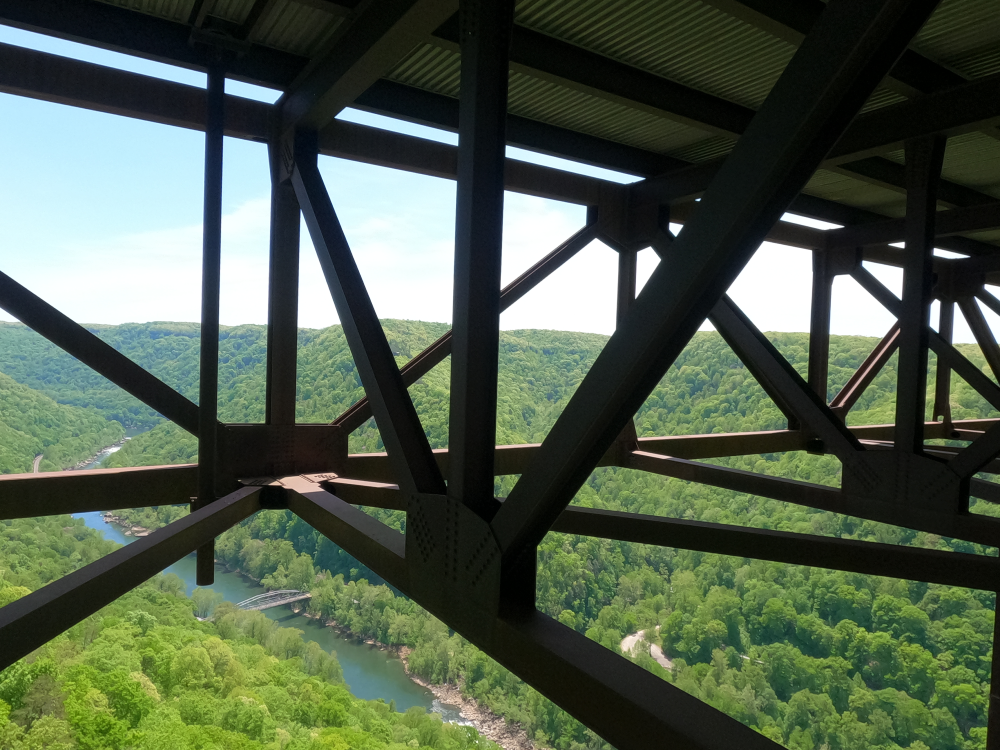
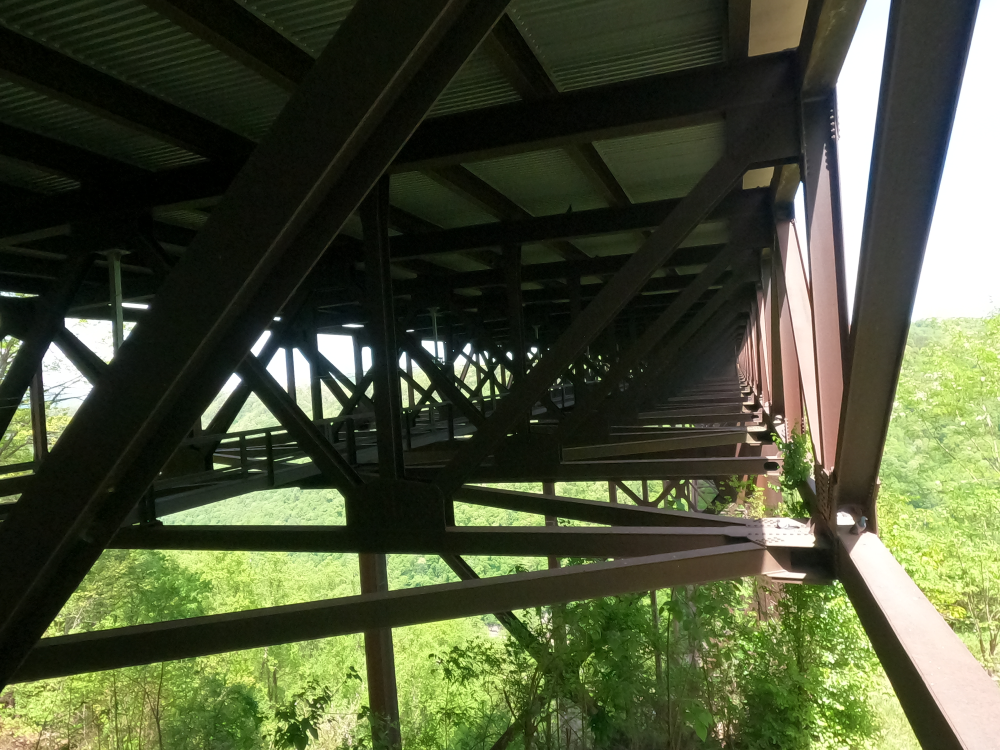
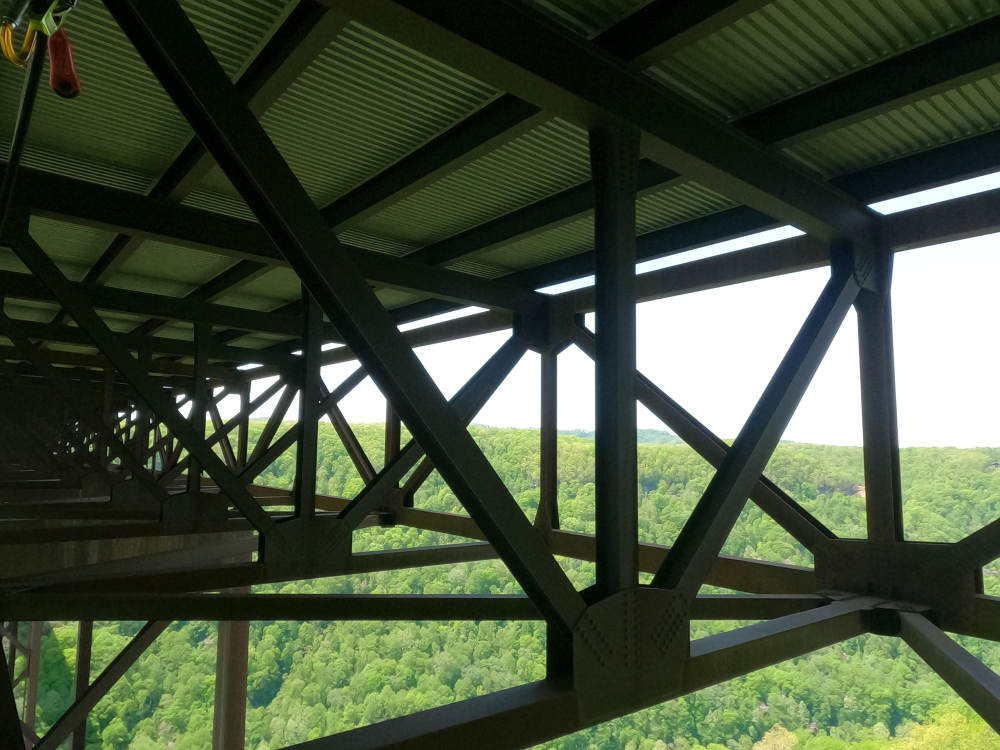
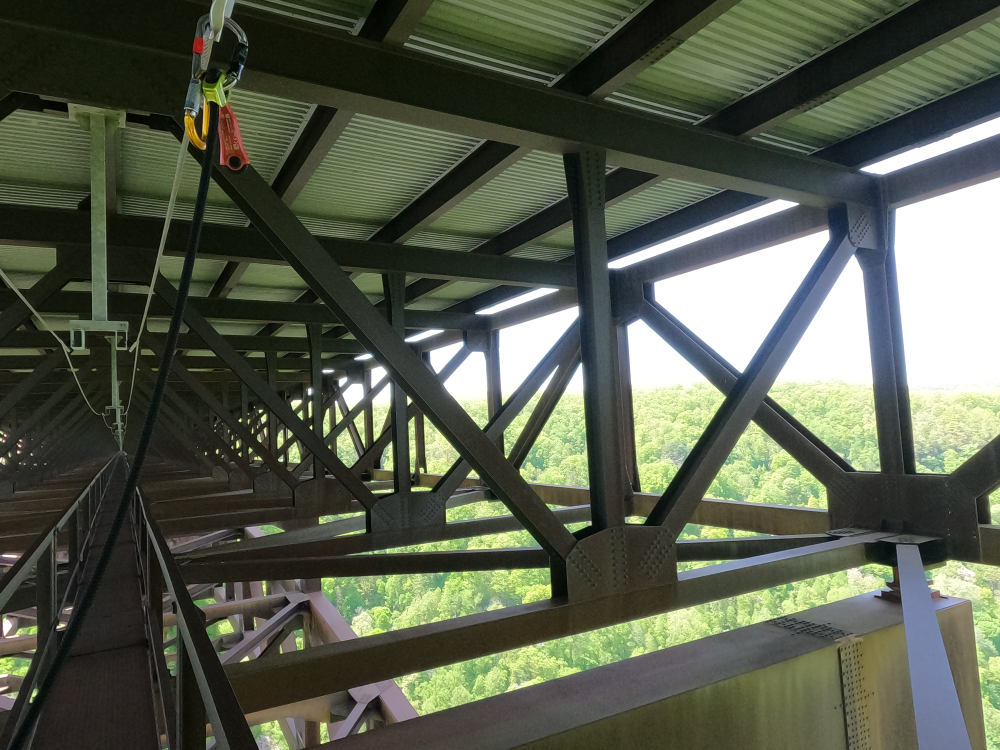
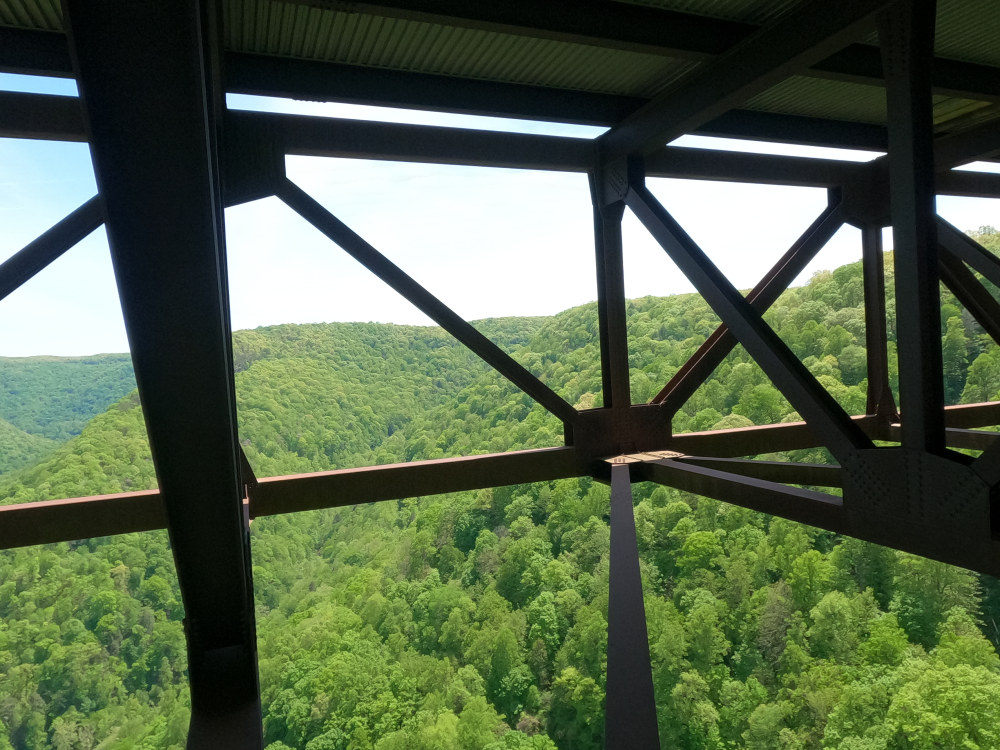
The bridge itself has become a tourist attraction. A steel catwalk runs the full length of the bridge underneath the roadway and is open for guided “Bridge Walk” tours. The bridge is also the centerpiece of Fayette County’s “Bridge Day”, which is held the third Saturday of every October. The bridge is closed to traffic, allowing people to walk across it. People also take this opportunity to rappel, ascend, and base jump from the bridge.
References
National Park Service. “New River Gorge Bridge.” National Park Service, 26 Sept. 2025, https://www.nps.gov/neri/planyourvisit/nrgbridge.htm. Accessed 30 July 2026.
“The New River Gorge Bridge.” Bridge Walk, https://bridgewalk.com/about-bridge-walk/. Accessed 30 July 2026.
Hartley, Gary. “New River Gorge Bridge .” National Park Service, 8 Aug. 2023, https://www.nps.gov/places/new-river-gorge-bridge.htm. Accessed 30 July 2026.
“New River.” West Virginia.Gov, https://transportation.wv.gov/highways/bridge_facts/Modern-Bridges/Pages/NewRiver.aspx. Accessed 30 July 2026.
“New River Gorge Bridge.” Michael Baker International, https://mbakerintl.com/projects/new-river-gorge-bridge/. Accessed 30 July 2026.
May 1, 2017


April 27, 2026