I Street Bridge
NBI Information
Location
State: California
County: Yolo County
Feature Carried: I Street and Railroad
Feature Crossed: Sacramento River and Railroad
Latitude, Longitude: 38.5867,-121.5082
Toll: On free road
Maintenance Responsibility: Railroad
Structure Open, Posted, or Closed to Traffic: Open, no restriction
History
Year Built: 1911
Historical Significance: Bridge is on the National Register of Historic Places.
Year Reconstructed: None
Picture Date: October 18, 2025
Geometry
Lanes on Structure: 2
Lanes under Structure: 0
Skew: 0 degrees
Number of Main Spans: 4
Main Structure Type: Movable - Swing
Main Structure Material: Steel
Number of Approach Spans: None
Approach Structure Type: None
Approach Structure Material: None
Condition
Inspection Date: January 2024
Deck Condition: Good
Superstructure Condition: Good
Substructure Condition: Fair
Channel Condition: Satisfactory
Culvert: Not Applicable
NBI Year: 2024
Bridge Information
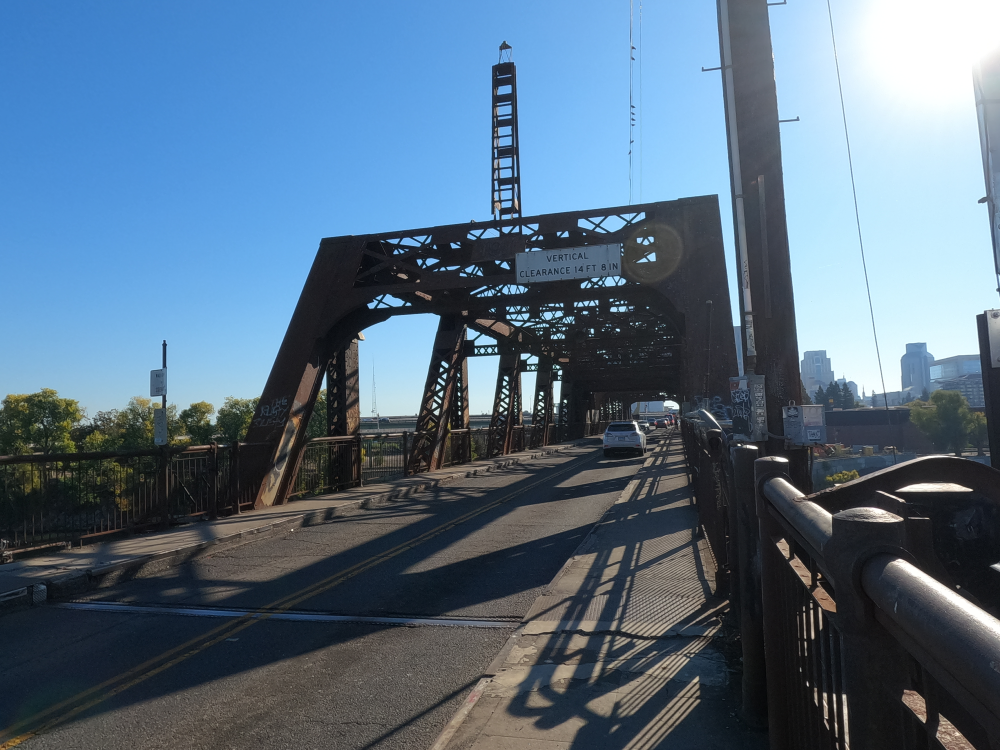
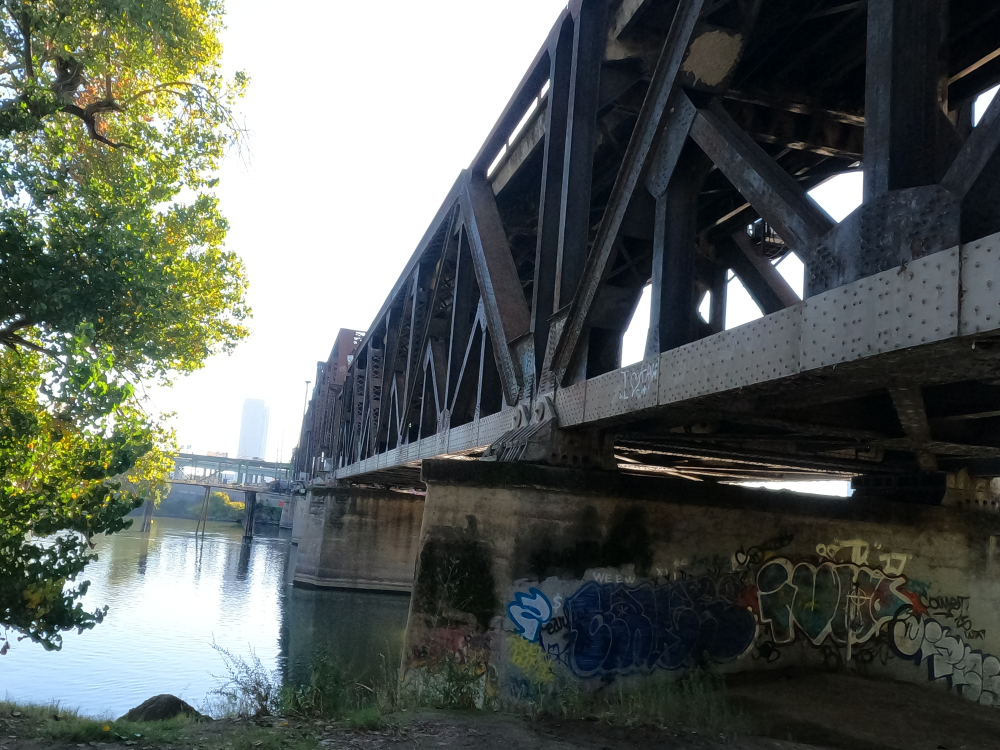
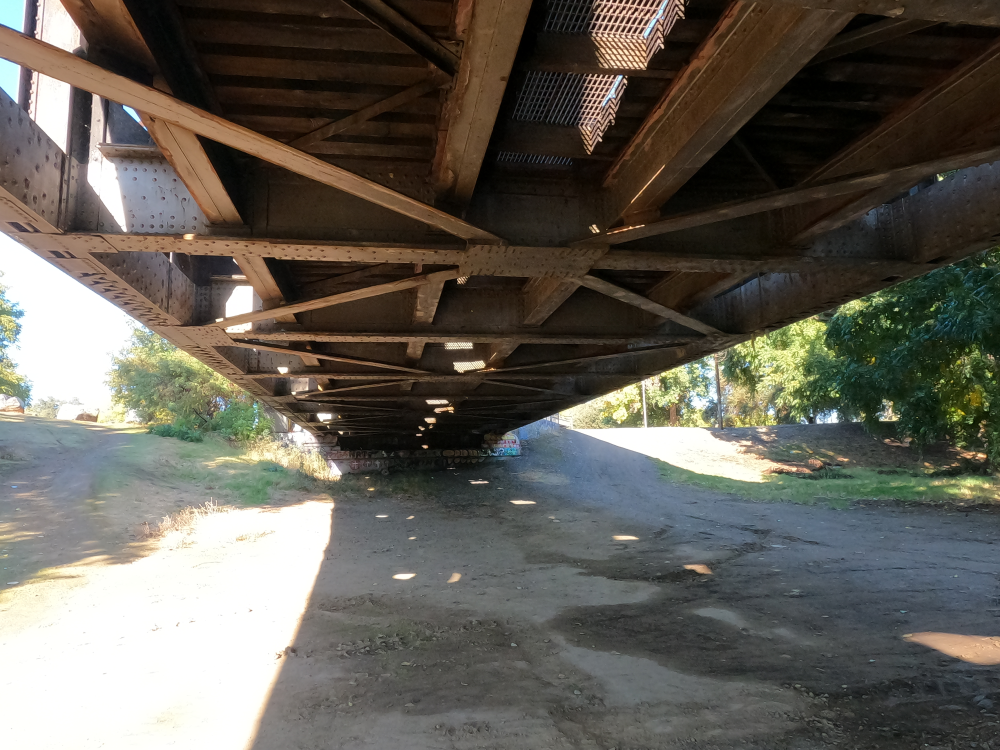
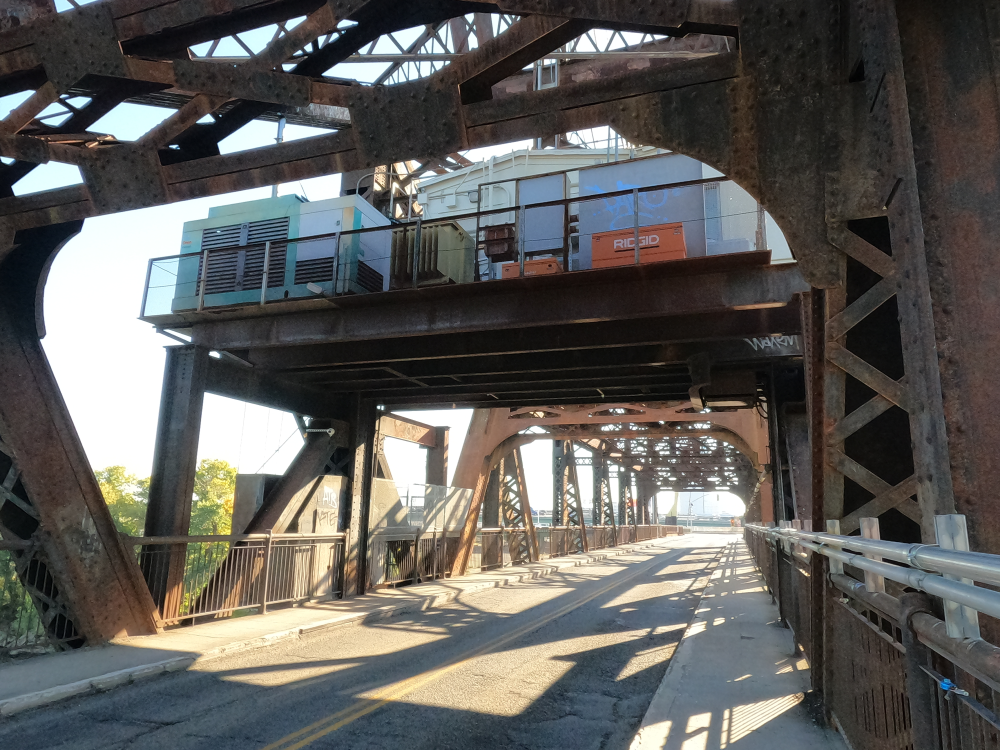
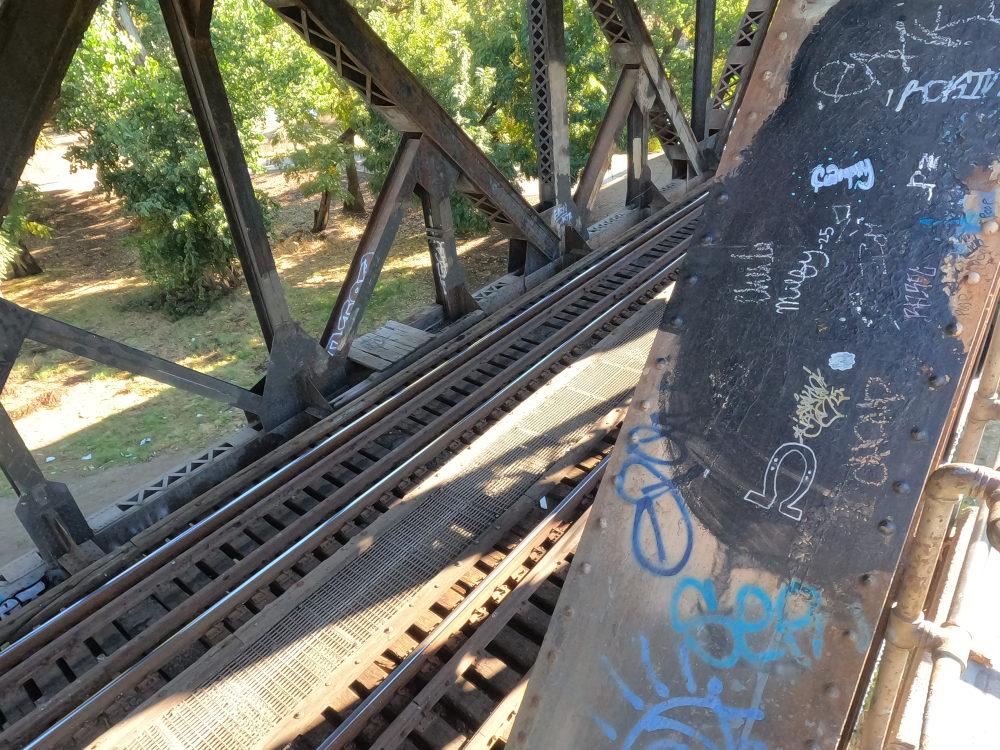
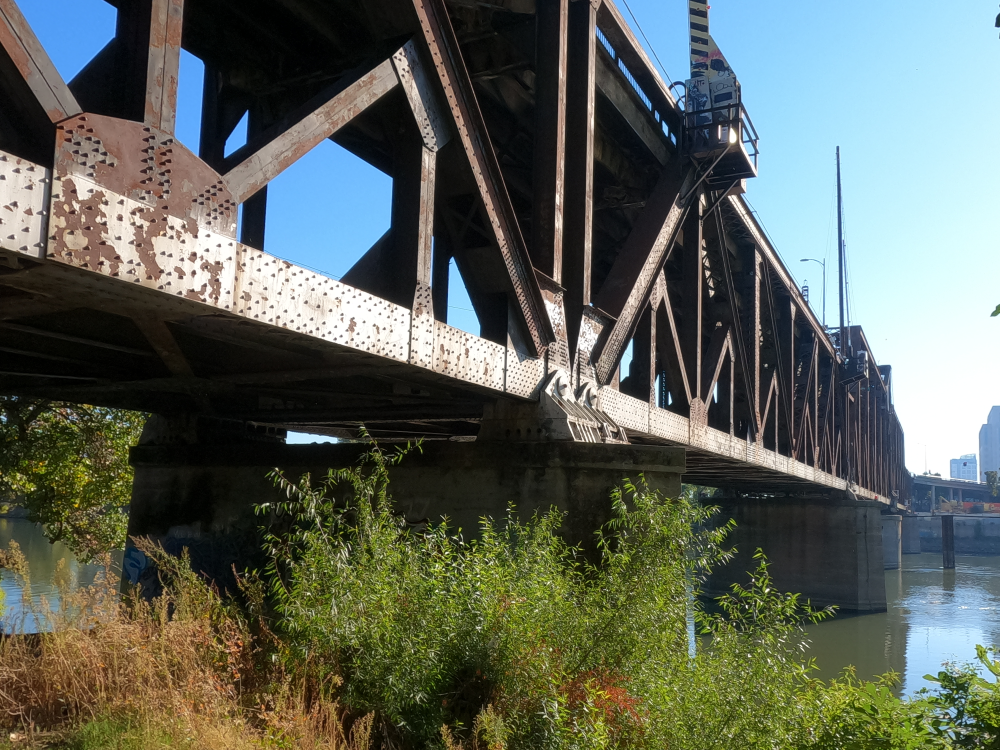
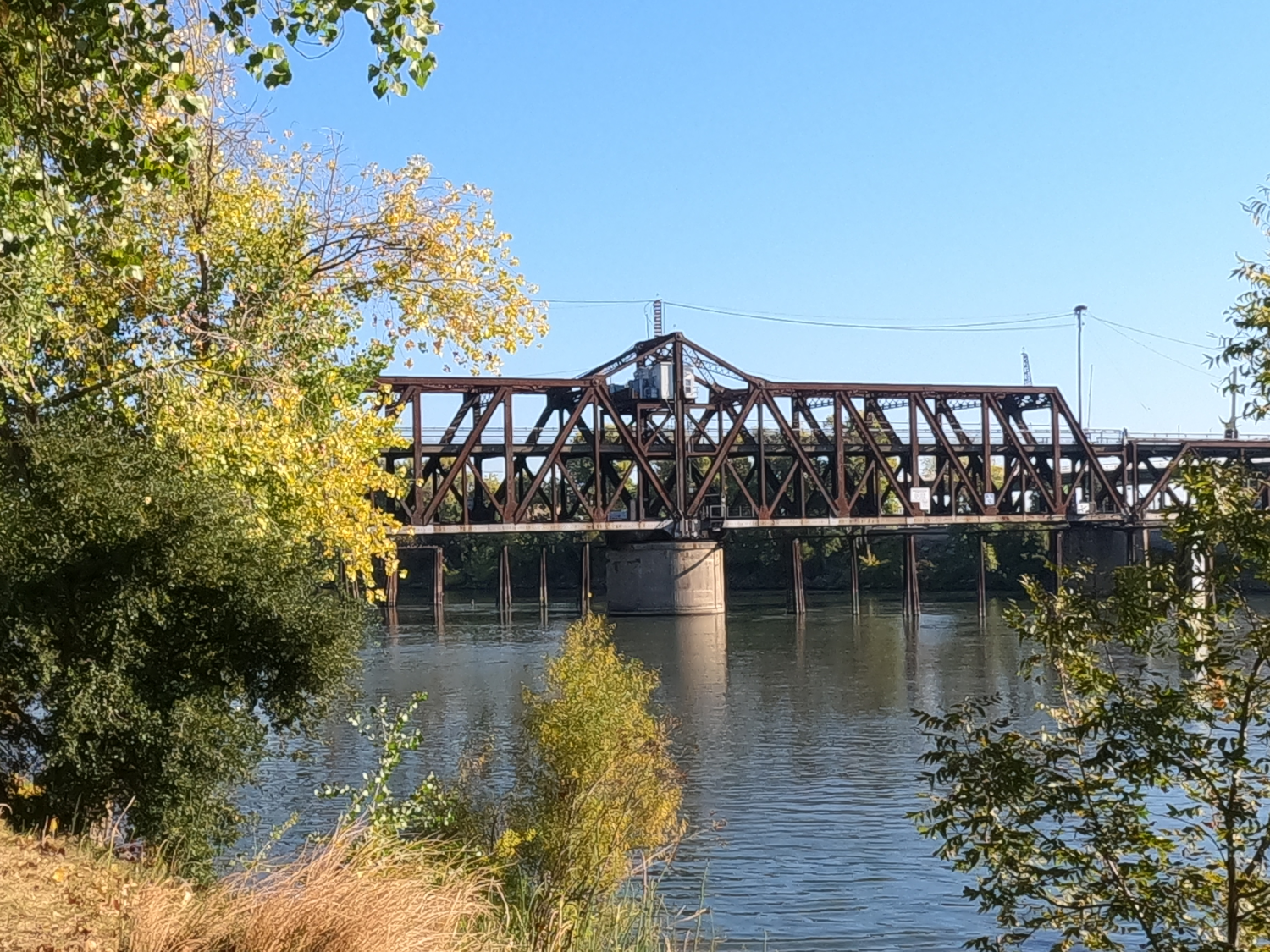
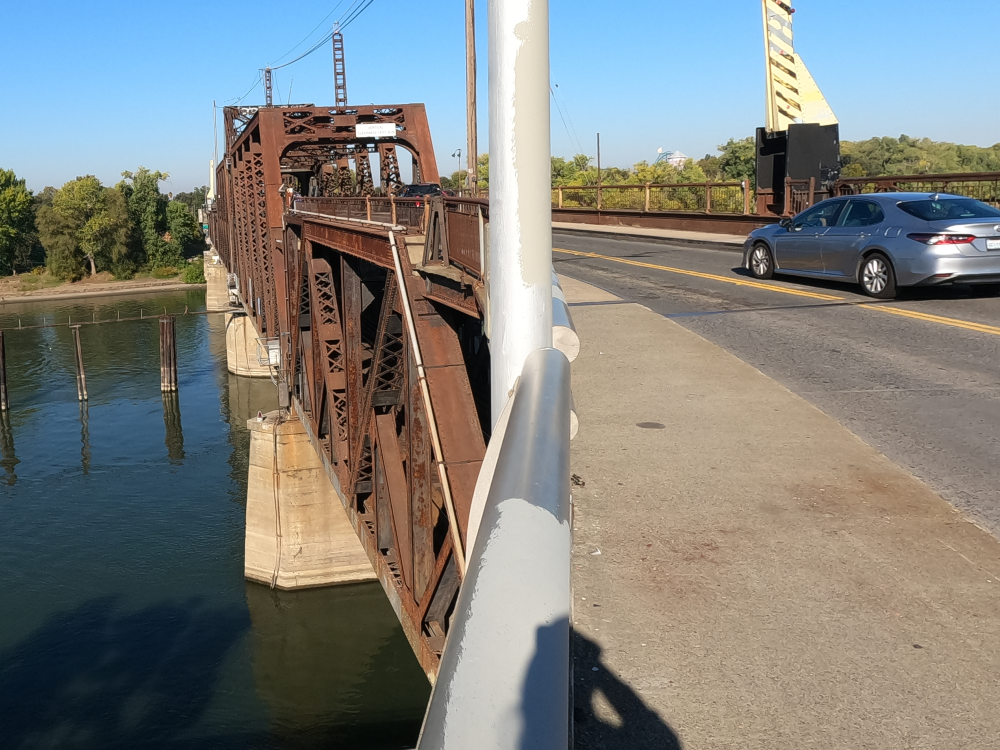
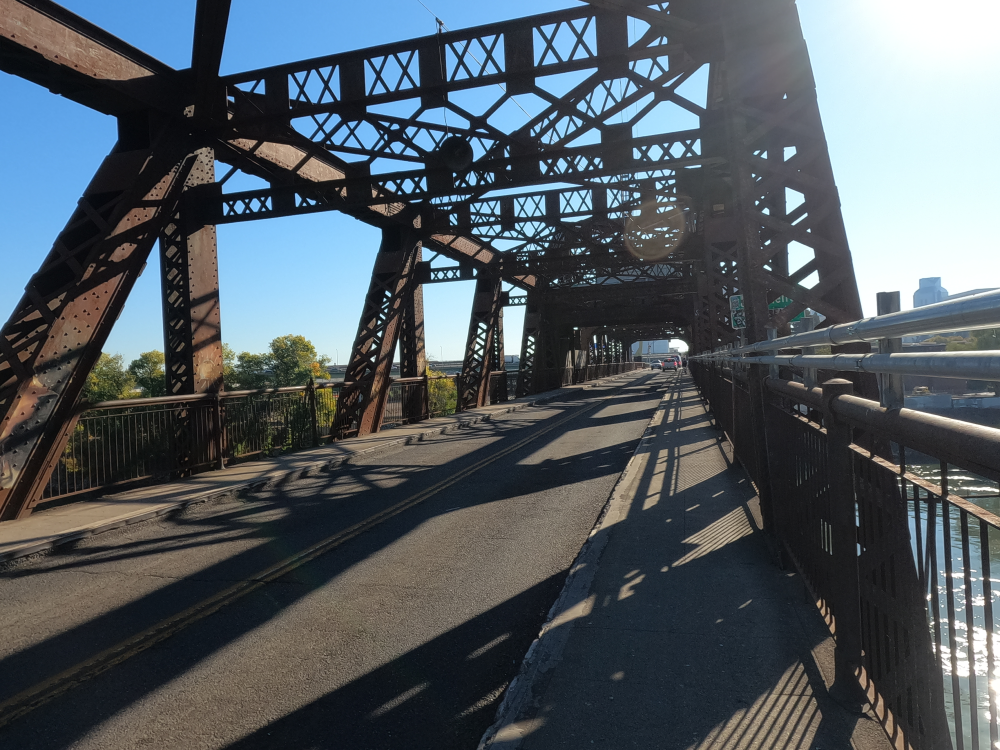
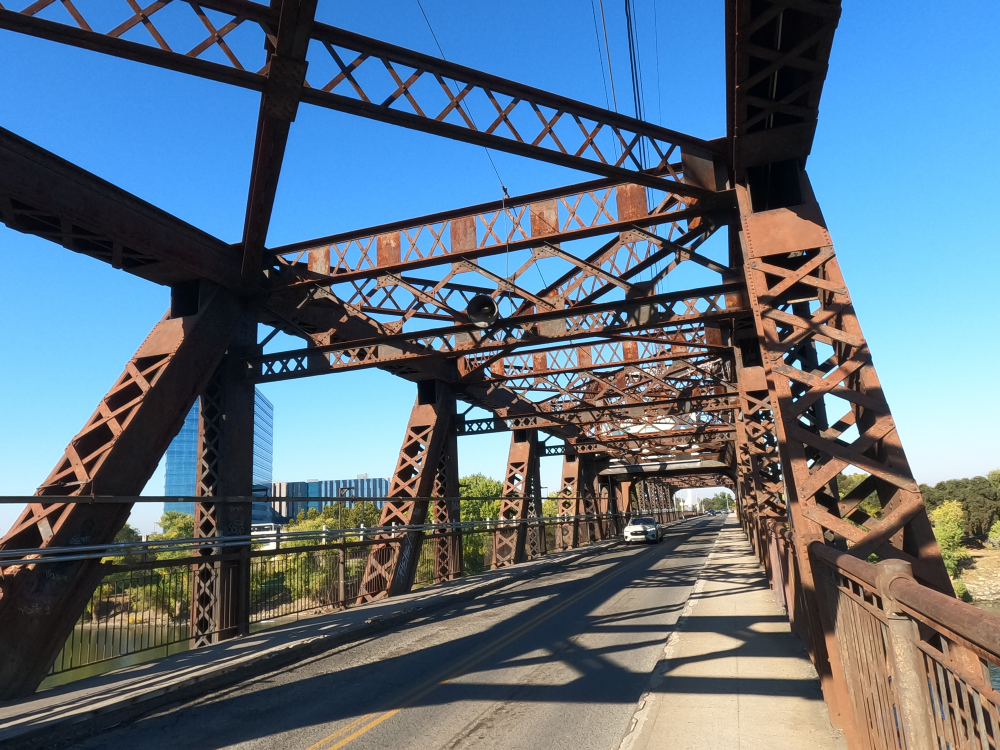
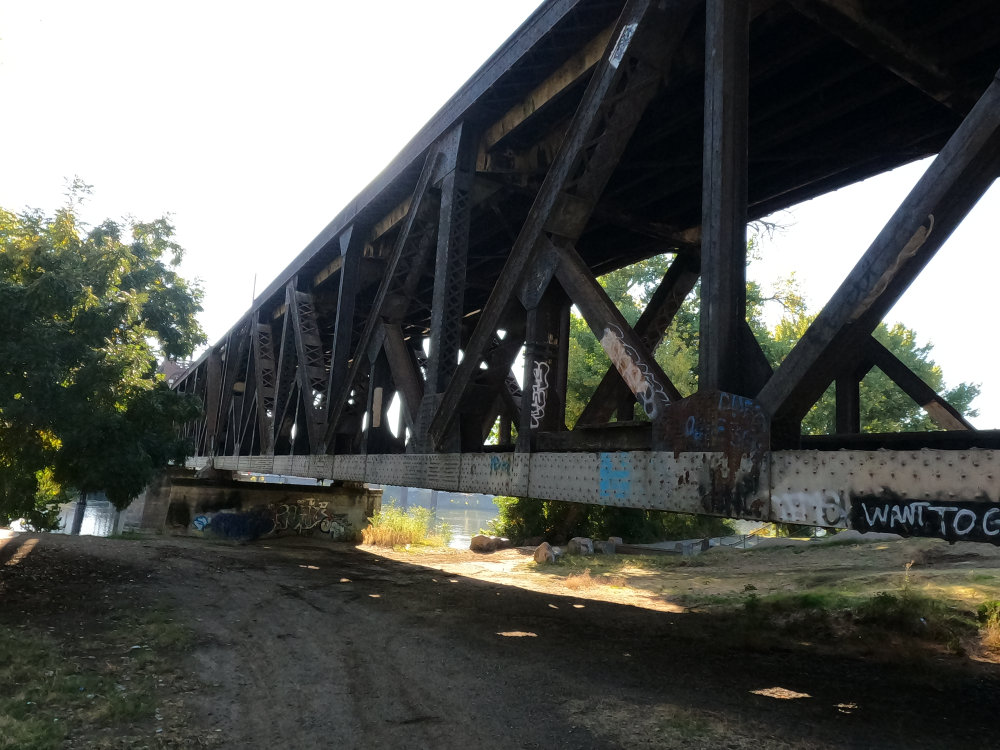
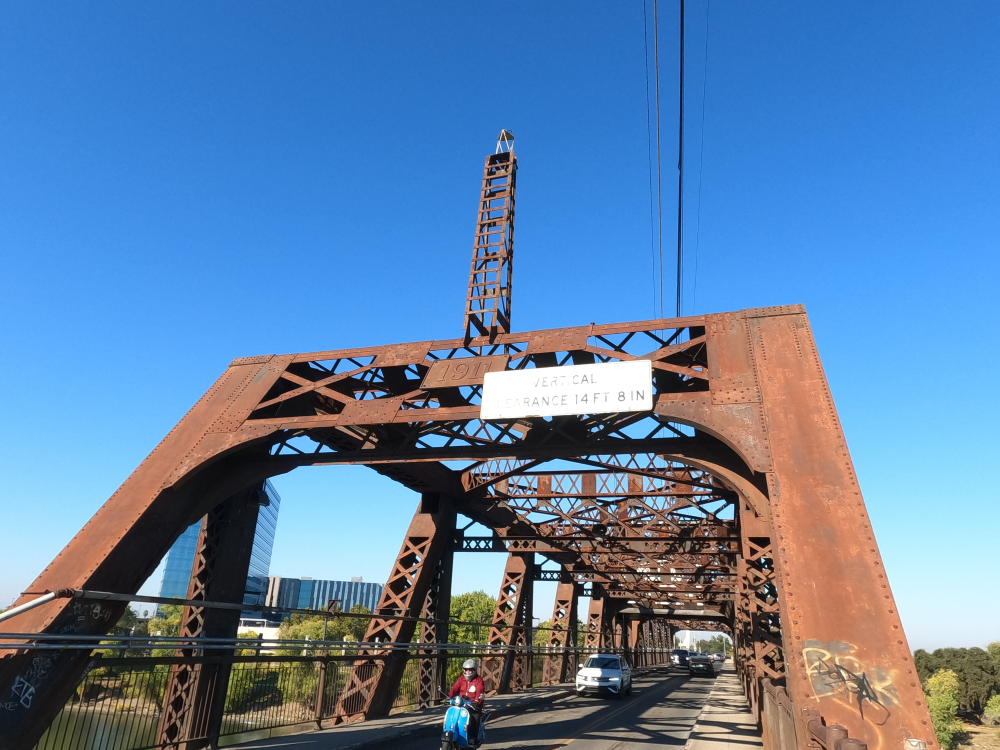
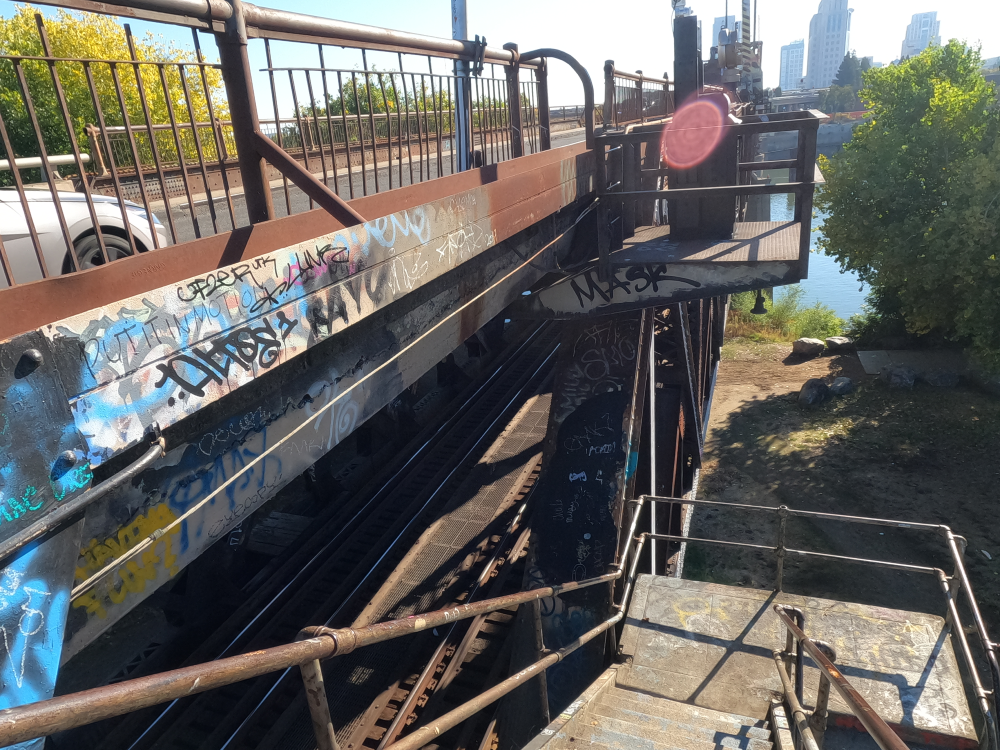
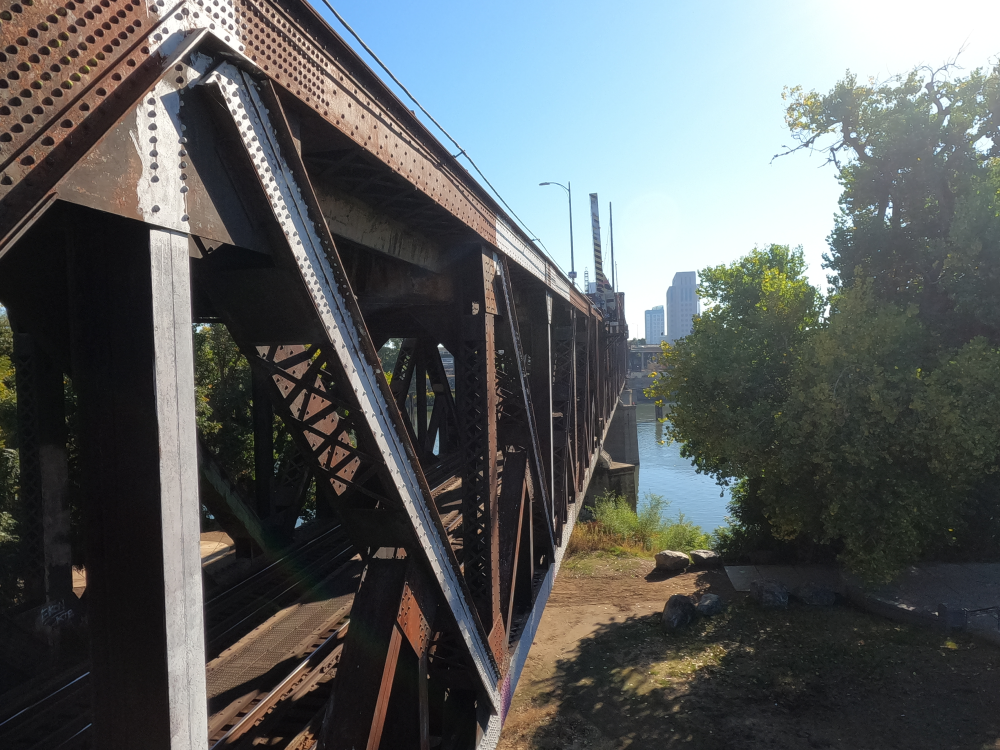
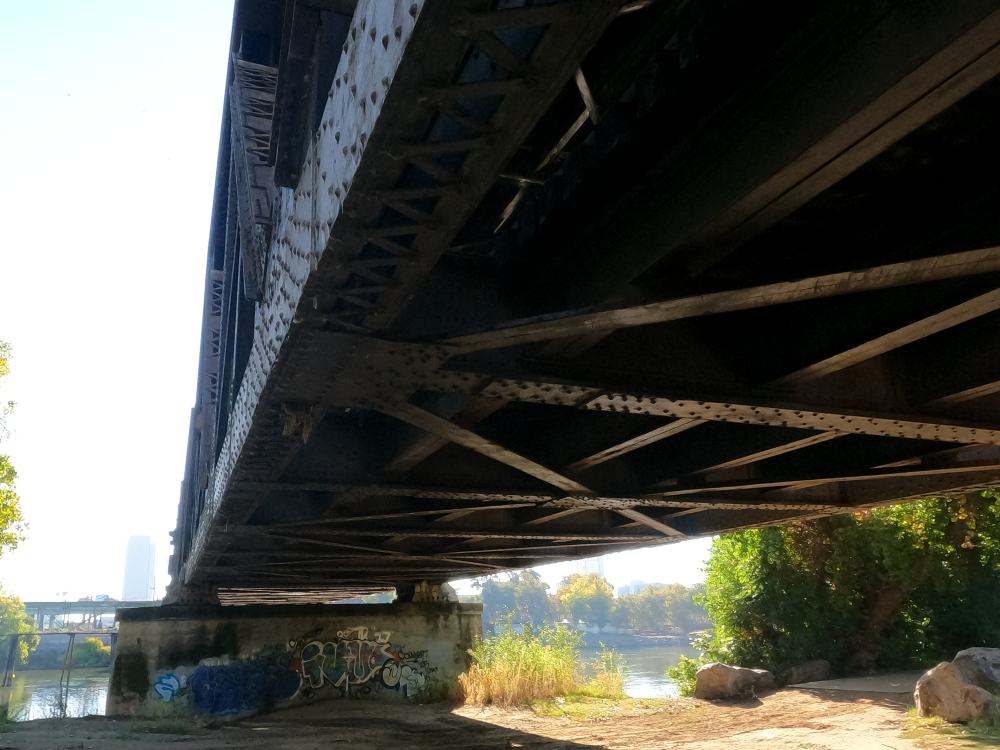
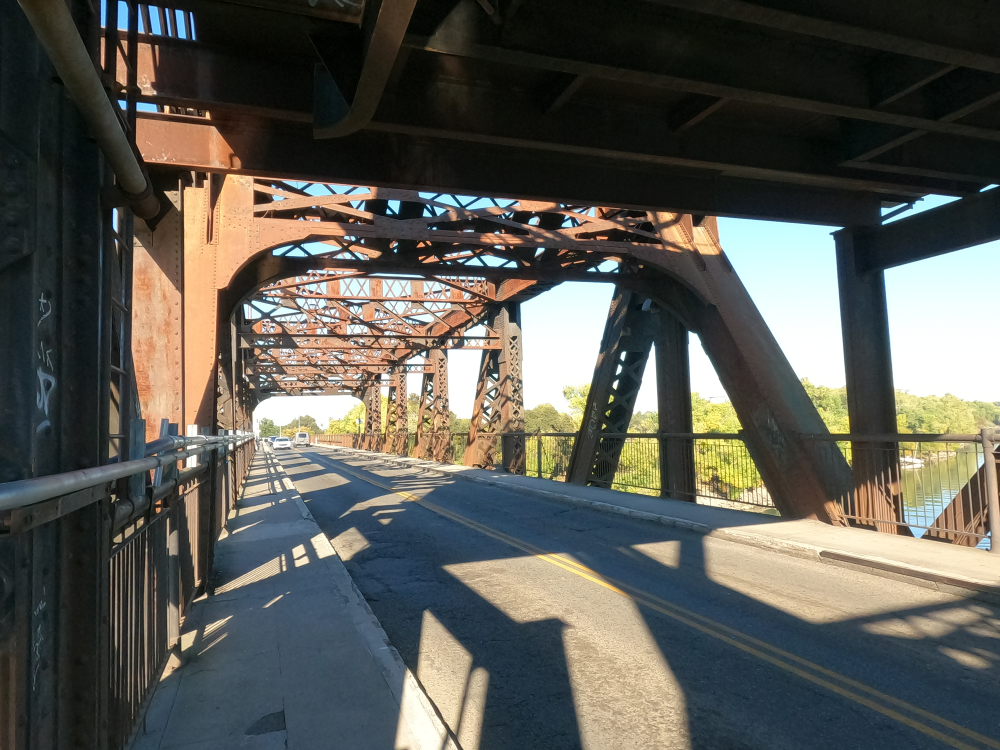
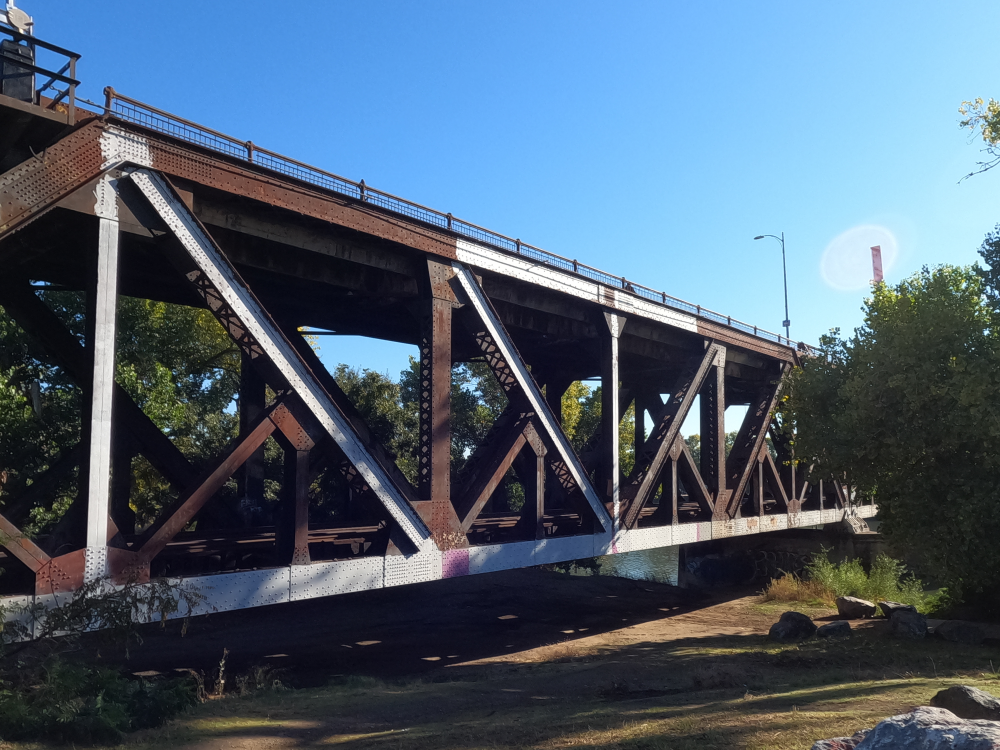
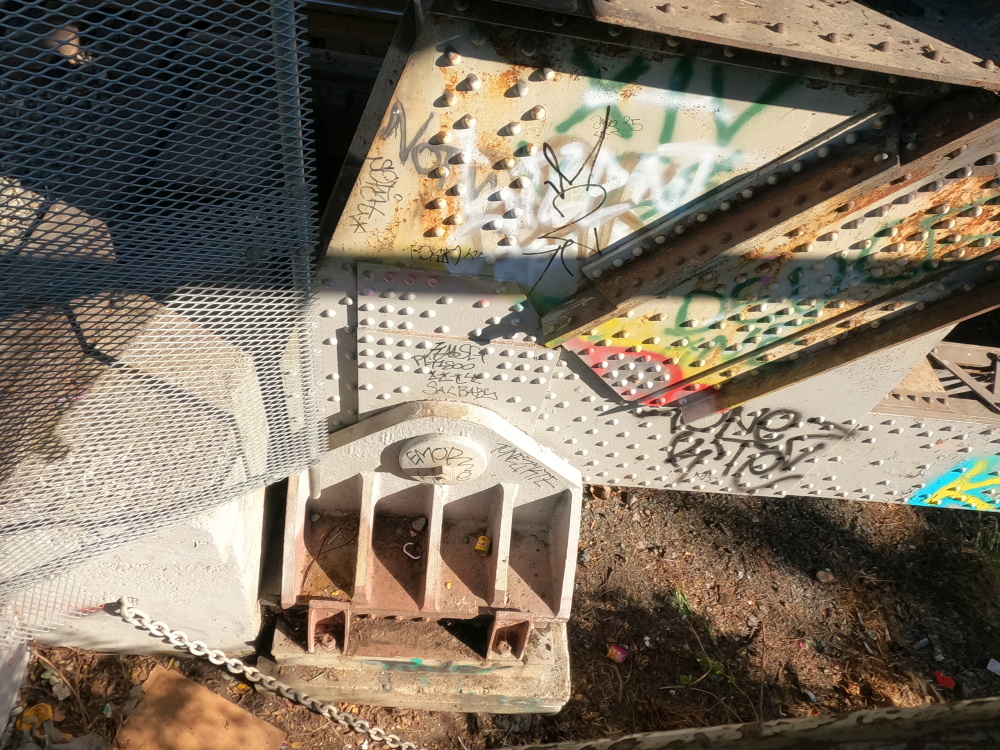
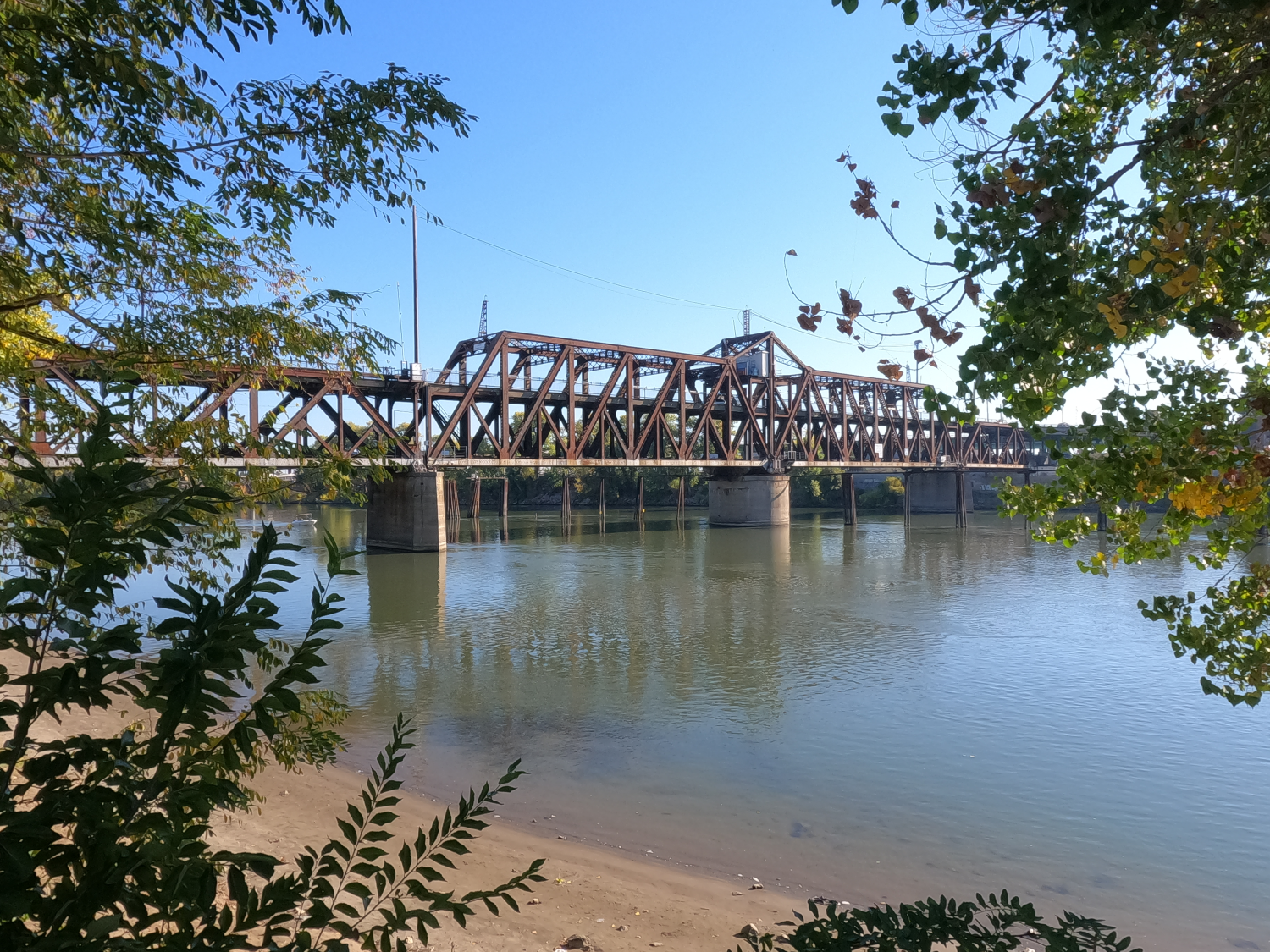
The I Street Bridge is a Baltimore Through Truss double-deck swing bridge across the Sacramento River in Sacramento, California. The upper level carries vehicular traffic on California Route 16, while the lower level carries the Union Pacific Railroad. Double-deck swing bridges are exceedingly rare, making this an important example. It opened in 1911, making it the oldest remaining swing bridge on California highways. The center bearing swing span weighs approximately 6,300,000 pounds, making it the heaviest in the world at the time of its construction. It remains the heaviest in the U.S.
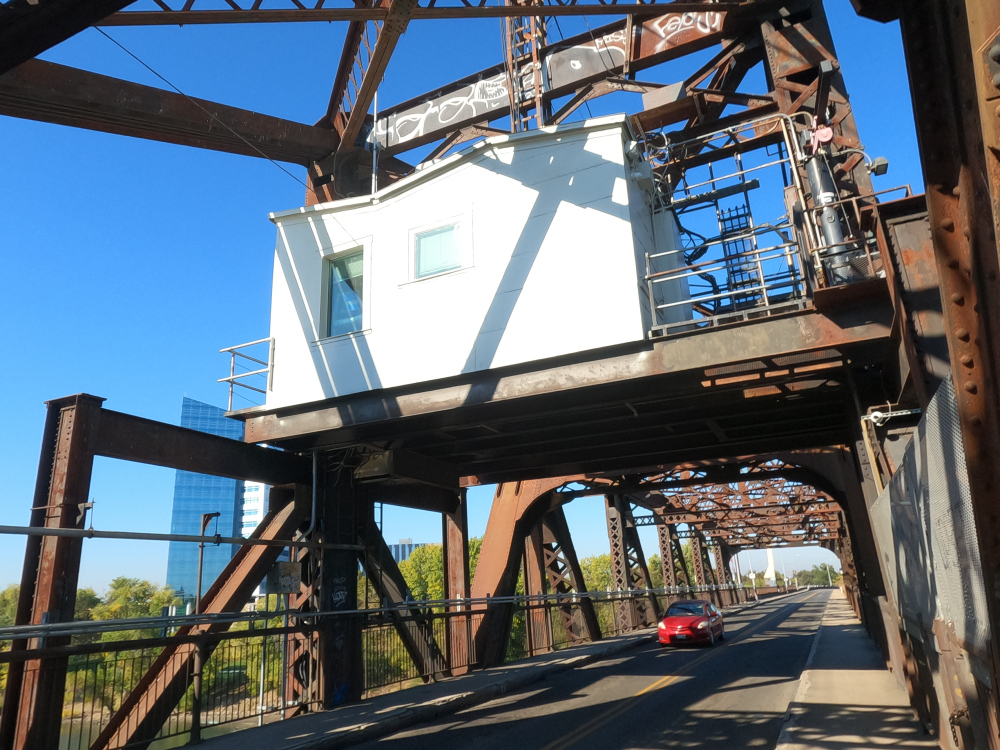
Swing bridges are typically designed to open either clockwise or counterclockwise. This bridge was designed to open in either direction, which further complicates its operation. The bridge operator is housed in a control cabin situated in the truss above the upper roadway.
This site has a long history of moveable railroad bridges. The first bridge was built by the California Pacific Railroad Company and opened in January of 1870. It was a wooden Howe truss drawbridge. After purchasing the California Pacific Railroad in 1876, the Central Pacific Railroad replaced the bridge with a new wooden Howe Through Truss swing bridge, which opened in 1878. Both bridges carried both wagon and rail traffic despite their narrow widths. Flagmen were stations at both ends of the bridge to ensure safety. A third bridge was built from 1893 to 1895 as a joint venture between the Southern Pacific Railroad and the governments of Sacramento County and Yolo County. This wooden Howe truss swing bridge was the first double-deck bridge. It carried wagon traffic on the upper level and rail traffic on the lower level. This bridge was intended to be built from steel, and the counties contributed to its cost with this understanding. This led to a long controversy and litigation between the counties and the railroad after the bridge was completed, and a new bridge was required soon after.
The current bridge was also a joint venture between the Southern Pacific Railroad and the governments of Sacramento County and Yolo County. However, Yolo County delayed giving its full support for the bridge, causing some confusion. Southern Pacific began constructing the railroad portion of the bridge before the addition of the second level was finalized. However, final support came a few months after construction started, allowing the upper deck to be built, which carried wagons and eventually automobiles. Construction was completed on April 29, 1912.
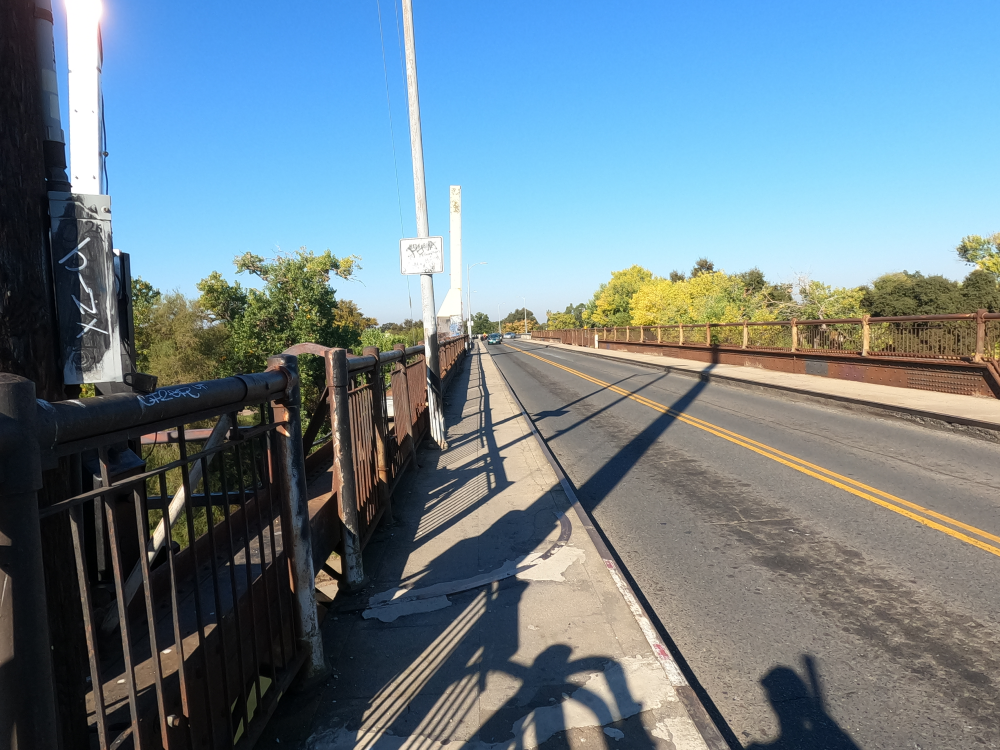
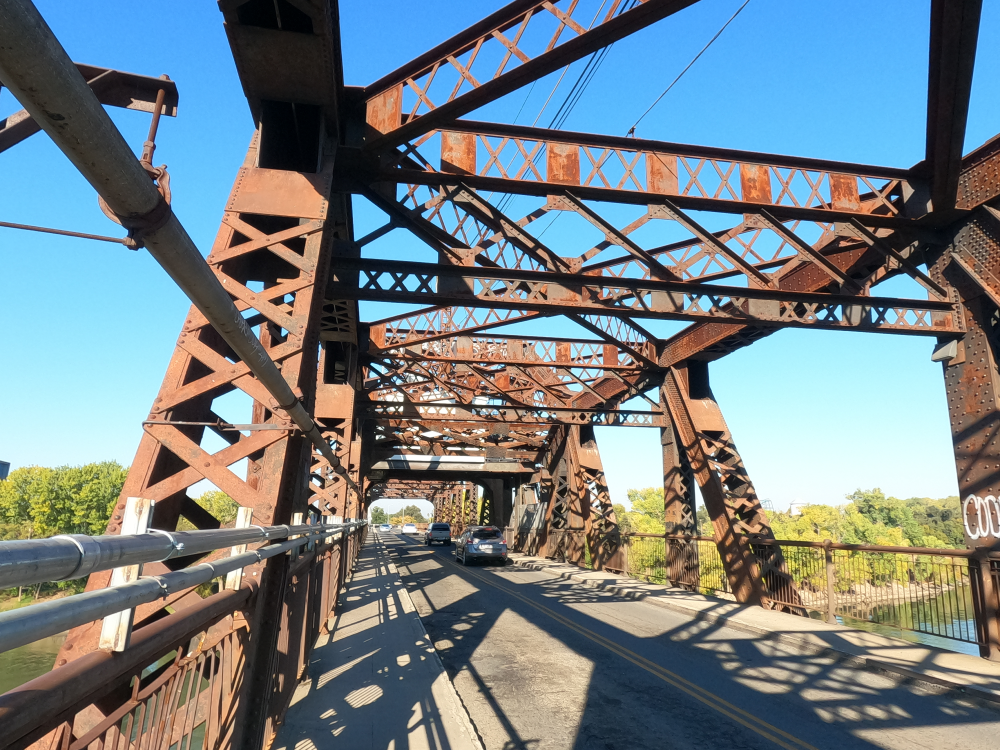
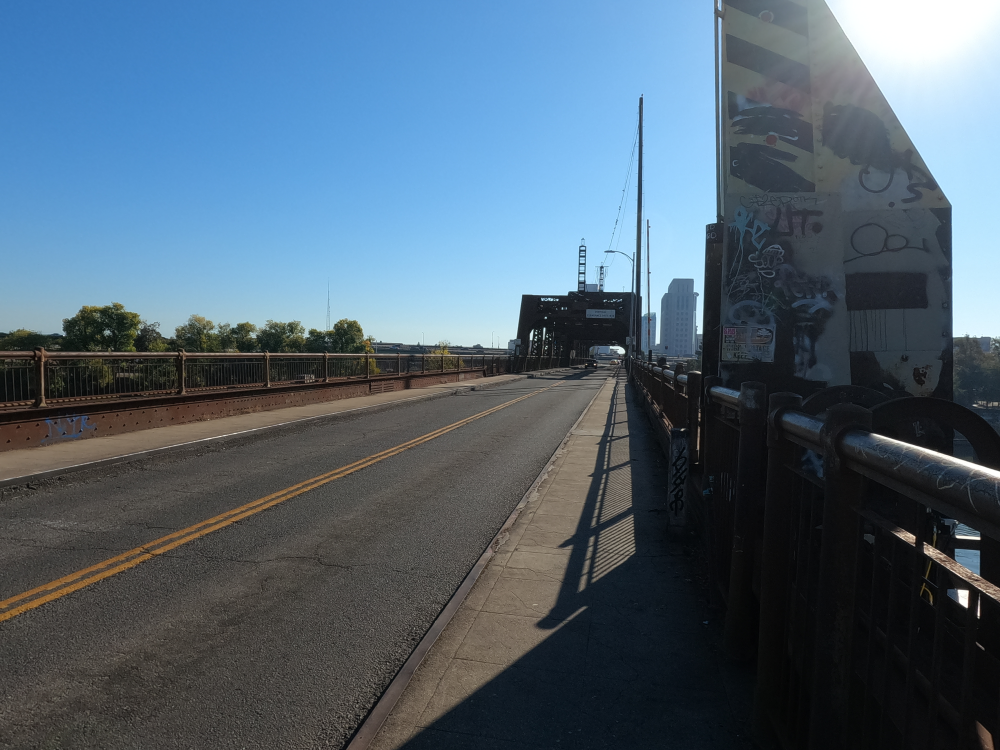
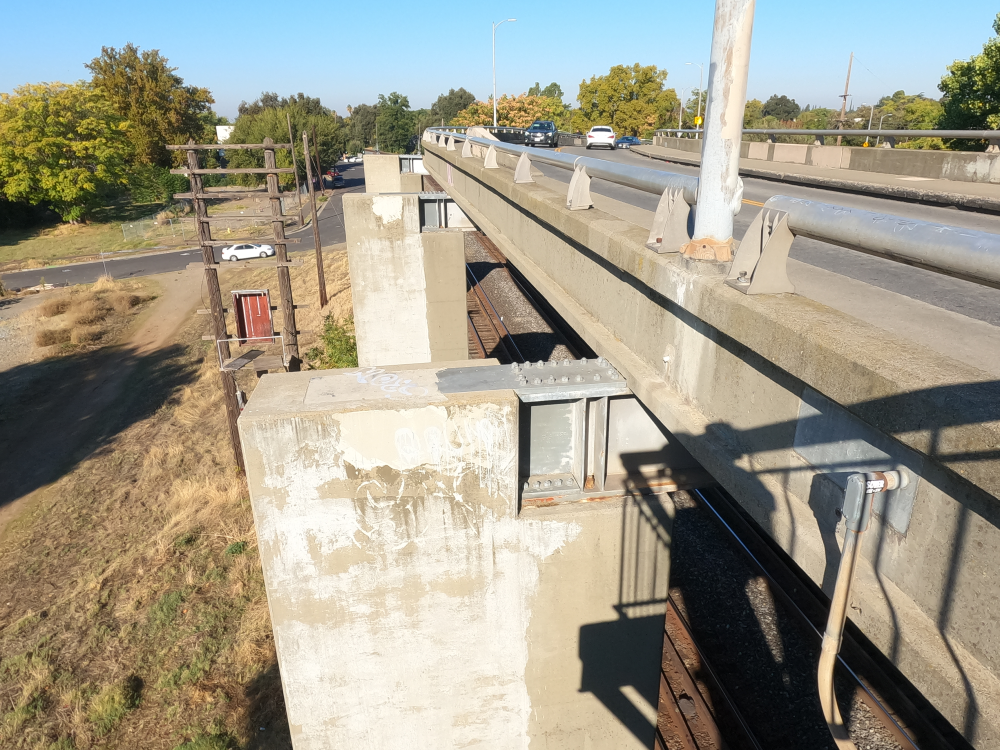
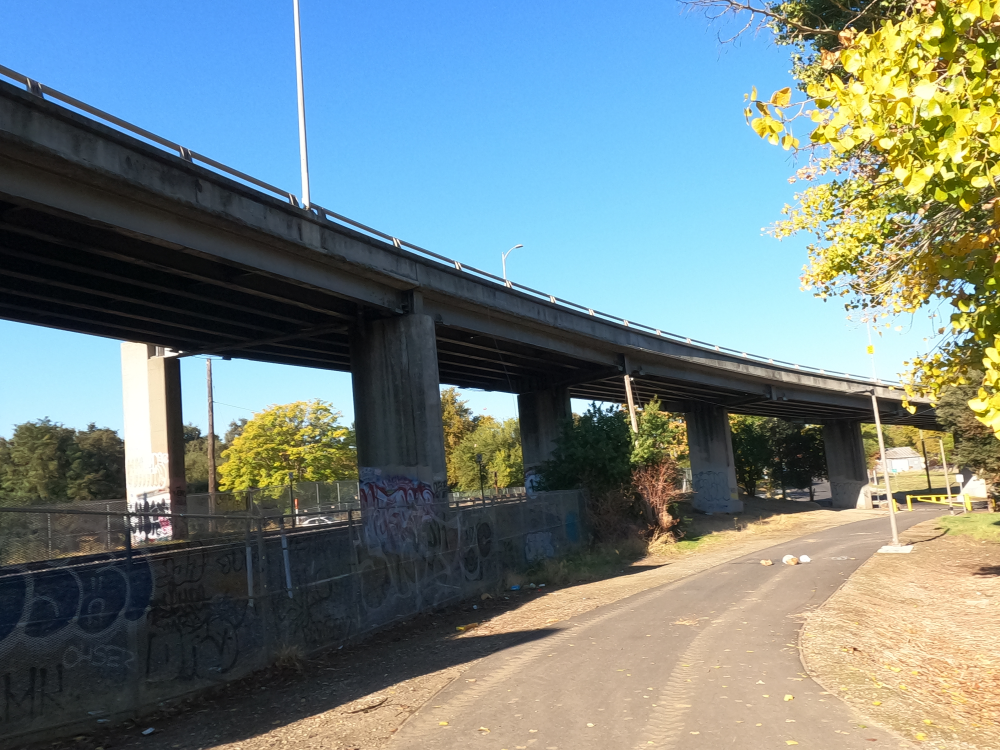
Unfortunately, this bridge has outlived its useful life. The nine-foot-wide lanes are too narrow to serve buses or trucks, and the sidewalks are too narrow to meet current accessibility standards. The City of Sacramento has started the I Street Bridge Replacement Project, which is really an augmentation project. The railroad will remain open and operational on the existing bridge, but a new bridge will be constructed for vehicular traffic.
The I Street Bridge Deck Conversion for Active Transportation Project will convert the existing upper roadway to a pedestrian and bicycle path. The majority of the existing approach roadways will be demolished, and four bicycle/pedestrian ramps will be constructed (two on each side of the river). These ramps will also be designed to allow access for emergency vehicles and Union Pacific Railroad maintenance vehicles. The project is still in Preliminary Engineering, and an anticipated construction date has not been published. Once the project is complete, this will be the only active, moveable, double-deck combination railroad/pedestrian bridge in the world.
The new bridge will be constructed upstream of the new bridge. It will be a vertical lift bridge, similar to Tower Bridge which is built in 1934 and is about half a mile downstream from the existing I Street Bridge. The new bridge will accommodate automobiles, bicycles, transit, and pedestrians. Construction is anticipated to start in the spring of 2026 and will be completed in 2031.
References