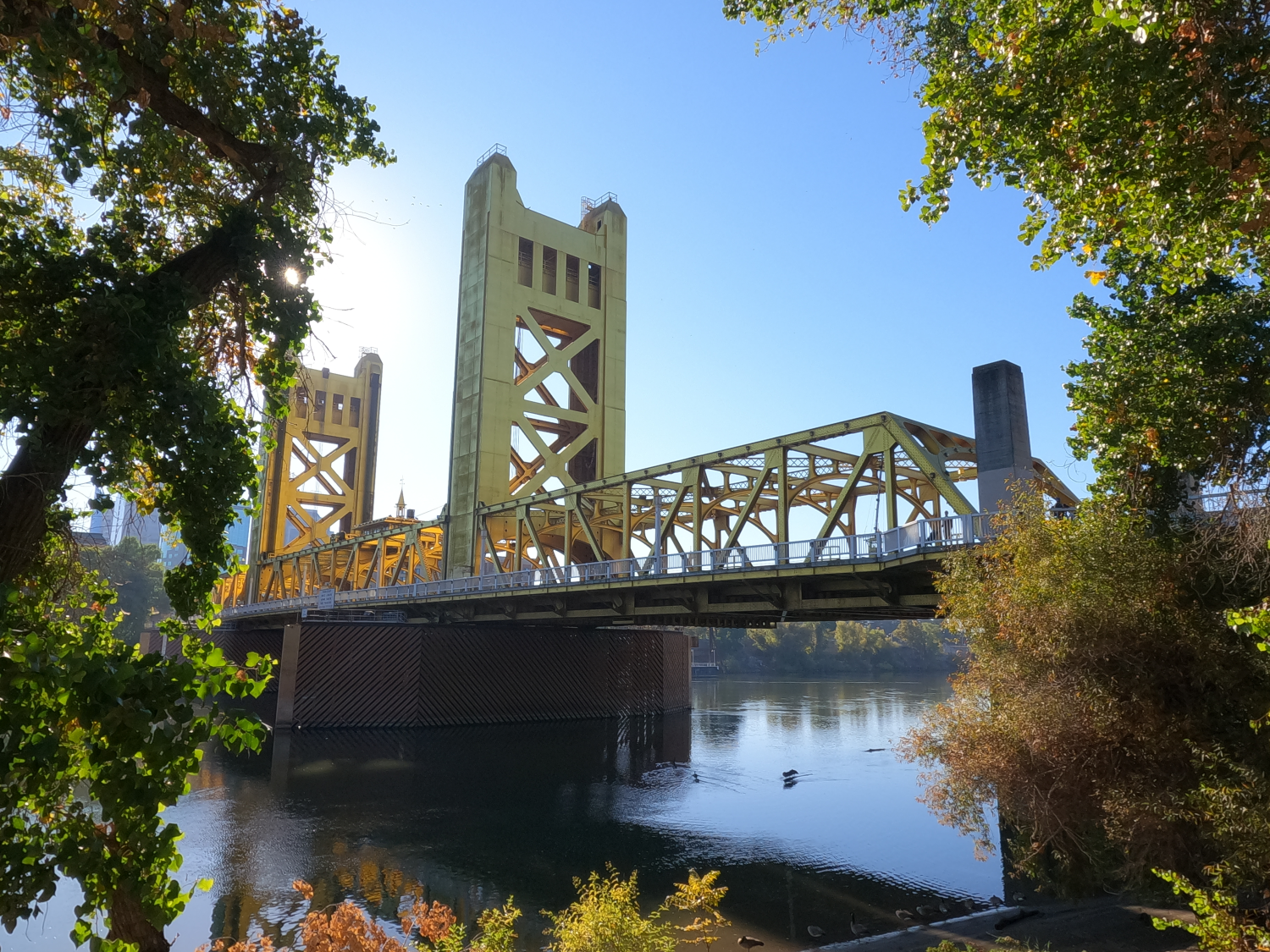
Tower Bridge
NBI Information
Location
State: California
County: Yolo County
Feature Carried: West Capitol Ave
Feature Crossed: Sacramento River
Latitude, Longitude: 38.5808,-121.5097
Toll: On free road
Maintenance Responsibility: State Highway Agency
Structure Open, Posted, or Closed to Traffic: Open, no restriction
History
Year Built: 1934
Historical Significance: Bridge is on the National Register of Historic Places.
Year Reconstructed: 2005
Picture Date: October 18, 2025
Geometry
Lanes on Structure: 4
Lanes under Structure: 0
Skew: 0 degrees
Number of Main Spans: 1
Main Structure Type: Movable - Lift
Main Structure Material: Steel
Number of Approach Spans: 7
Approach Structure Type: Stringer/Multi-beam or Girder
Approach Structure Material: Steel
Condition
Inspection Date: June 2023
Deck Condition: Satisfactory
Superstructure Condition: Good
Substructure Condition: Fair
Channel Condition: Very Good
Culvert: Not Applicable
NBI Year: 2024
Bridge Information
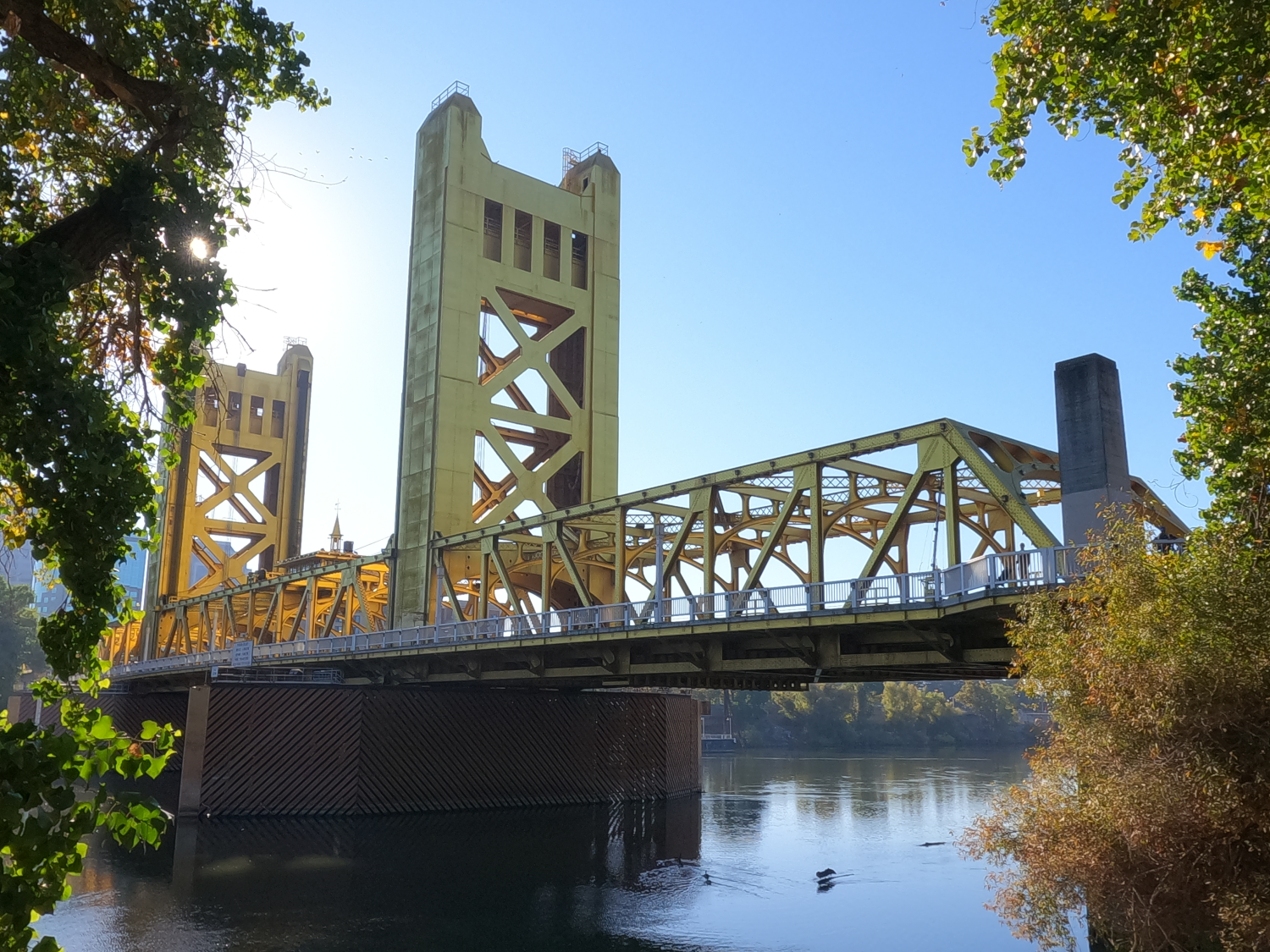
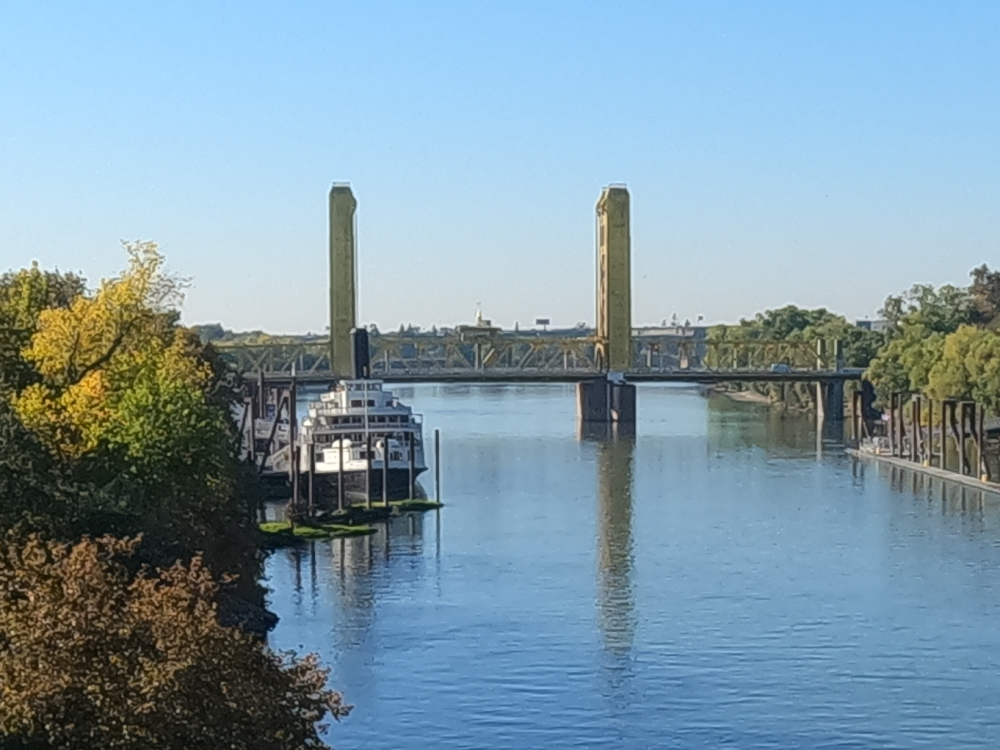
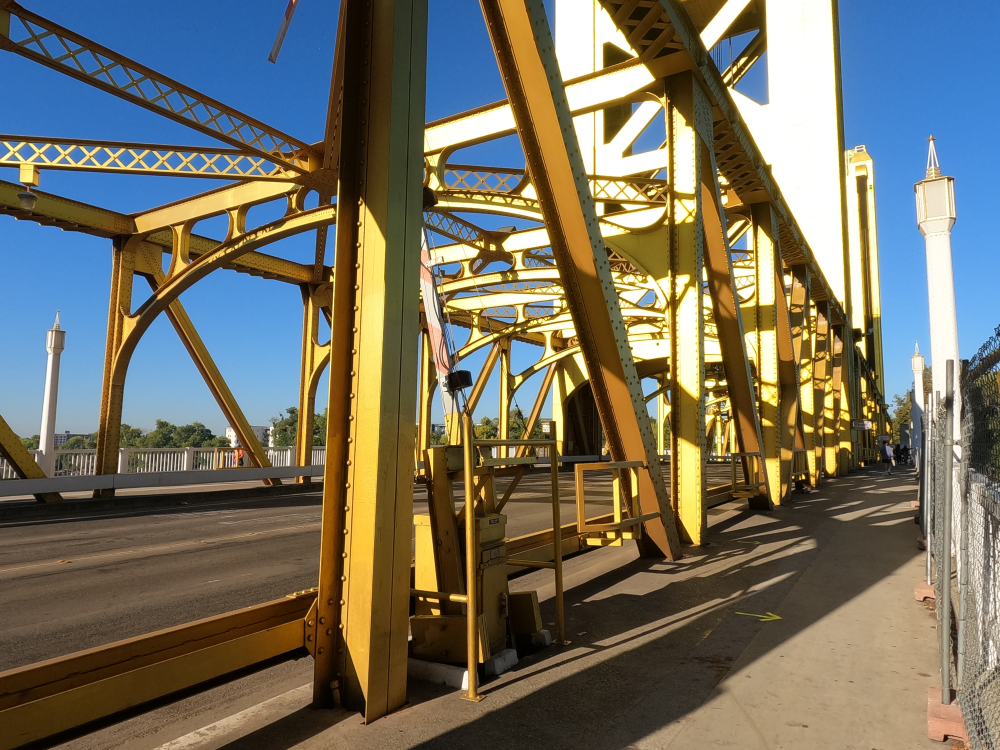
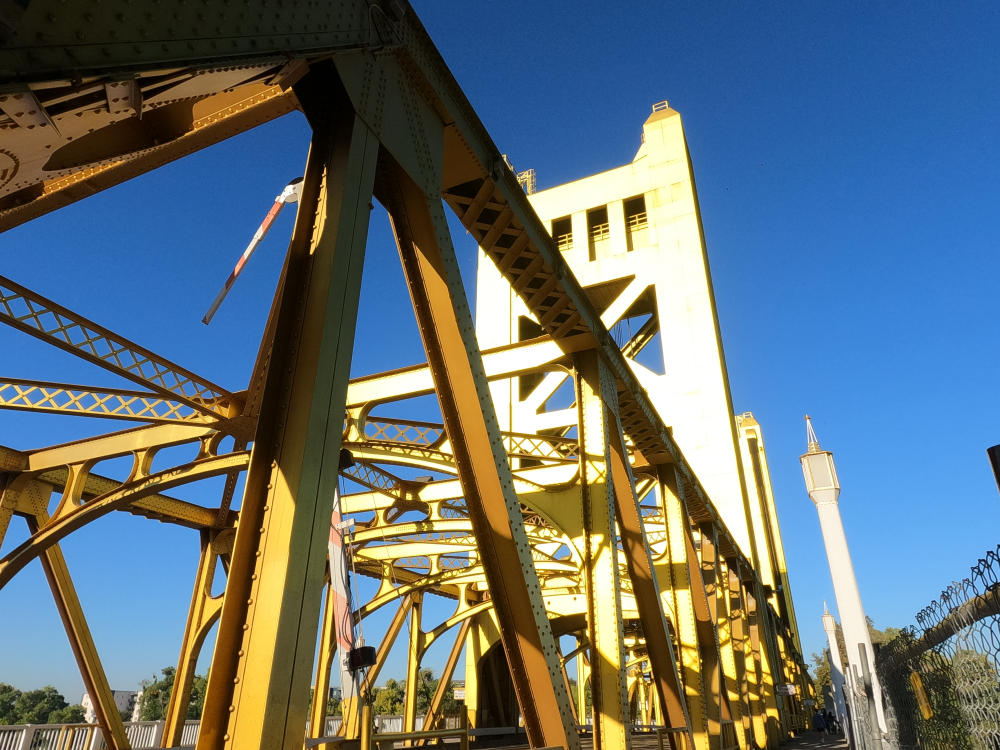
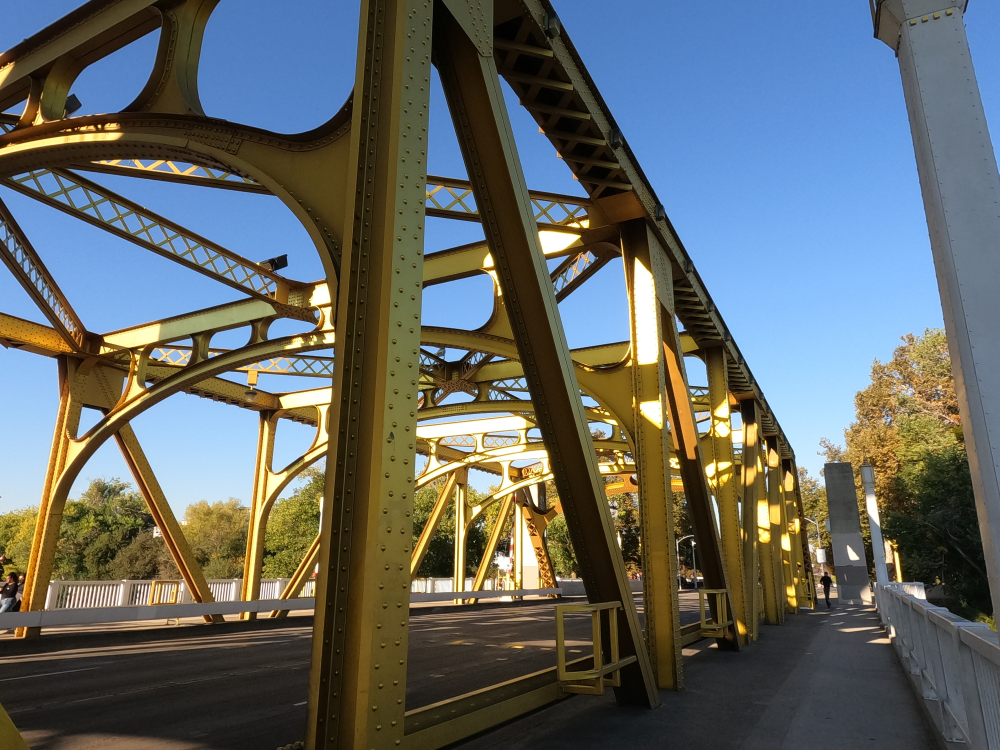
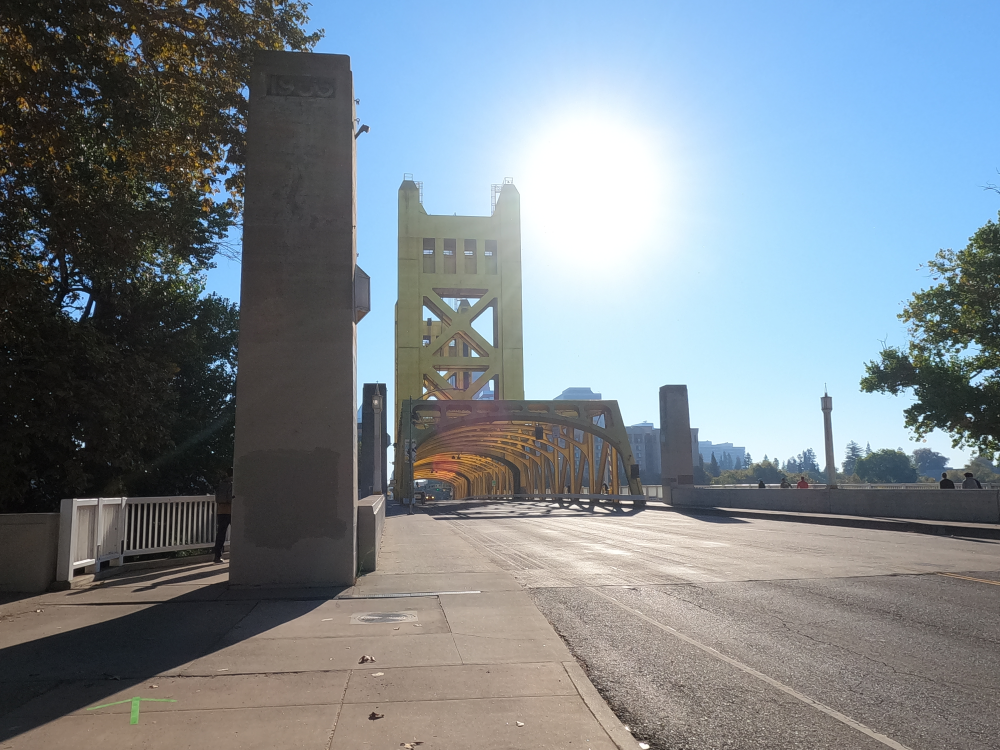
The Tower Bridge, also called the M Street Bridge, is a vertical lift bridge across the Sacramento River. Both the main approach spans and the lift span are Pratt through trusses, with several built-up stringer approach spans leading up to the truss spans. It was the first vertical lift bridge in the California Highway System.
The Tower Bridge was built to replace the previous 1911 M Street Bridge. This bridge was a swing through truss that was originally a railroad bridge. At some point, roadway sections were added as cantilevered sections on both sides of the existing bridge. However, Sacramento’s population more than doubled between 1910 and 1935, which quickly overwhelmed the bridge. Sacramento Northern Railway relinquished its rights to the bridge, and trains were diverted to a temporary timber-and-steel "shoofly" bridge that was approximately 75 feet upriver of the existing bridge. Roadway traffic was diverted to the nearby I-Street Bridge, and construction for the new bridge began on July 20, 1934. Construction of the new bridge created 1,500 new jobs at a time when the nation was struggling with the massive unemployment as an effect of the Great Depression.
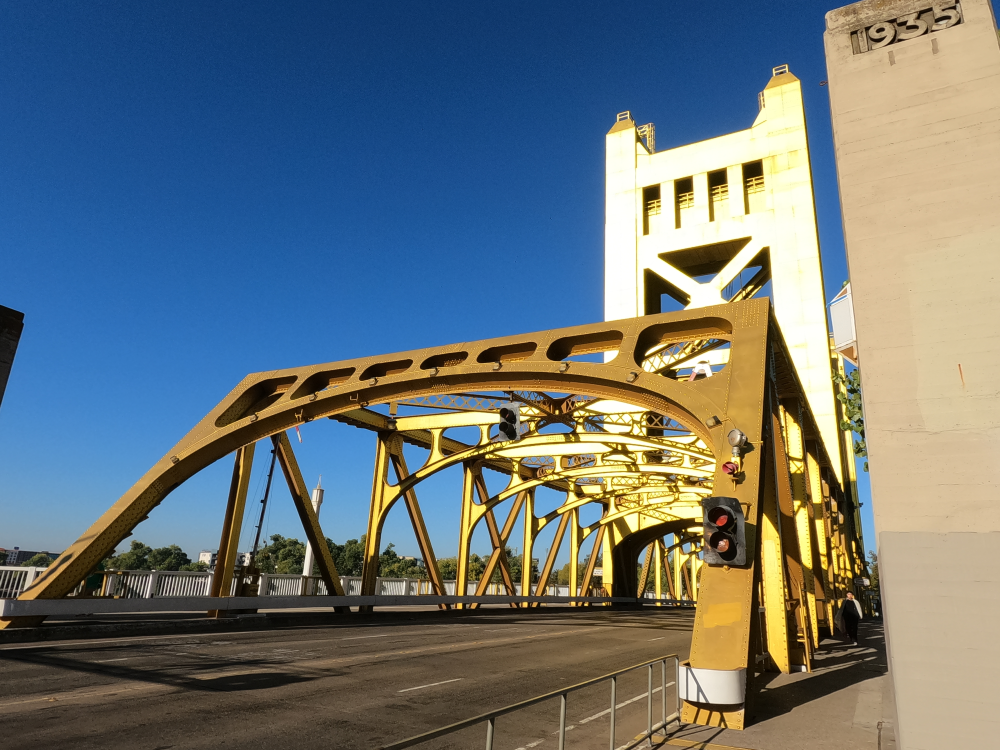
The new bridge was designed with a similar layout as the previous bridge. There was a large 13-foot center lane for trains, flanked with single traffic lanes and sidewalks on either side. The railroad's rights to the bridge were set to expire in 1960. It was planned that the railroad tracks would be removed at that time, and the bridge would be converted to be fully for vehicular traffic. The first train crossed the bridge on November 7, 1935, and it was formally dedicated on December 15, 1935. As part of the dedication ceremony, 1000 homing pigeons were released to carry the news throughout California.
By the early 1960’s, Sacramento Northern Railway had obtained trackage rights to use the Southern Pacific Railroad’s nearby tracks over the I Street Bridge. The last train ran over the Tower Bridge in 1962, and the railroad tracks were removed the following year. The bridge was then converted to carry four traffic lanes.
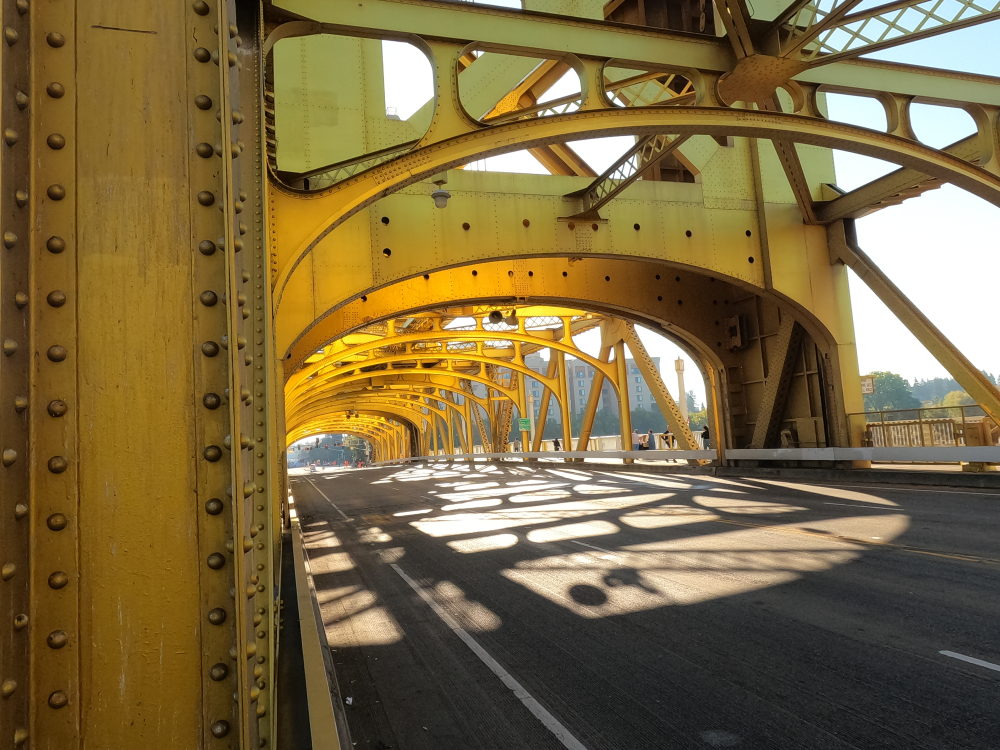
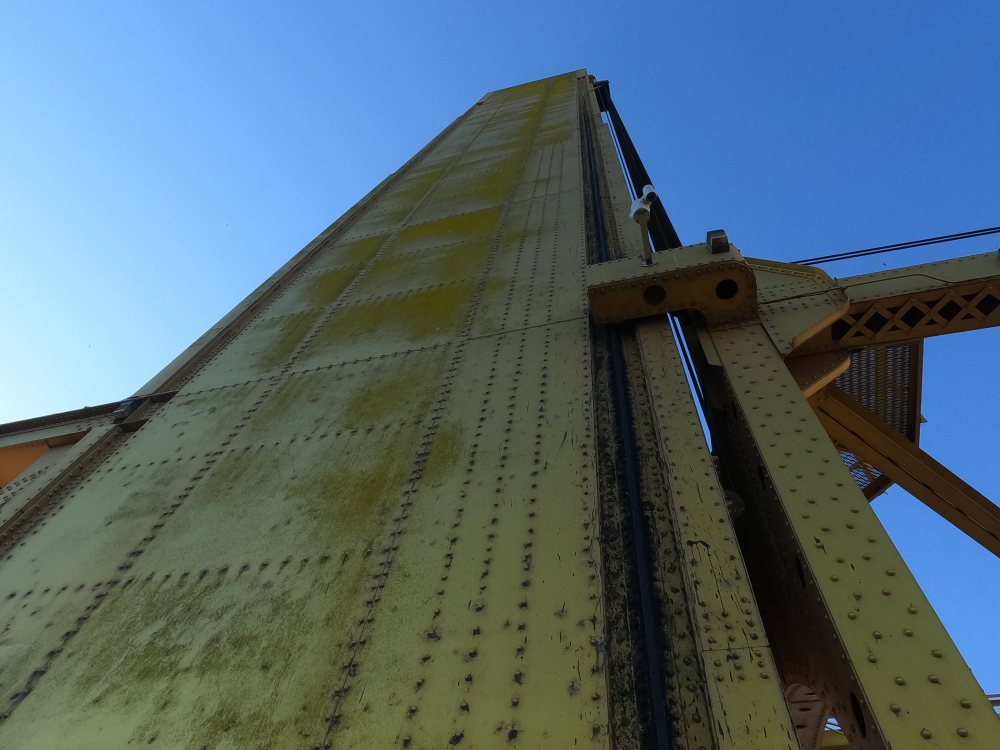
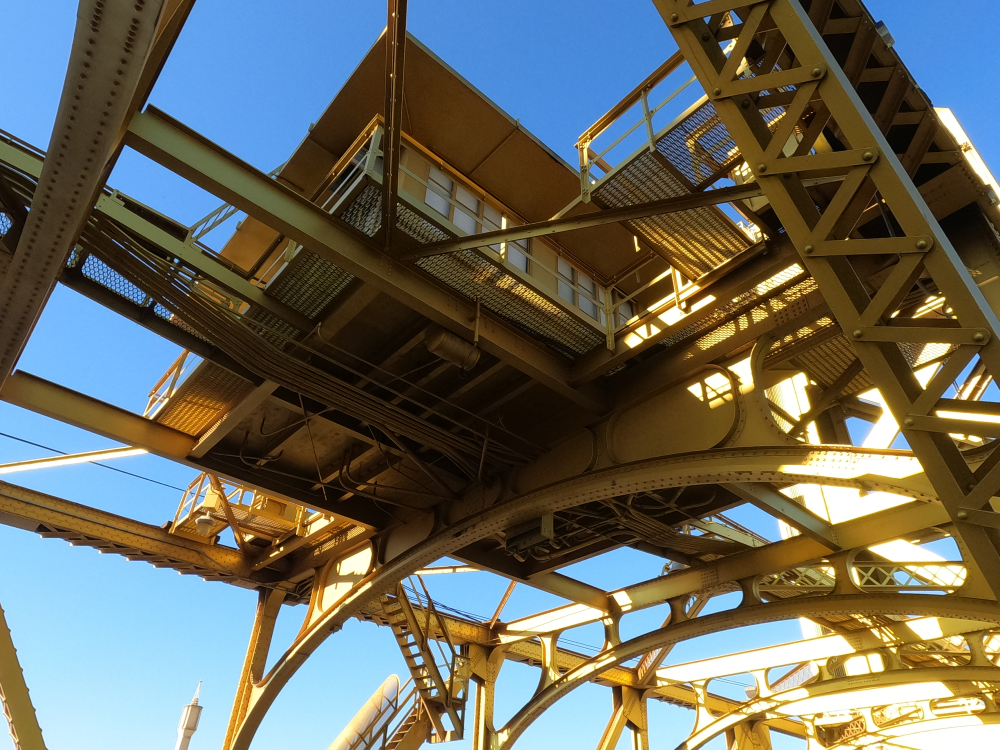
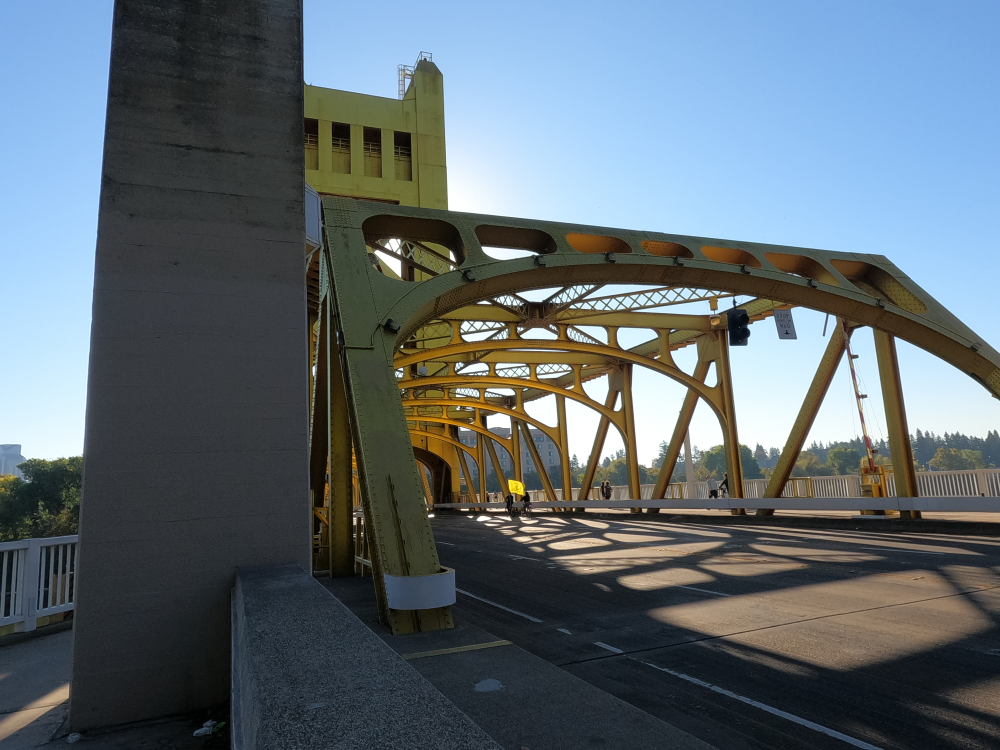
The design of this bridge was originally done by an architect (not an engineer) and is a rare example of a bridge that prioritized aesthetics. It is the gateway to the State Capitol, with the west front of the capitol building directly east of the bridge. The lift span towers were clad with solid metal plates to hide the bracing on the tower posts, counterweights, and counter chains. The X-bracing on the tower faces were cleverly crafted so that only flat surfaces were visible, with the flanges and webs of the actual bracing being hidden. In addition, ornate riveted lighting and steel caps were placed on the tops of the towers to hide the sheaves. The bridge had minimal use of lattice and v-bracing, to give it a more streamlined look, and trusses in the portal and sway bracing have a unique arched design.
The Tower Bridge was originally painted with a silver aluminum paint, with sky-blue pylons. This was unusual at the time, as most bridges were painted black. However, people complained about the glare coming off the bridge, and in 1976, it was repainted a yellow-ochre color to match the gold leafed cupola on the nearby State Capitol Building. It was repainted metallic gold in 2002 after the color was chosen by a public vote for residents within a 35-mile radius. The concrete pylons have lost their blue color and are now simply the weathered gray of exposed concrete.
By 2006, the original three-foot wide sidewalks created bottlenecks and were widened to ten feet. However, the weight of the lift span could not be changed substantially, or it would require changes to the counterweights. Therefore, a FRP composite material was used as a lightweight alternative to concrete. It is also the first bridge to be fitted with an FRP cantilever sidewalk.
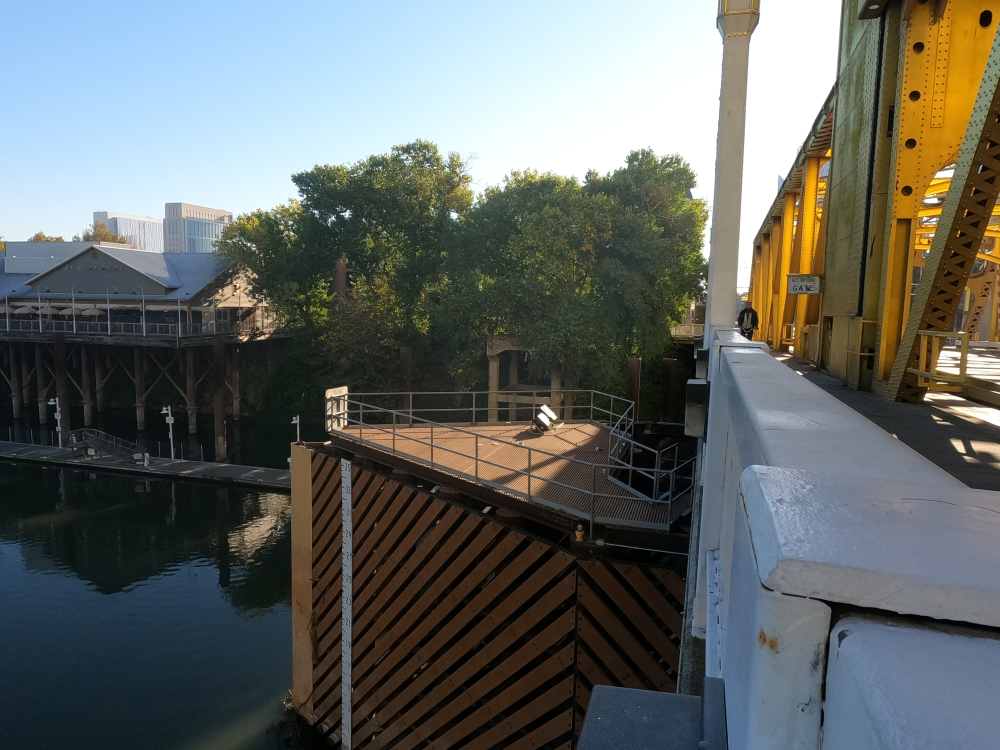
A rehabilitation project was completed in 2018. As part of this project, the bearings were removed and replaced. The electrical and mechanical components of the lift span were also upgraded after the motor failed and prevented the bridge from raising. The fender system was replaced in 2019 and 2020.
The Downtown Riverfront Streetcar Project aims to expand the SacRT light rail service to West Sacramento, utilizing the Tower Bridge. The initial project conception occurred in 2015, with the original alignment being approved in 2022. The alignment has since been revised to improve connectivity and reduce costs. The Public Comment Period for this new alignment is between December 15, 2025, and January 15, 2026. The environmental and design documents are also expected to be completed in January of 2026, with construction beginning that fall. The expected project completion is in 2029.
References