William V Roth Jr. Bridge
(Chesapeake & Delaware Canal Bridge)
NBI Information
Location
State: Delaware
County: New Castle County
Feature Carried: Korean War Veterans Memorial Highway
Feature Crossed: Chesapeake and Delaware Canal
Latitude, Longitude: 39.5500,-75.6561
Toll: On toll road
Maintenance Responsibility: Corps of Engineers (Civil)
Structure Open, Posted, or Closed to Traffic: Open, no restriction
History
Year Built: 1995
Historical Significance: Historical significance is not determinable at this time.
Year Reconstructed: None
Picture Date: September 16, 2026
Geometry
Lanes on Structure: 6
Lanes under Structure: 2
Skew: 0 degrees
Number of Main Spans: 7
Main Structure Type: Stayed Girder
Main Structure Material: Prestressed Concrete
Number of Approach Spans: 40
Approach Structure Type: Segmental Box Girder
Approach Structure Material: Prestressed Concrete
Condition
Inspection Date: October 2023
Deck Condition: Satisfactory
Superstructure Condition: Satisfactory
Substructure Condition: Fair
Channel Condition: Very Good
Culvert: Not Applicable
NBI Year: 2025
Bridge Information
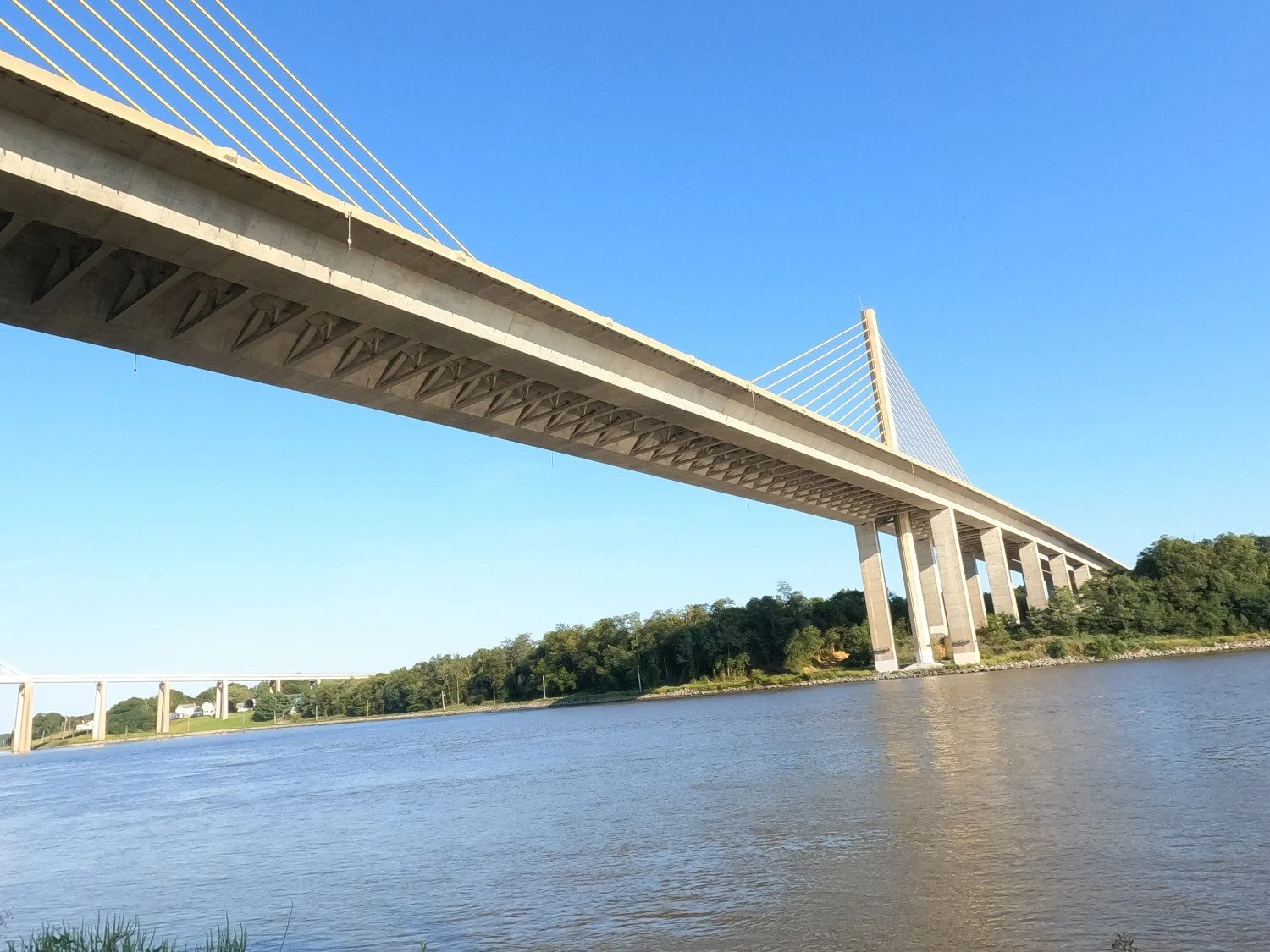
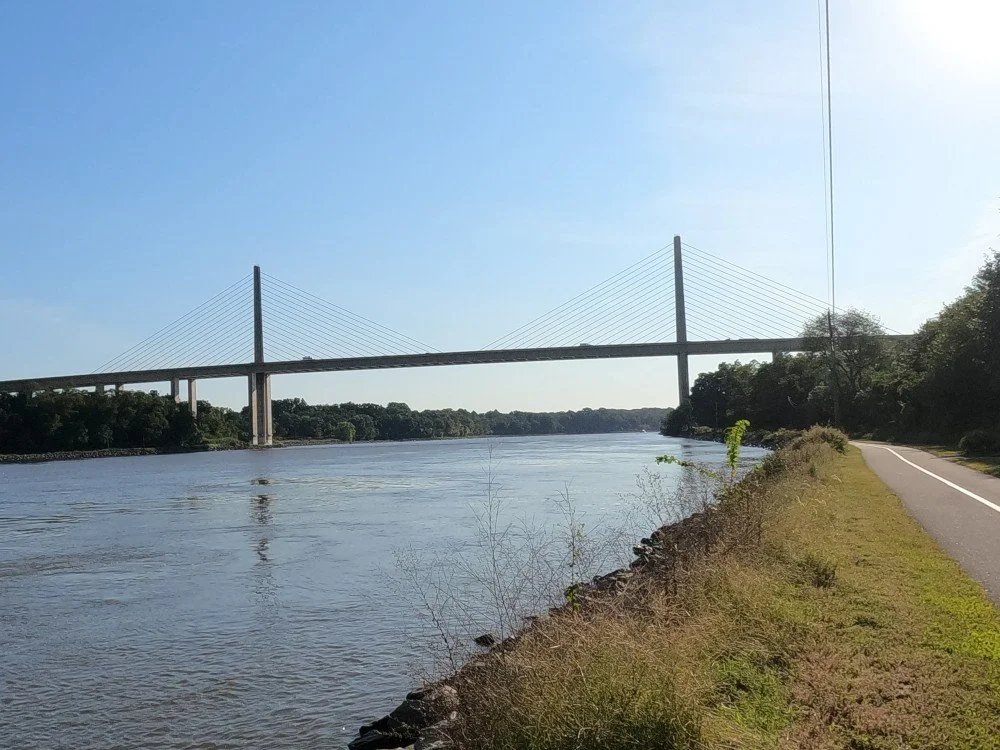
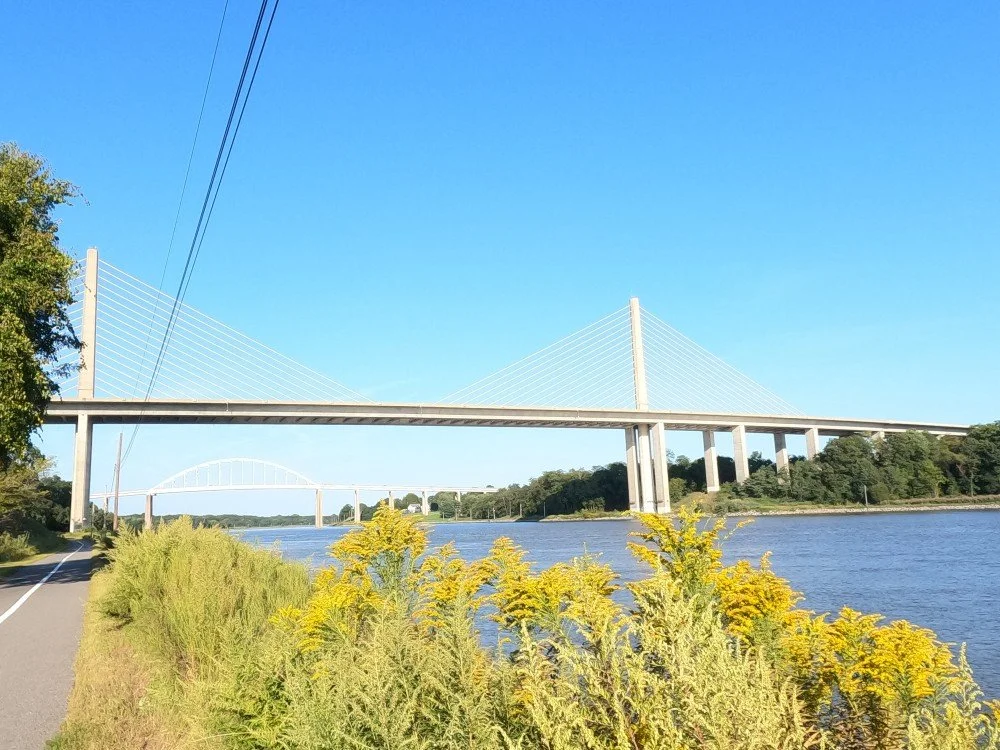
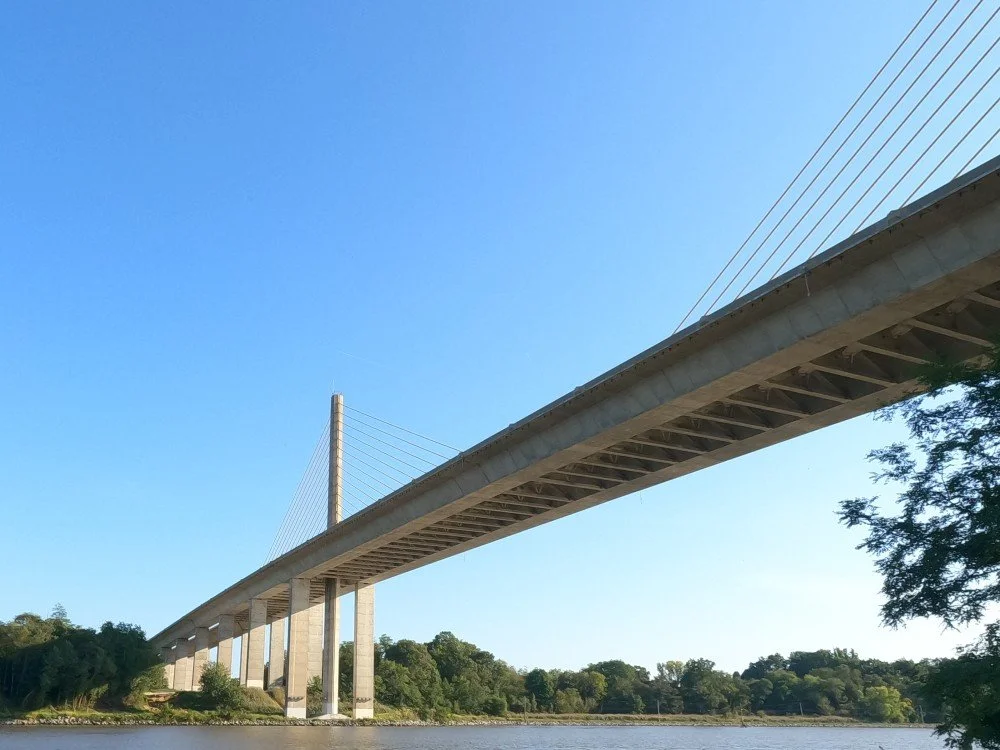
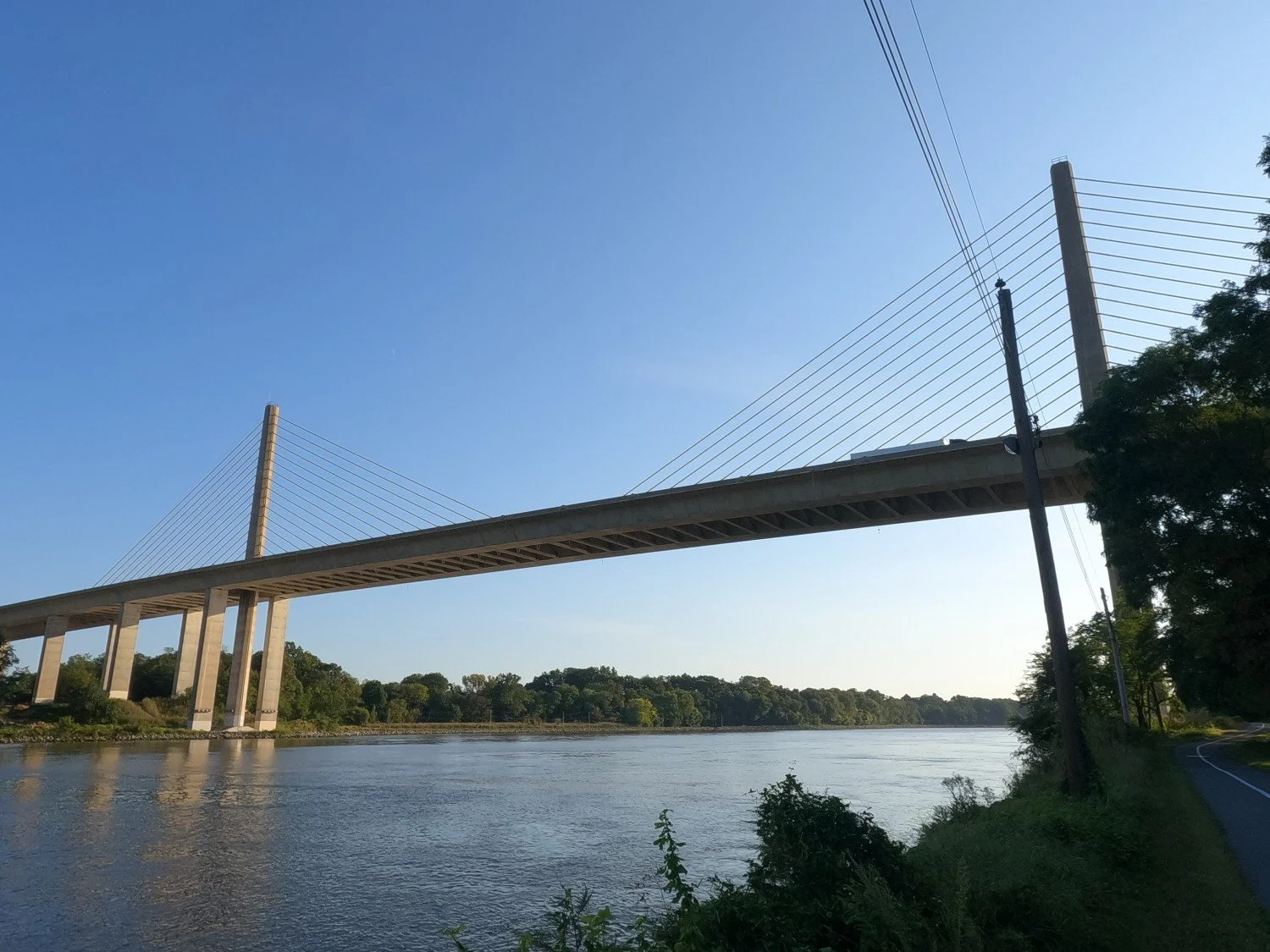
The Senator William V. Roth Jr. Bridge, originally called the Chesapeake & Delaware Canal Bridge, is a cable-stayed bridge across the Chesapeake & Delaware Canal near St. Georges, Delaware. It is owned and operated by the U.S. Army Corps of Engineers.
This bridge was built from 1992 to 1995 to provide a bypass for the aging St. Georges Bridge. It eventually became part of the new DE-1, which was designed as a “relief route” to reduce the traffic on US-13.
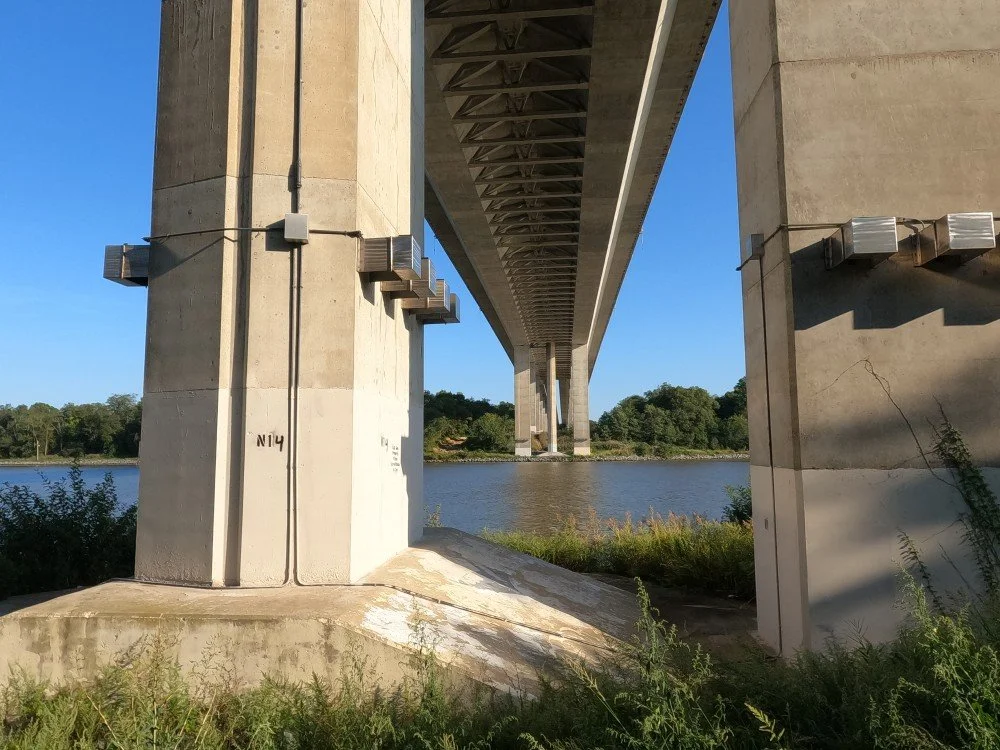
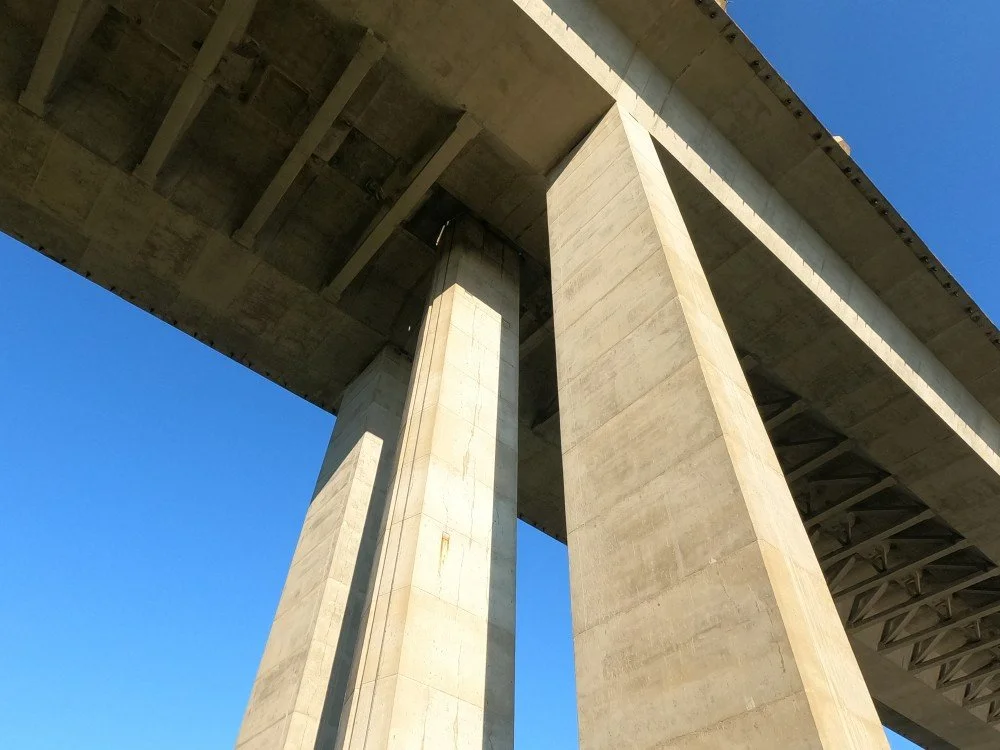
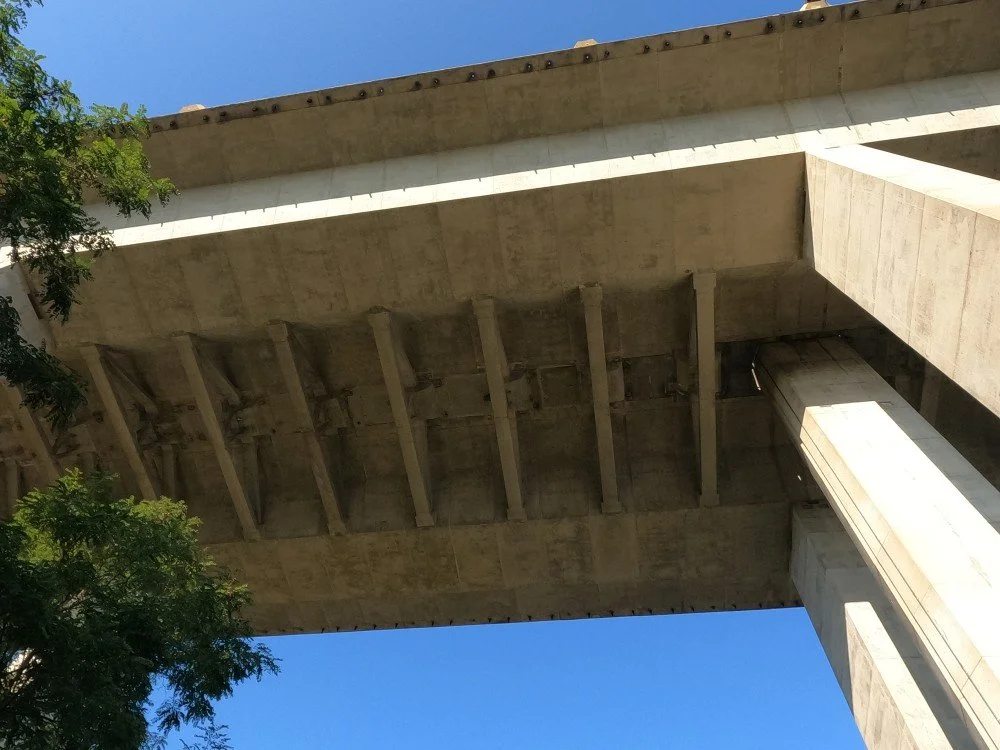
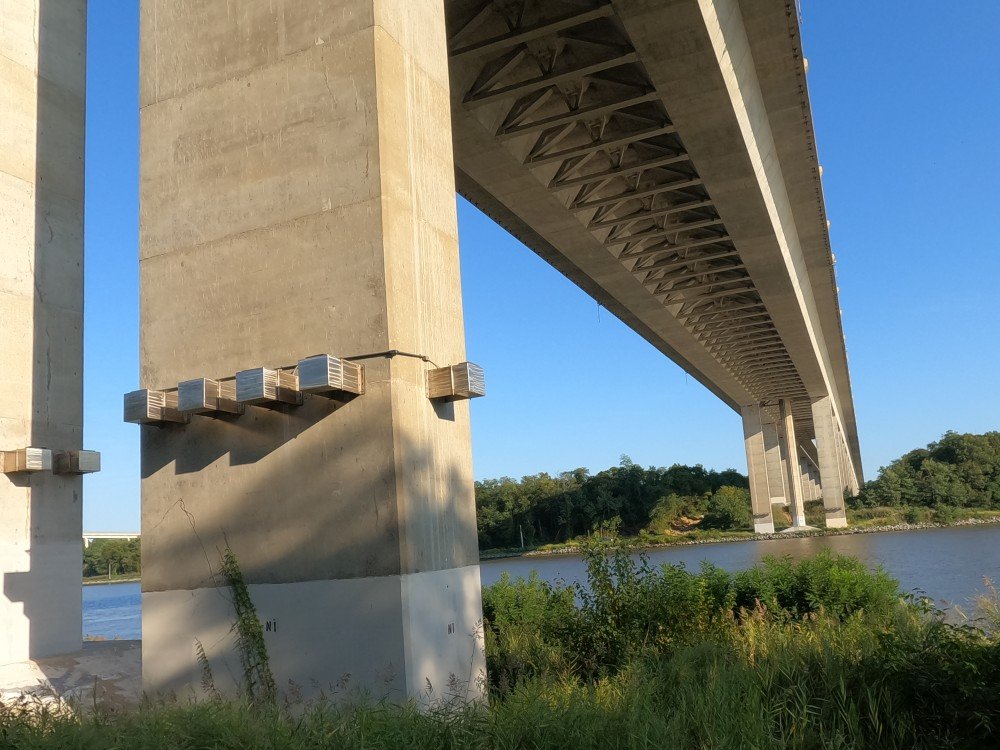
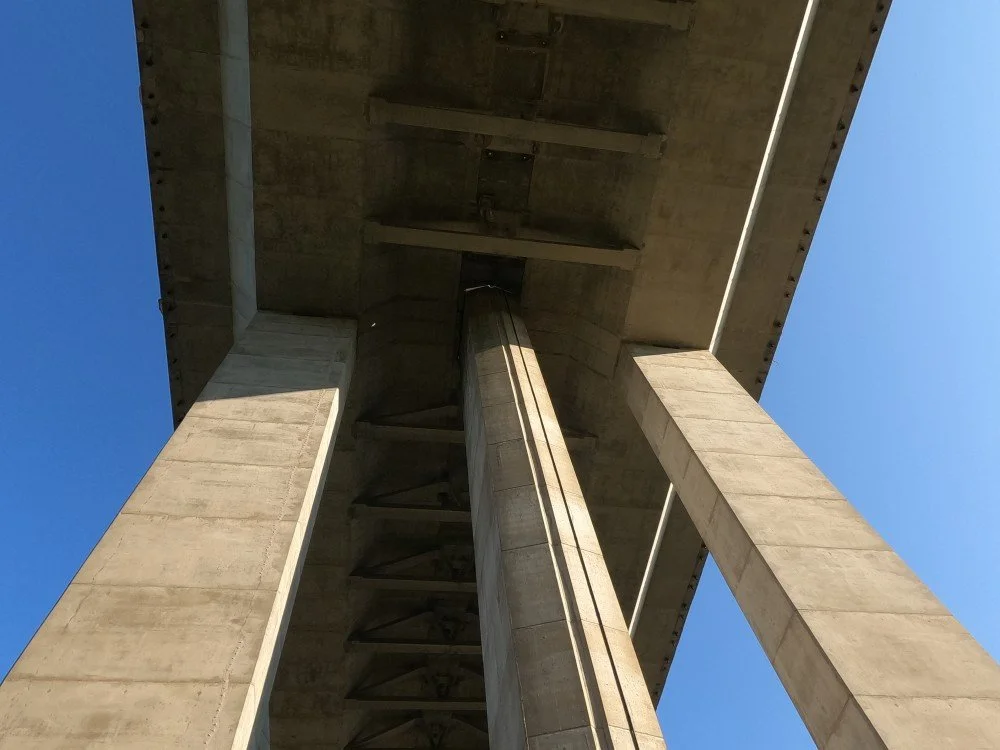
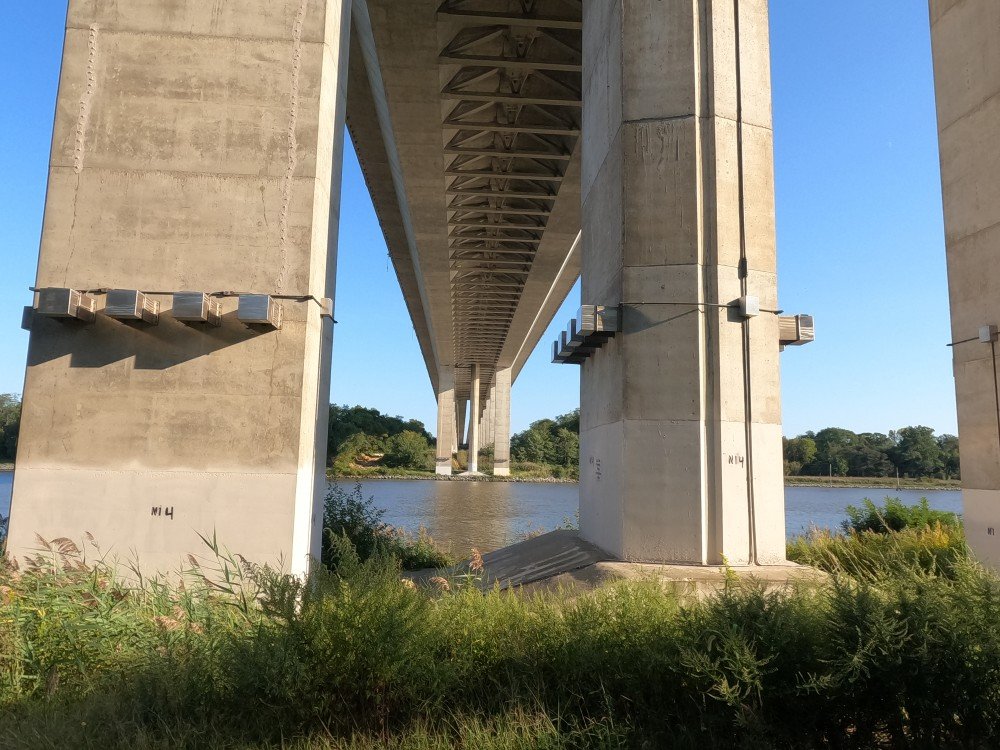
This was the first pre-cast concrete bridge to be built in the United States. The spans are built entirely using precast segmental box sections, which were cast off-site and delivered on barges. The bridge is constructed as two parallel spans, which are joined by concrete trusses on the underside.
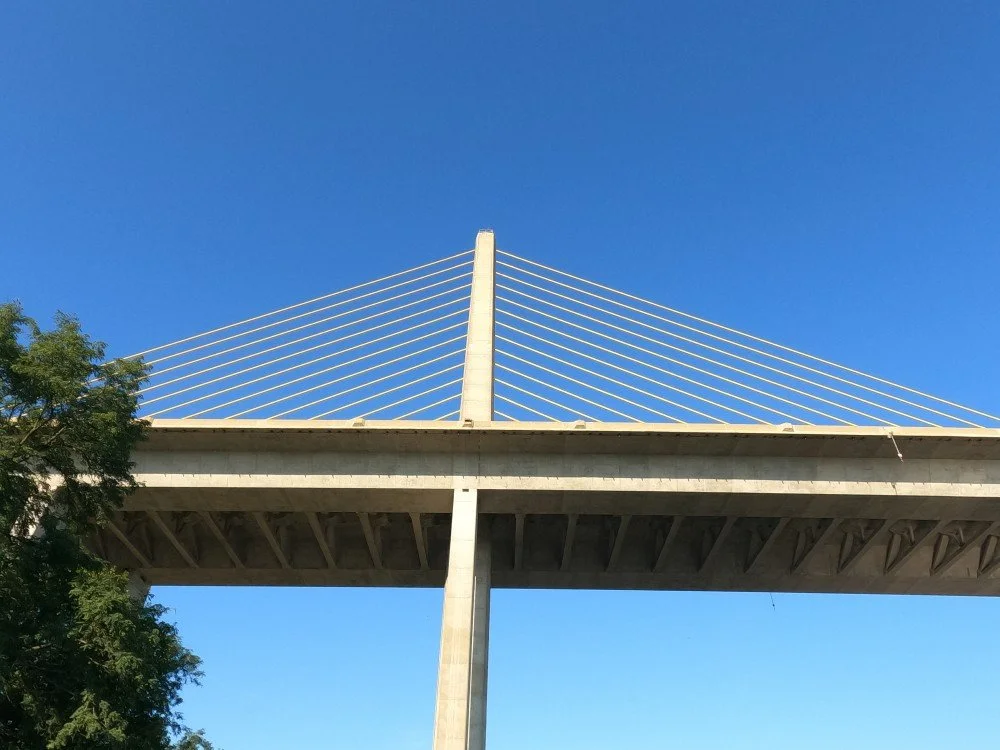
Another interesting feature is that this bridge only has one span that is truly suspended. The main span over the canal is suspended, but the approach spans on either side are supported by piers. Cable-stayed bridges typically have three suspended spans (a main span and an approach on either side) which act together to balance the loads. However, on the Roth Bridge, the cables are not actually attached to the towers. Instead, they pass through the towers in tubes (called saddles). This allows the weight of the suspended span to counterbalance the weight of the approach spans, instead of the towers holding up the weight. This allows the towers to be smaller and slenderer than the towers required for a typical cable-stayed bridge. There is also a small joint between the towers and the bridge deck, which allows the bridge to flex.
The bridge was officially named after Senator William V. Roth Jr. in November 2006.
The bridge underwent a repair project from March to December of 2022. This project primarily replaced the deck overlay
References
Cahal, Sherman. “Roth Bridge.” Bridges and Tunnels, https://bridgestunnels.com/location/roth-bridge/. Accessed 28 Sept. 2026.
Weeks, John A. “Senator William V. Roth Jr. Bridge.” John Weeks, http://johnweeks.com/cablestay/pages/csb03.html. Accessed 28 Sept. 2026.
“Senator William V. Roth Jr. Bridge.” GM2, https://gm2inc.com/projects/senator-william-v.-roth-jr-bridge/https://gm2inc.com/projects/senator-william-v.-roth-jr-bridge/. Accessed 28 Sept. 2026.
“Senator William V Roth Jr Bridge.” FIGG Engineering, https://www.figgbridge.com/senator-william-v-roth-jr-bridge. Accessed 28 Sept. 2026.
“Army Corps to Conduct Repairs on SR-1 Bridge in Delaware.” US Army Corps of Engineers, 9 Mar. 2022, https://www.nap.usace.army.mil/Media/News-Releases/Article/2960662/army-corps-to-conduct-repairs-on-sr-1-bridge-in-delaware/. Accessed 28 Sept. 2026.