Clay Wade Bailey Bridge
NBI Information
Location
State: Kentucky
County: Kenton County
Feature Carried: US-25 / US-42 / US-127
Feature Crossed: Ohio River
Latitude, Longitude: 39.0913,-84.5194
Toll: On free road
Maintenance Responsibility: State Highway Agency
Structure Open, Posted, or Closed to Traffic: Open, no restriction
History
Year Built: 1974
Historical Significance: Bridge is possibly eligible for the National Register of Historic Places (requires further investigation before determination can be made) or bridge is on a State or local historic register.
Year Reconstructed: None
Picture Date: April 24, 2026
Geometry
Lanes on Structure: 2
Lanes under Structure: 3
Skew: 0 degrees
Number of Main Spans: 3
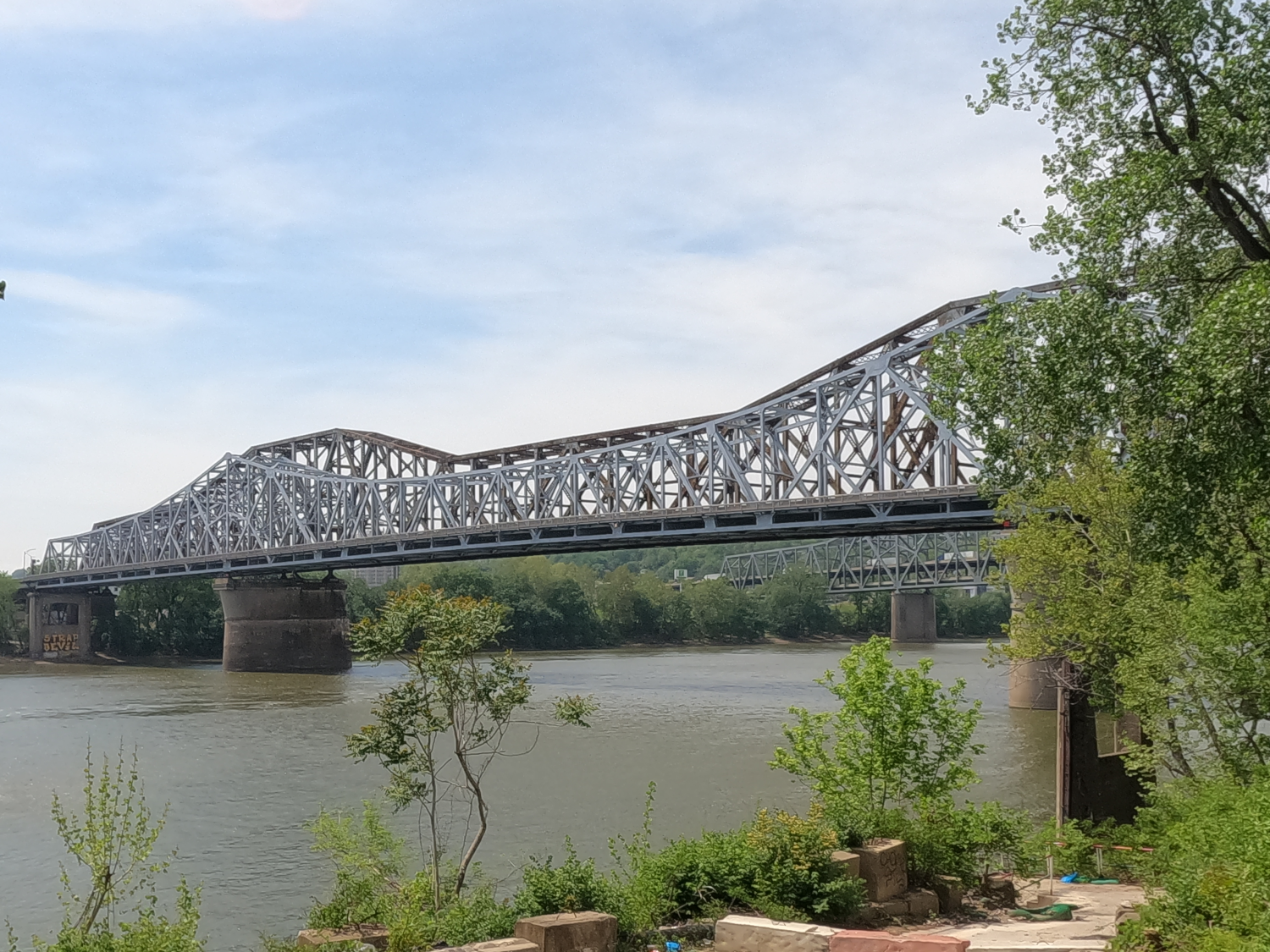
Main Structure Type: Truss - Thru
Main Structure Material: Steel
Number of Approach Spans: 7
Approach Structure Type: Stringer/Multi-beam or Girder
Approach Structure Material: Steel Continuous
Condition
Inspection Date: June 2024
Deck Condition: Fair
Superstructure Condition: Fair
Substructure Condition: Poor
Channel Condition: Good
Culvert: Not Applicable
NBI Year: 2025
Bridge Information
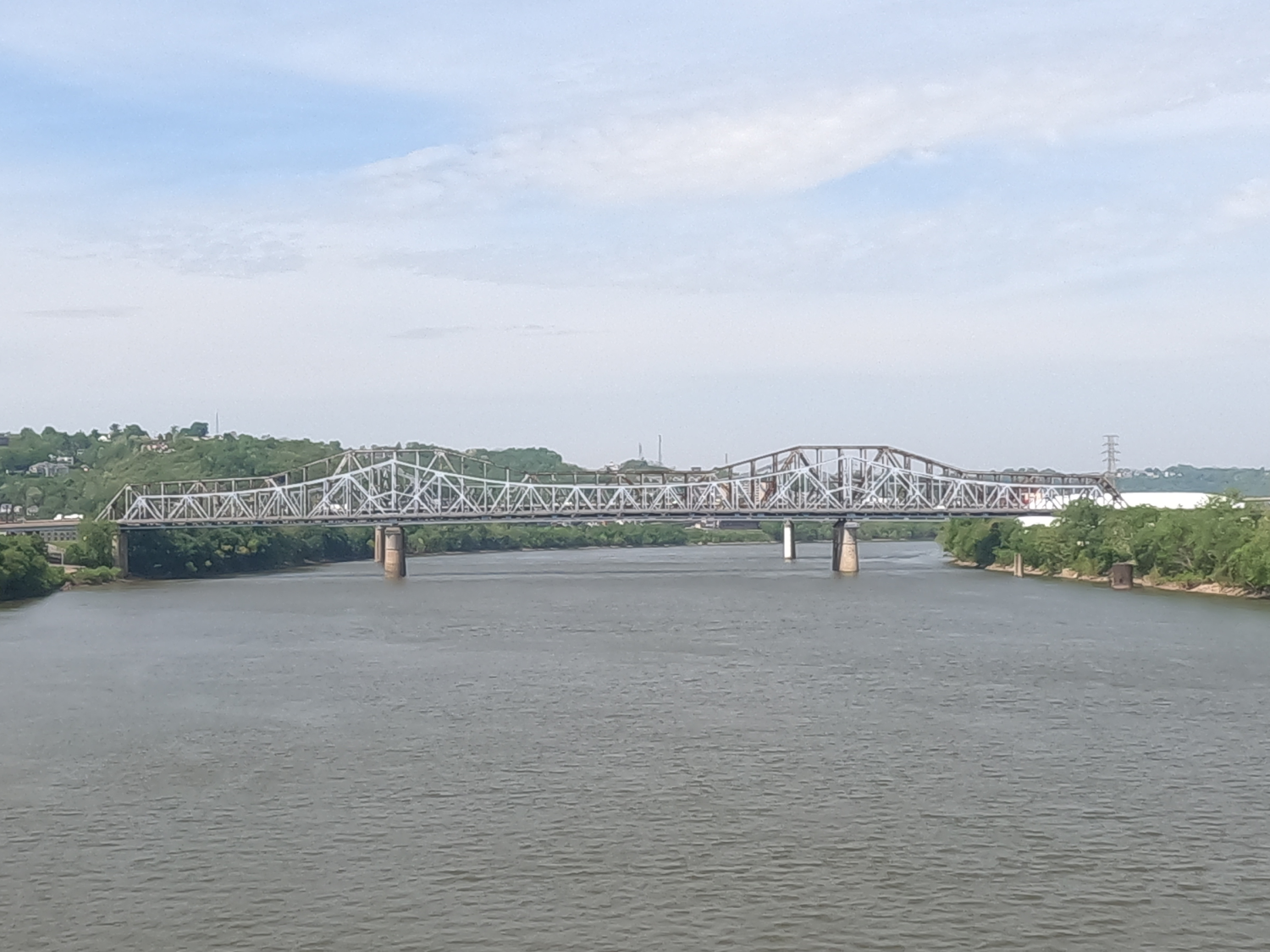
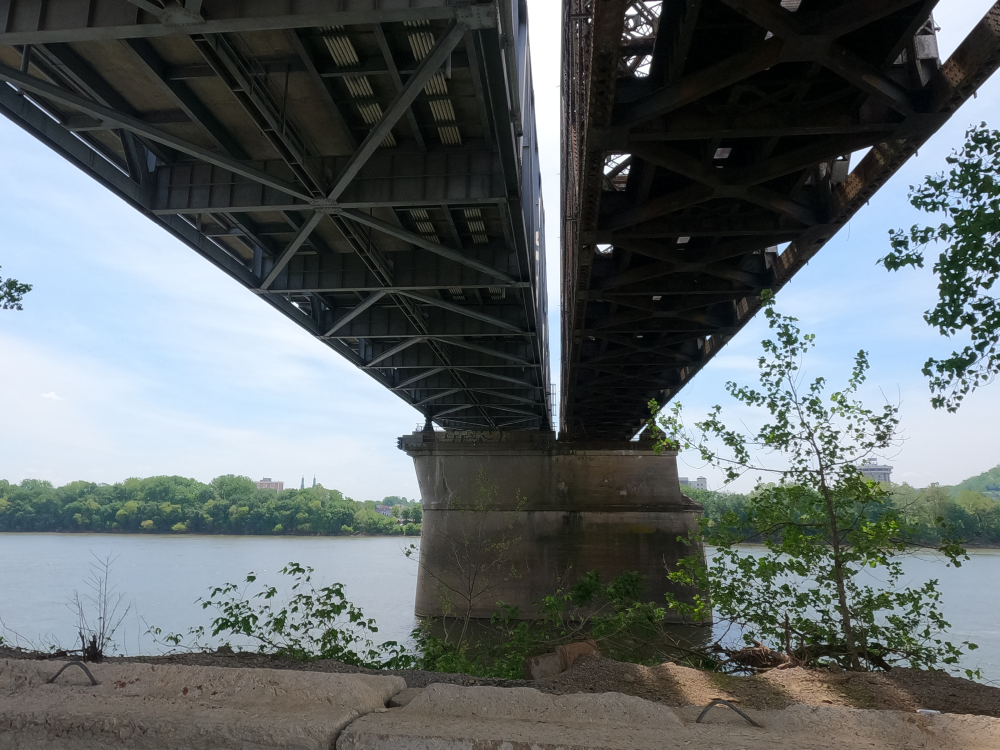
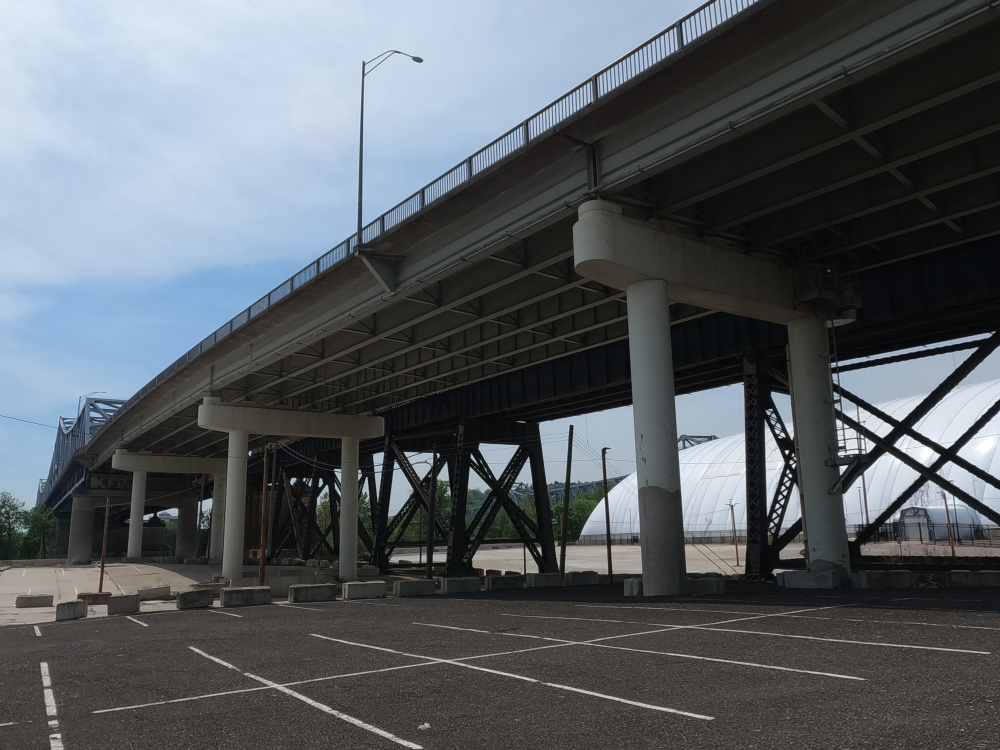
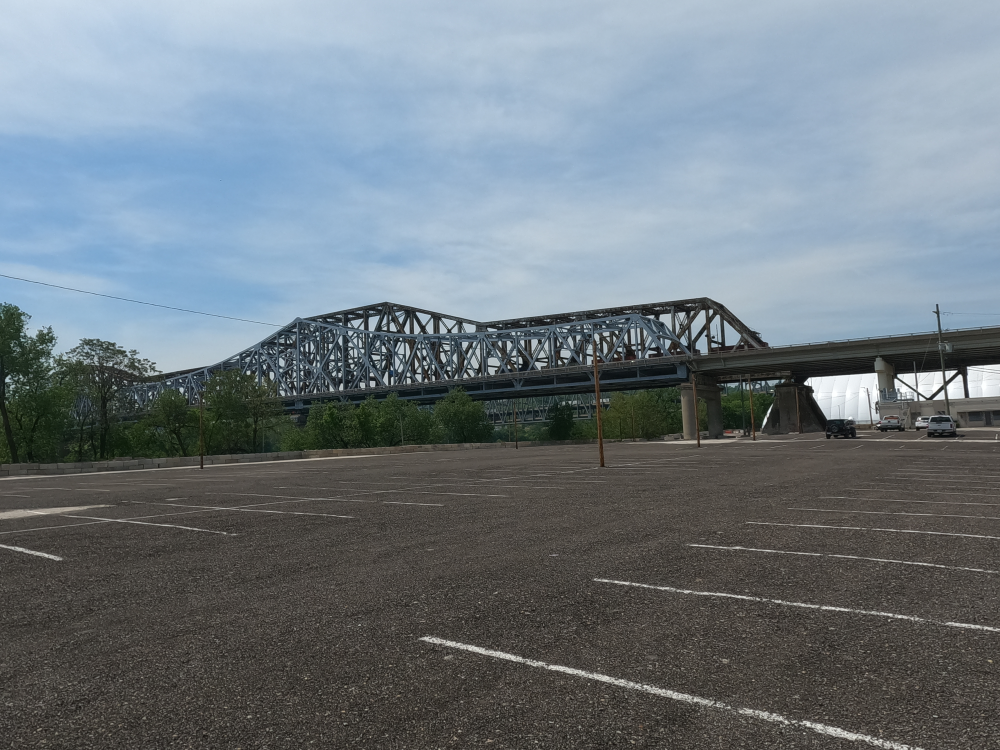
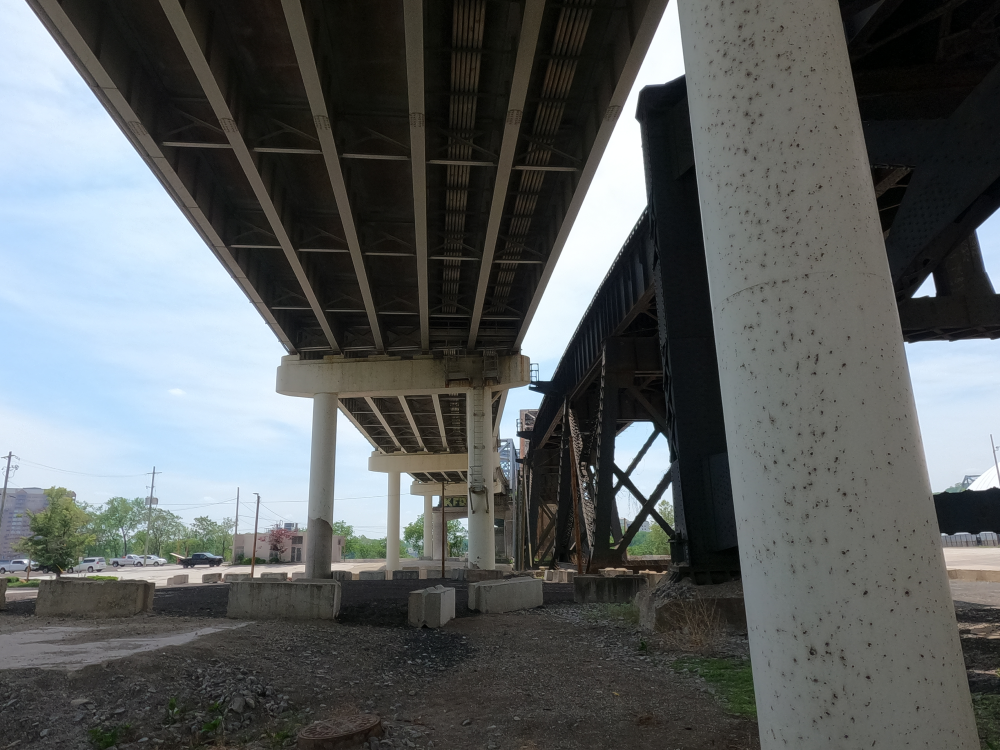
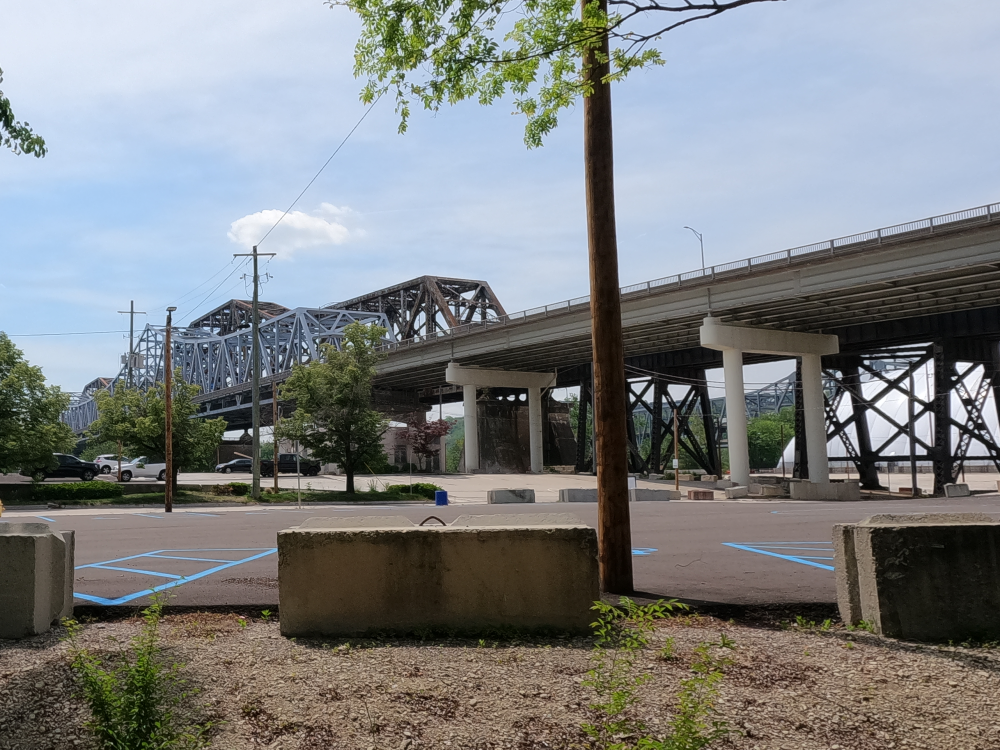
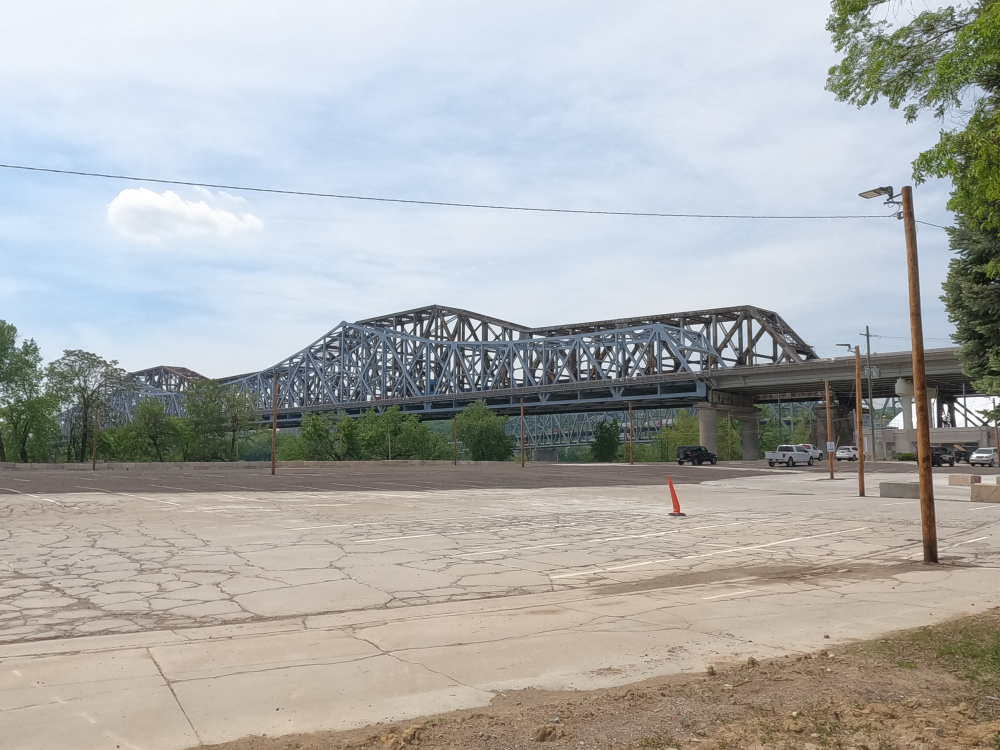
The Clay Wade Bailey Bridge is a cantilevered warren through truss bridge that was built in 1974. The bridge follows the alignment of the original 1889 C&O Bridge and still uses one of its original piers. The bridge is immediately adjacent to the 1929 C&O Railroad Bridge, and the bridges share two piers in the river.
Prior to this bridge’s construction, there were two railroad bridges at this location, both called the C&O Railroad Bridge. The original bridge was built in 1889. The current C&O Railroad Bridge was designed in the mid-1920’s as a stronger bridge with lower grades to accommodate heavier locomotives. The original piers were widened to accommodate this, and the original bridge was converted to carry automobile traffic.
By the 1960’s, the original 1889 bridge began to show signs of serious deterioration. There was significant amounts of rust throughout, with some of the beams being rusted all the way through. In 1963, it was discovered that one of the supports on the Ohio Approach ramp had slipped out of place and was causing the roadway to tilt. The bridge was closed and repaired and reopened a week later. In 1968, a man fell through a hole on the concrete sidewalk and nearly fell into the river below. He was able to grab the edge and pull himself to safety.
The collapse of the nearby Silver Bridge in 1967, along with the continued deterioration of the bridge, led to the closure of the bridge on December 9, 1968. It was demolished in 1970 and was replaced with the Clay Wade Bailey Bridge, which follows the alignment of the original railroad bridge and reused one of the original piers. The 1929 bridge is still open and operational. It is currently owned by CSX.
The bridge was named after Clay Wade Bailey, a prominent Kentucky newspaper reporter. This name has caused some confusion over the years, because the bridge is not a Bailey Bridge. A Bailey Bridge is a type of prefabricated truss bridge, such as the Bartlett Road Bridge in New York.
References
“C&O Bridge, Clay Wade Bailey Bridge.” Cincinnati Transit.Net, https://cincinnati-transit.net/claywade.html. Accessed 14 July 2026.
Cahal, Sherman. “Clay Wade Bailey Bridge.” Bridges and Tunnels, 8 June 2022, https://bridgestunnels.com/location/clay-wade-bailey-bridge/. Accessed 14 July 2026.
Cahal, Sherman. “Chesapeake & Ohio Railroad Cincinnati Bridge.” Bridges and Tunnels, 8 June 2022, https://bridgestunnels.com/location/chesapeake-ohio-railroad-cincinnati-bridge/. Accessed 14 July 2026.