Veterans Memorial Bridge
(Gramercy Bridge)
NBI Information
Location
State: Louisiana
County: St. James Parish
Feature Carried: LA-3213
Feature Crossed: Mississippi River
Latitude, Longitude: 30.0429,-90.6709
Toll: On free road
Maintenance Responsibility: State Highway Agency
Structure Open, Posted, or Closed to Traffic: Open, no restriction
History
Year Built: 1989
Historical Significance: Bridge is not eligible for the National Register of Historic Places.
Year Reconstructed: None
Picture Date: February 20, 2026
Geometry
Lanes on Structure: 4
Lanes under Structure: 4
Skew: 0 degrees
Number of Main Spans: 3
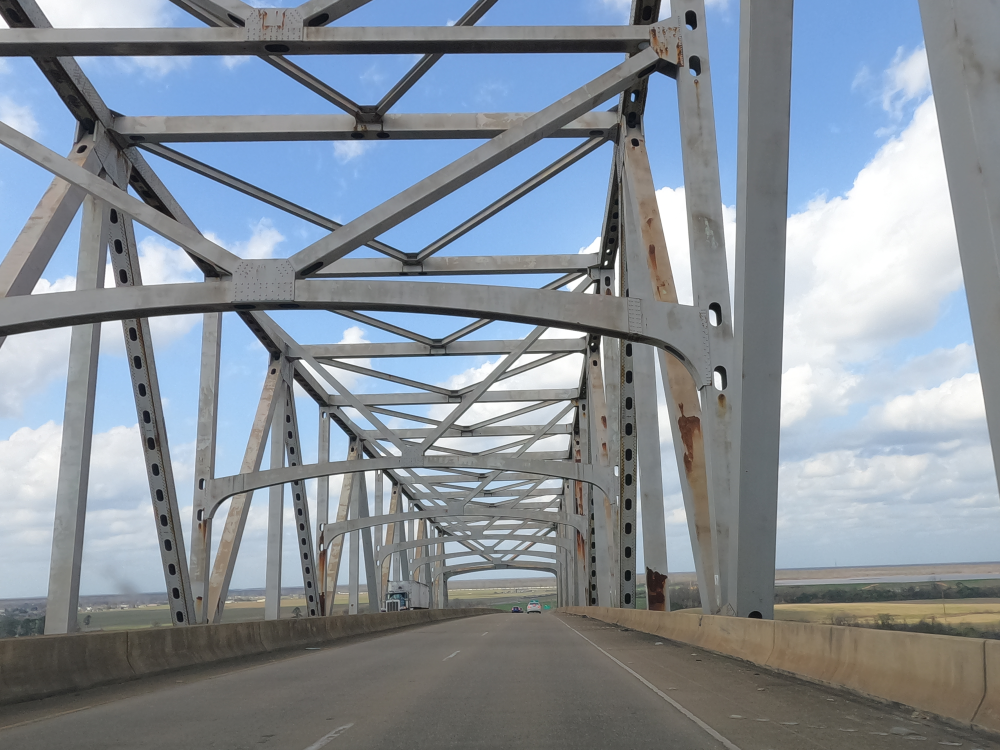
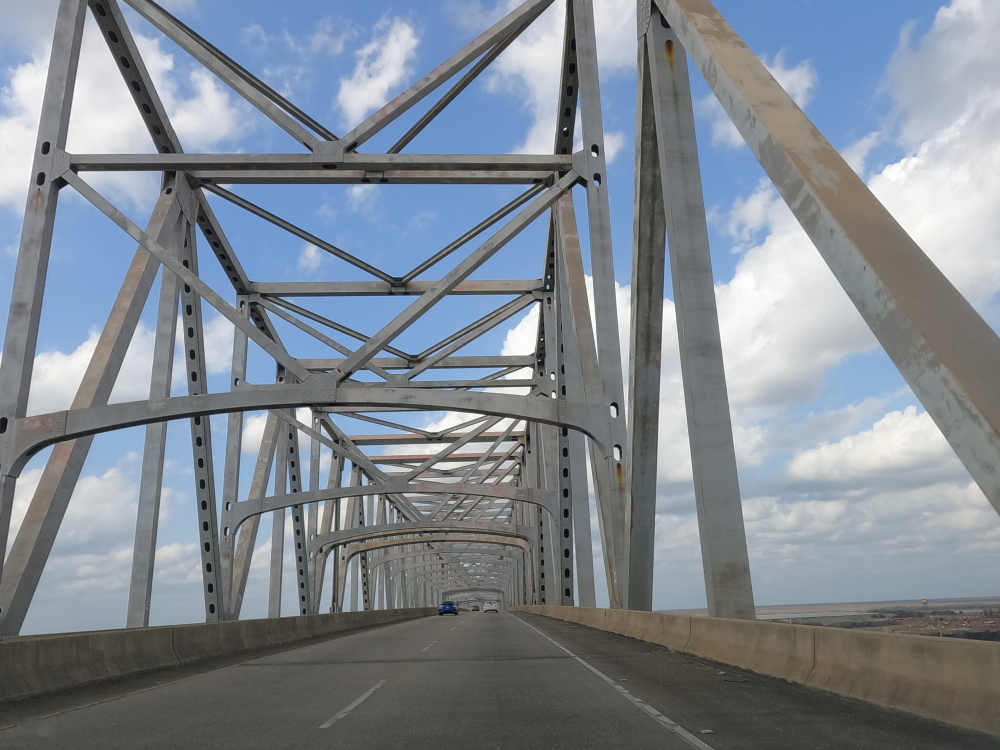
Main Structure Type: Truss - Thru
Main Structure Material: Steel Continuous
Number of Approach Spans: 58
Approach Structure Type: Metal Stringer/Multi-beam or Girder
Approach Structure Material: Steel
Condition
Inspection Date: August 2023
Deck Condition: Good
Superstructure Condition: Fair
Substructure Condition: Satisfactory
Channel Condition: Very Good
Culvert: Not Applicable
NBI Year: 2025
Bridge Information
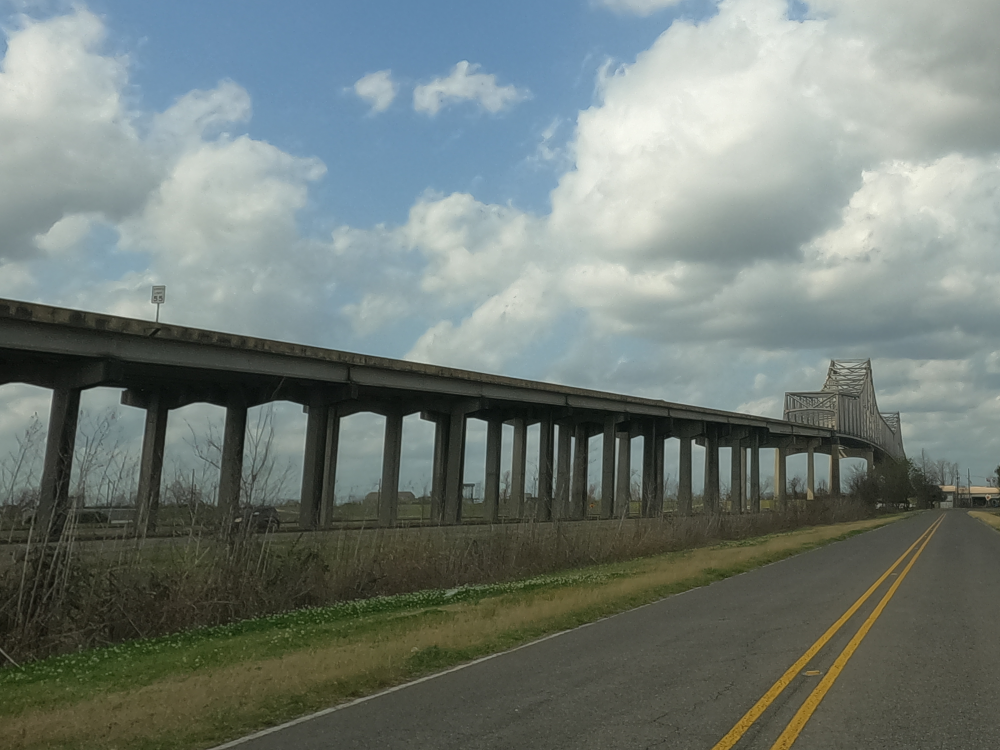
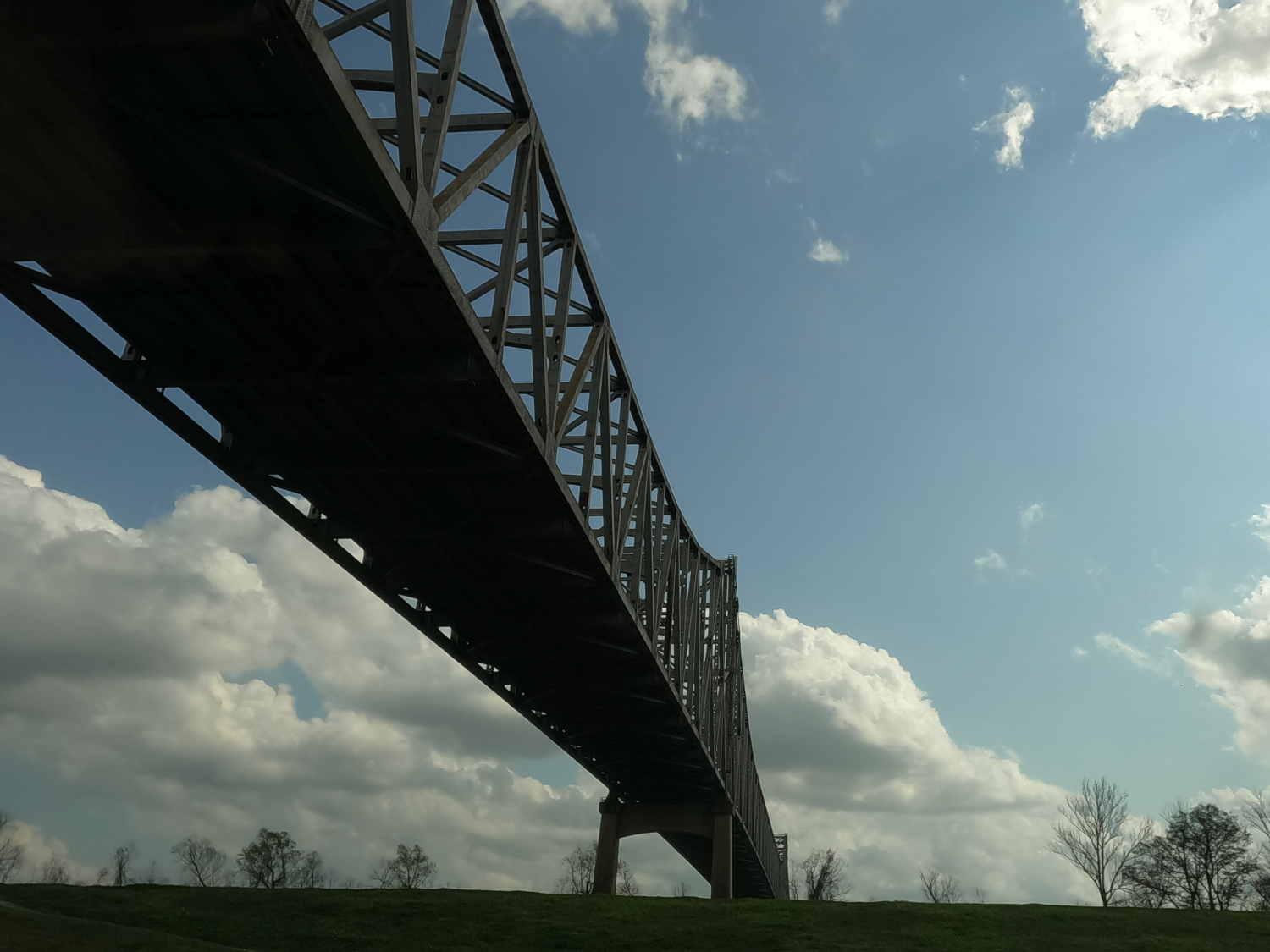
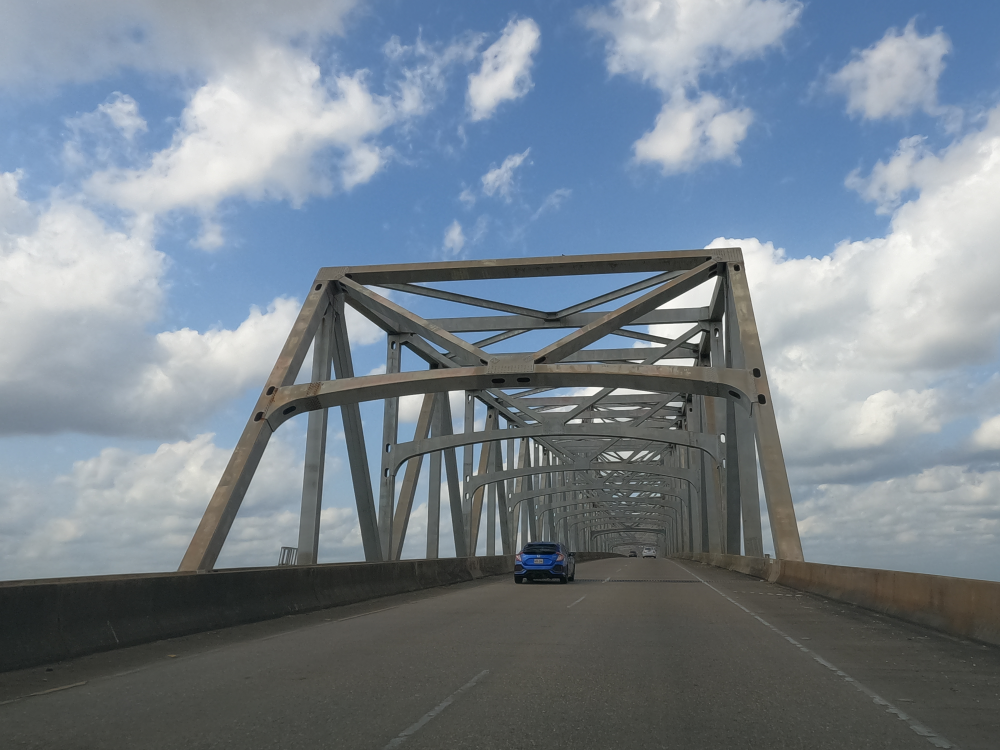
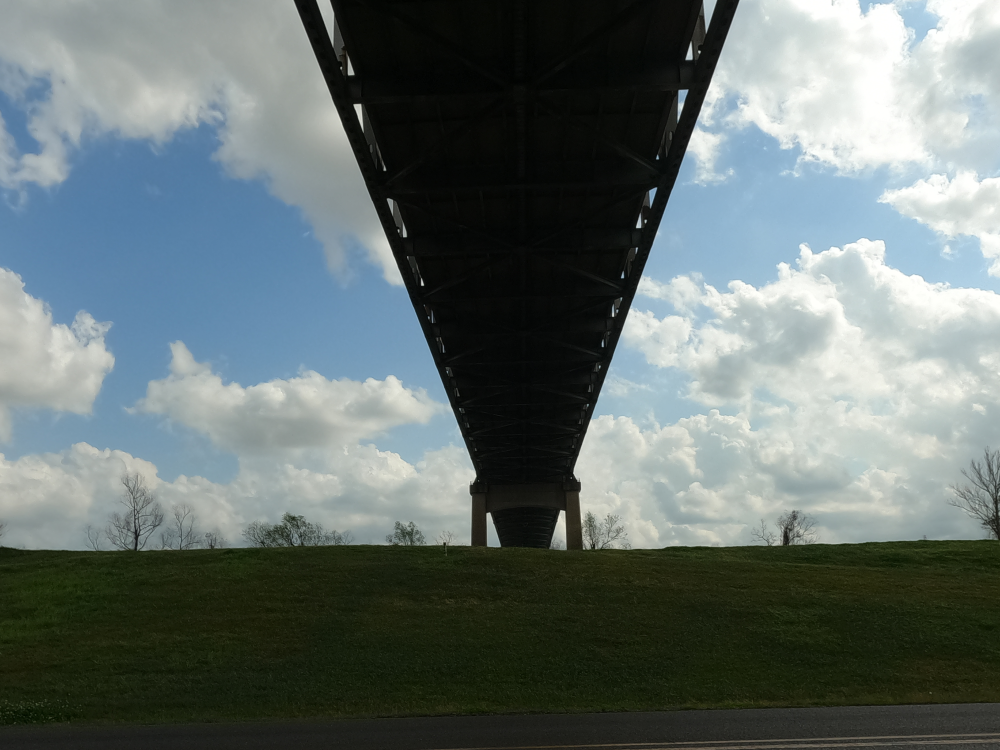
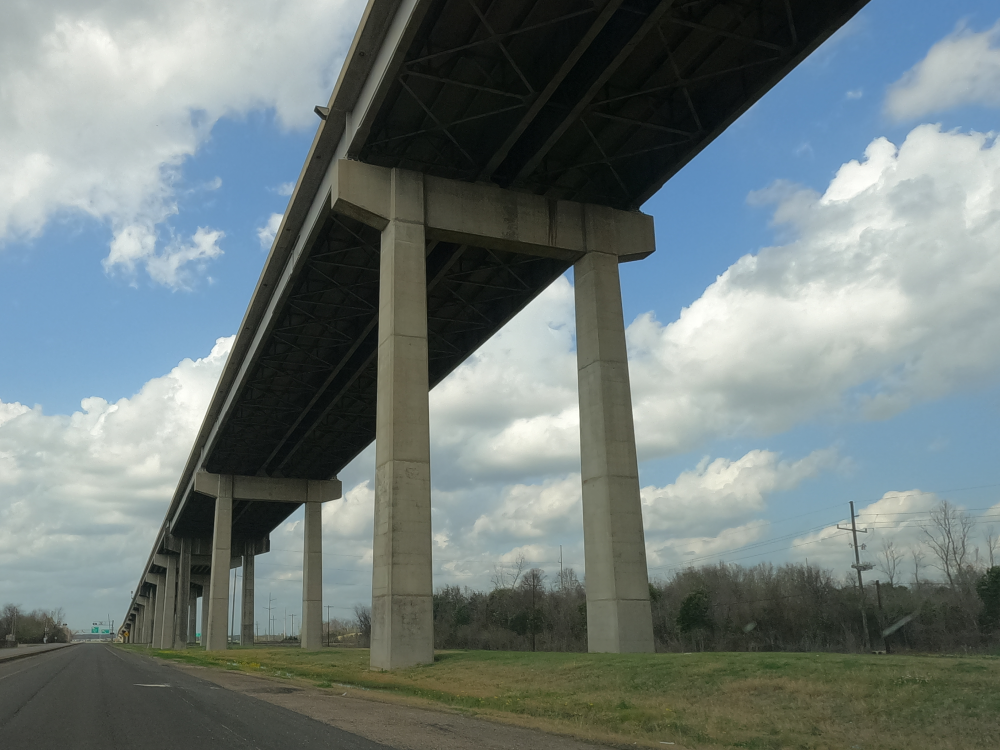
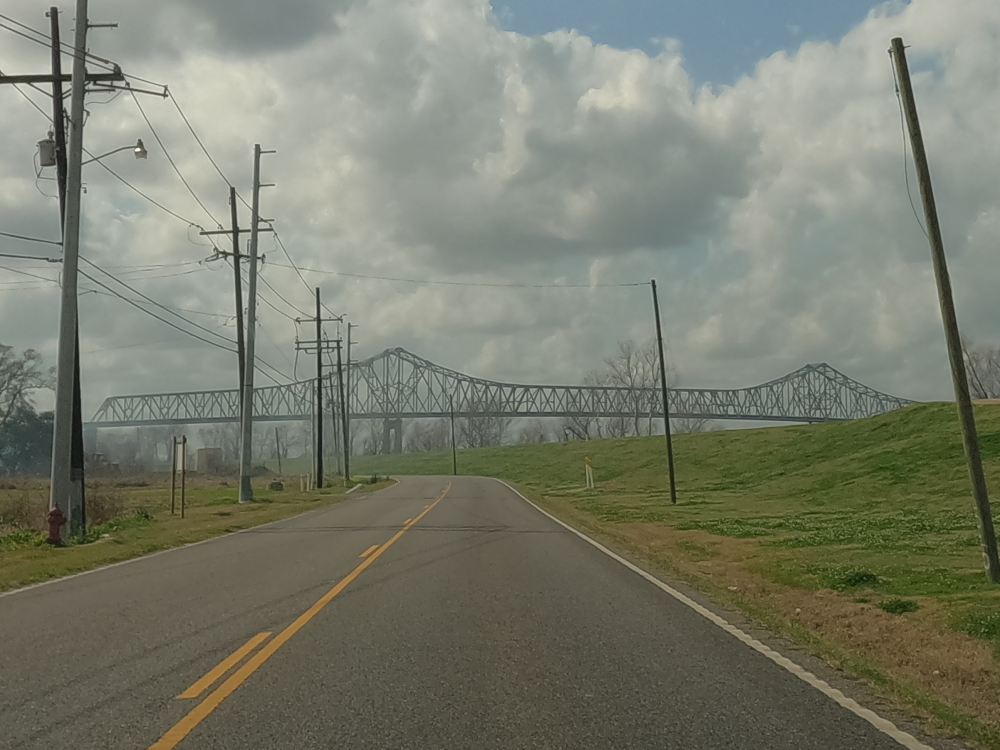
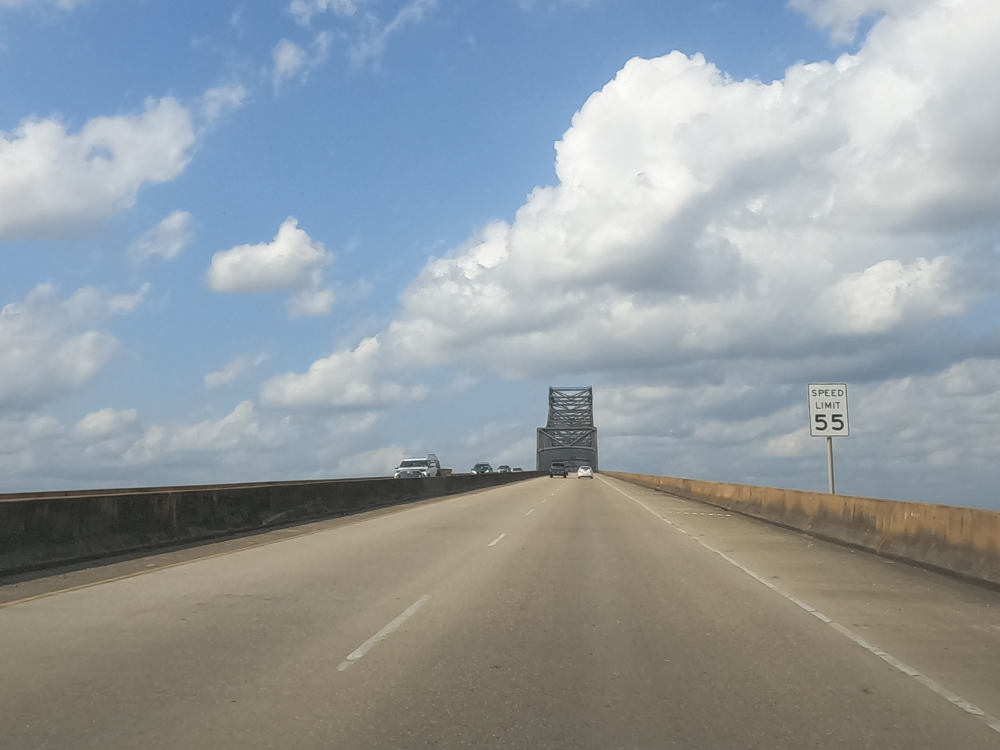
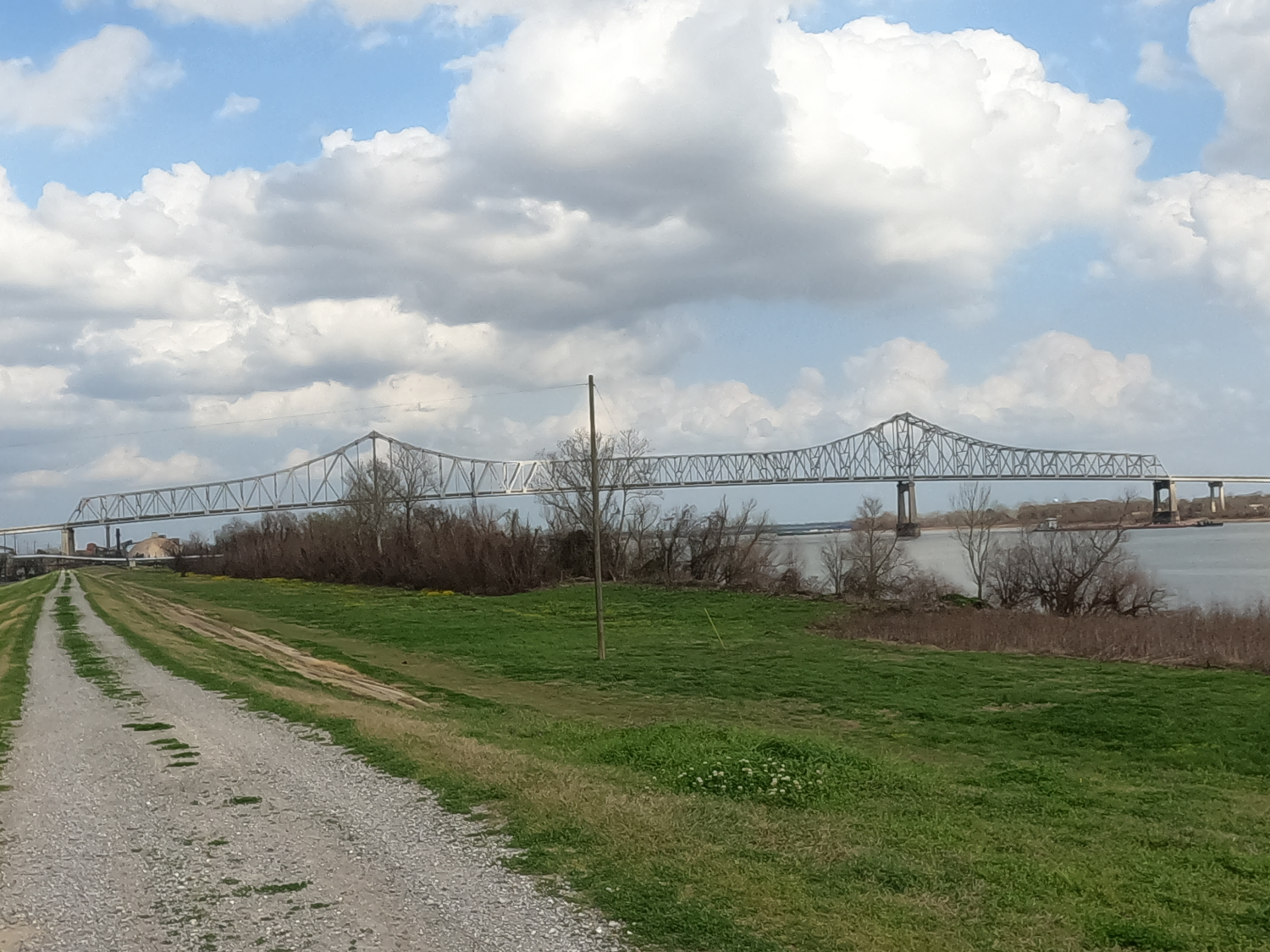
The Veterans Memorial Bridge, also known as the Gramercy Bridge, is a cantilevered Warren through truss bridge over the Mississippi River. It was built in 1989, making it the second newest Mississippi River Crossings in Louisiana (The John James Audubon Bridge was built in 2011 and holds the title of the newest bridge). The center main span is one of the longest of its type in the world, and it is one of the tallest bridges on the lower Mississippi.
When it was built, this bridge connected to Interstate 10 and US Highway 61 on the north bank but forced traffic onto the low-speed and inconvenient River Road on the south bank. It was often called the “Bridge to Nowhere” until the approach was extended to connect to LA-3127 in 2008. The bridge now connects to major roadways, which makes it more usable for locals. However, it is still not the busy river crossing that it was predicted to become.
In the 1970’s (prior to the construction of this bridge), the Louisiana Department of Highways operated 3 ferries, the Luling–Destrehan Ferry, the Edgard–Reserve Ferry, and the pedestrian Taft–Norco Ferry. On the morning of October 20, 1976, the Luling–Destrehan Ferry collided with a Norwegian tanker and sank. Of the 96 passengers and crew abord the ferry, 78 were killed, making this the deadliest ferry disaster in United States history. It was later determined that the ferry pilot was intoxicated and failed to notice or react to the tanker. This accident spurred changes in maritime law and caused the state to focus on removing the ferries. The Hale Boggs Memorial Bridge opened in 1983 to replace the Luling–Destrehan Ferry and the Veterans Memorial Bridge opened in 1989 to replace the Edgard–Reserve Ferry. The Taft–Norco Ferry still operates, and none of the Mississippi River Bridges in Louisiana allow pedestrians.
This desire to eliminate the ferry crossing was an unnecessary overcorrection. There was not (and still isn’t) enough traffic to justify the exorbitant costs involved in constructing this bridge. Ferries themselves are not dangerous modes of transportation when competent and sober crews operate them. The regulatory changes that were implemented in the wake of that tragedy ensure that would be the case, and these regulations remain in place to this day. The funds used for this project would have been better spent elsewhere in the state, where well-established infrastructure needed modernization and supplementation.
References